
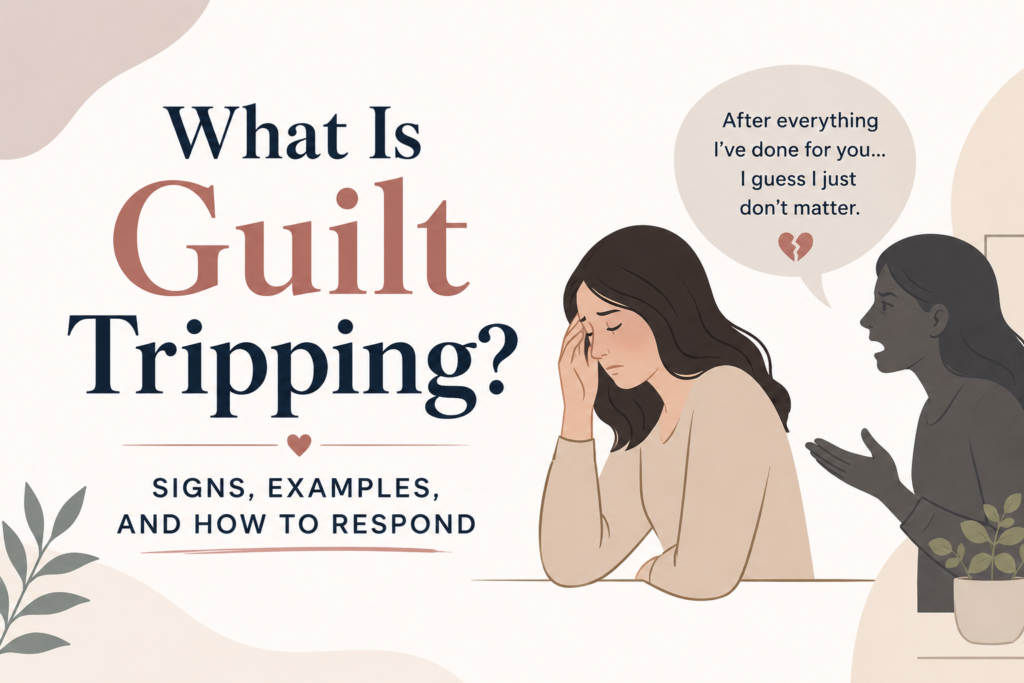
Guilt can be a healthy emotion when it helps people recognize harm, take responsibility, and repair relationships. But guilt can also be used in unhealthy ways. In many relationships, guilt becomes a form of emotional pressure rather than honest communication.
If you often feel responsible for someone else’s emotions, disappointment, or reactions—even when you’ve done nothing wrong—you may be experiencing guilt tripping.
So, what is guilt tripping exactly?
Guilt tripping is a form of emotional manipulation where someone uses guilt, shame, obligation, disappointment, or emotional withdrawal to influence another person’s behavior or decisions.
Instead of expressing needs directly, the person creates emotional discomfort to encourage compliance.
For many adults and cycle-breaking parents, guilt tripping can feel difficult to identify because it often hides behind phrases that sound caring, loving, or self-sacrificing. But over time, these toxic communication patterns can create anxiety, resentment, emotional exhaustion, and confusion about boundaries.
Understanding what is guilt tripping can help people recognize unhealthy dynamics earlier and begin building emotionally healthy communication patterns rooted in respect rather than control.
What Is Guilt Tripping in Relationships?
Guilt tripping in relationships happens when someone indirectly pressures another person through shame, obligation, or emotional discomfort.
Rather than communicating openly, they may use:
- disappointment
- victim positioning
- silent treatment
- exaggerated sacrifice
- conditional affection
- emotional blackmail
Common guilt trip examples include:
- “After everything I’ve done for you…”
- “I guess I just don’t matter.”
- “If you loved me, you would do this.”
- “Fine, forget it.”
Some people use guilt intentionally as a manipulation tactic. Others learned these unhealthy relationship behaviors from childhood environments where emotional manipulation was normalized.
Either way, the emotional impact can be significant.
Healthy communication creates safety and clarity. Manipulative behavior in relationships creates pressure and emotional confusion.
Healthy love does not require emotional pressure.
Common Signs of Guilt Tripping
Recognizing the signs of guilt tripping can help you identify relationship red flags before they become emotionally damaging.
Persistent guilt tripping is one of the most overlooked relationship red flags because it often appears disguised as care, sacrifice, or disappointment.
Silent Treatment
Instead of discussing emotions directly, the person withdraws emotionally or stops communicating altogether.
The goal is often to create anxiety, guilt, or fear of abandonment.
Martyr Behavior
A person repeatedly emphasizes their sacrifices while implying others are selfish or ungrateful.
Examples:
- “Nobody appreciates me.”
- “I do everything for everyone.”
“After All I’ve Done for You”
This is one of the most common emotional manipulation tactics in families and partnerships.
Acts of kindness later become emotional leverage.
Victim Positioning
The person redirects attention away from the issue and toward their emotional suffering.
This often prevents healthy accountability and resolution.
Conditional Affection
Warmth, approval, or love are withheld when someone sets boundaries or makes independent choices.
This can create long-term people-pleasing tendencies and fear of conflict.
Guilt Trip Examples in Different Relationships
Guilt tripping can happen in romantic relationships, families, friendships, and workplaces.
Romantic Relationships
A guilt tripping partner may say:
- “You care more about everyone else than me.”
- “I guess I’ll just stay home alone.”
- “If you loved me, you’d cancel your plans.”
Instead of expressing needs directly, the person creates emotional pressure.
Parent-Child Dynamics
Guilt tripping parents often use obligation and sacrifice to influence behavior.
Examples include:
- “I gave up everything for you.”
- “You never make time for family anymore.”
- “One day you’ll regret treating me this way.”
Parent-child emotional manipulation can create deep guilt and difficulty setting emotional boundaries in adulthood.
Friendships
Friends may use shame or emotional disappointment to maintain control or attention.
Examples:
- “Wow, I guess I’m not important to you.”
- “Forget it. I’ll handle everything myself.”
Workplace Manipulation
Managers or coworkers may use guilt to pressure others into overworking.
Examples:
- “We’re all making sacrifices here.”
- “I thought you were committed to the team.”
These psychological manipulation signs often blur healthy professional boundaries.
Why Guilt Tripping Works
Guilt tripping is effective because it activates emotional conditioning many people learned early in life.
Fear of Rejection
Most people naturally want connection and approval. Emotional blackmail often exploits that fear.
Childhood Conditioning
Adults raised around toxic family dynamics may have learned that love depends on compliance, caretaking, or emotional self-sacrifice.
As a result, setting boundaries can feel unsafe or selfish.
People-Pleasing Patterns
People pleasers often prioritize other people’s emotional comfort over their own needs.
Manipulative guilt tactics rely heavily on this pattern.
Confusion About Emotional Responsibility
Many people believe they are responsible for fixing everyone else’s emotions.
But emotionally healthy communication recognizes an important truth:
You can care about someone’s feelings without becoming responsible for managing them.
Boundaries are not punishment. They are emotional clarity.
Emotional Effects of Guilt Tripping
Repeated exposure to manipulative behavior in relationships can affect emotional and mental well-being over time.
Anxiety
People may constantly worry about disappointing others or triggering emotional reactions.
Shame
Guilt tripping often creates chronic feelings of selfishness or inadequacy.
Chronic Self-Doubt
Emotional manipulation can cause people to question their instincts, perceptions, and decisions.
Emotional Exhaustion
Constantly managing someone else’s emotions can become deeply draining.
Difficulty Setting Boundaries
People exposed to narcissistic guilt tactics often struggle to say no without overwhelming guilt.
Many therapists identify chronic guilt-based communication as a common feature of emotionally unhealthy relationship systems.
How to Respond to Guilt Tripping
Learning how to respond to guilt tripping does not require aggression or emotional shutdown. Calm, clear communication is often more effective.
Stay Calm and Factual
Avoid becoming defensive or overexplaining.
Examples:
- “I understand you’re upset.”
- “That decision still feels right for me.”
- “I’m not comfortable with that.”
Refuse Emotional Bait
You do not need to prove your love, loyalty, or goodness every time someone feels disappointed.
Set Emotional Boundaries Clearly
Setting emotional boundaries protects emotional health and relationship clarity.
Examples:
- “I’m willing to talk respectfully.”
- “I won’t continue conversations based on guilt or blame.”
- “I care about you, but I still need to make this decision.”
Recognize Manipulation Early
The sooner you notice emotional manipulation tactics, the easier it becomes to respond intentionally rather than react emotionally.
How Cycle-Breaking Parents Can Avoid Using Guilt
Many parents who experienced emotional manipulation growing up want to build healthier patterns with their children.
Awareness matters more than perfection.
Replace Guilt With Honest Communication
Instead of:
- “You never spend time with me anymore.”
Try:
- “I miss spending time together and would love to plan something soon.”
Direct communication builds connection without emotional pressure.
Model Emotional Accountability
Emotionally healthy adults take responsibility for their emotions instead of placing that burden on children or partners.
Encourage Autonomy
Healthy relationships allow people to make independent decisions without fear, shame, or emotional punishment.
Create Emotional Safety
Trauma-informed communication focuses on:
- honesty
- empathy
- accountability
- boundaries
- emotional respect
Children who feel emotionally safe are more likely to develop secure relationships and healthy self-worth later in life.
Breaking toxic family cycles often begins with recognizing manipulation patterns that once felt normal.
Final Thoughts
Understanding what guilt tripping is can help people recognize emotionally unhealthy dynamics before they become deeply damaging.
Healthy relationships do not rely on shame, obligation, or fear to maintain closeness. They make room for honesty, emotional safety, accountability, and mutual respect.
For cycle-breaking parents and adults, recognizing guilt-based communication is not about becoming cold or distant. It is about creating relationships where love is freely given—not emotionally demanded.