
The strongest livingnumb.com alternatives right now are Smartreadshub, evidence-based recovery workbooks, the Psychology Today therapist directory, and WE Survive Abuse. Each one serves a different stage of recovery, which is exactly why survivors get better results combining two or three rather than hunting for one perfect site.
- Smartreadshub — curated book lists and recovery guides mapped to recovery stages; best for psychoeducation and preparing for therapy
- WE Survive Abuse — plain-language breakdown of coaches vs. therapists vs. psychologists; best for deciding when to move beyond books
- Psychology Today (therapy directory) — filterable listings of licensed, trauma-informed clinicians; best for finding local or telehealth EMDR, IFS, or Somatic Experiencing providers
- Recovery workbooks (Psychopath Free by Jackson MacKenzie for early-stage validation; Complex PTSD: From Surviving to Thriving by Pete Walker for rebuilding self-trust) — best for structured, self-paced work between sessions
One concrete next step: Within the next 48 hours, pick one workbook from the list above and run a Psychology Today search filtered to “trauma” and “narcissistic abuse” for a free 15-minute consultation. Recovery research consistently shows that sequencing resources by stage, starting with language and validation before moving to body-based work, reduces overwhelm and speeds progress.
Table of Contents
What Smartreadshub offers survivors looking for curated recovery reading
Most sites like livingnumb give you a list. Smartreadshub gives you a sequence. The difference matters because recovery moves in stages: first you need vocabulary to name what happened, then nervous-system regulation, then relational repair. Consuming every resource at once often stalls progress rather than accelerating it.

Smartreadshub’s curated lists are built around that arc. You get books grouped by where you actually are, not alphabetically or by popularity. The site covers gaslighting, narcissistic abuse, manipulation tactics, and boundary-setting, with guides that help you vet an author’s credentials and understand the evidence base before you buy. All curated lists are free to browse; books link to purchase via affiliate partners.
For readers ready to pair reading with professional care, Smartreadshub’s emotional recovery guide walks through how to combine a validated workbook with an initial therapy session. When cost is a barrier, community clinics and nonprofit survivor organizations offer sliding-scale options that make trauma-informed care accessible without full private-pay rates.
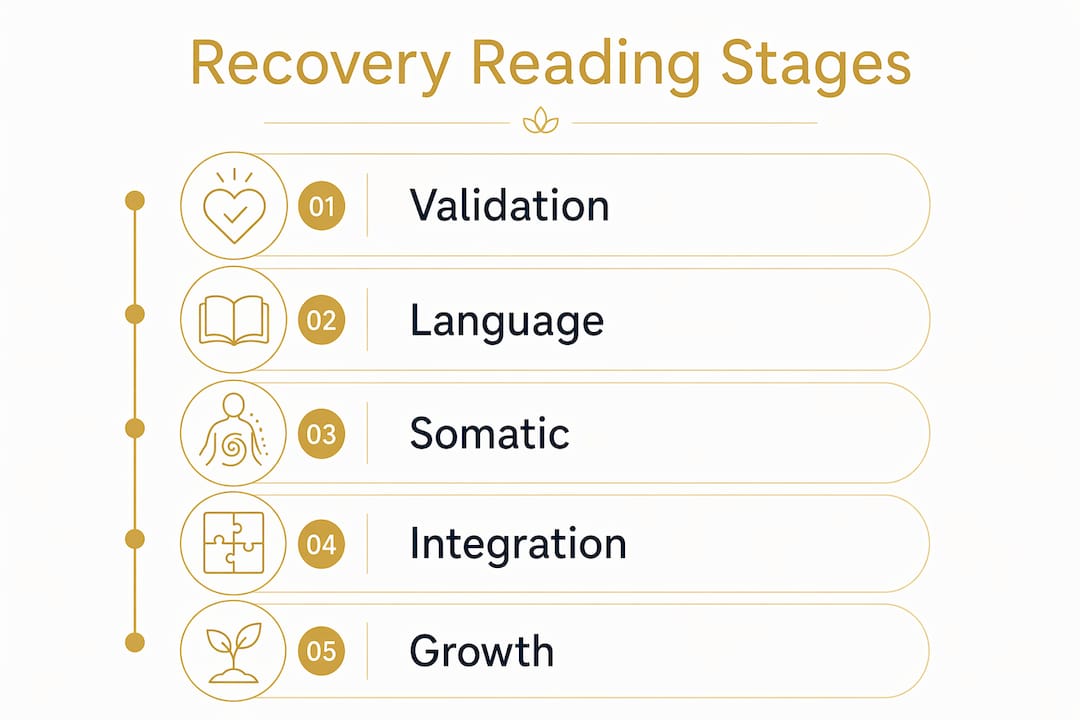
Browse the full recovery book list and pick the title that matches your current stage. Then book one introductory therapy session via Psychology Today to put what you read into practice.
| Resource | Best for | Format | Evidence base | Cost |
|---|---|---|---|---|
| Smartreadshub | Sequenced psychoeducation, therapy prep | Curated blog + book lists | Trauma-informed, clinician-vetted selections | Free to browse |
| WE Survive Abuse | Choosing the right provider type | Article / guide | Survivor-centered, clinical distinctions | Free |
| Psychology Today directory | Finding local or telehealth therapists | Clinician directory | Licensed, filterable by specialty | Varies by clinician |
| The Body Keeps the Score (Bessel van der Kolk) | Understanding body-based trauma impacts | Book | Clinical, widely cited | Paid |
| Complex PTSD (Pete Walker) | Rebuilding self-trust, managing inner critic | Book / workbook | Trauma-informed | Paid |
| Will I Ever Be Free of You? (Karyl McBride) | Narcissistic relationship endings, boundaries | Book | Psychoeducational | Paid |
| Psychopath Free (Jackson MacKenzie) | Early-stage pattern recognition | Book / memoir | Peer-validated, accessible | Paid |
Body-based modalities, specifically EMDR, IFS, and Somatic Experiencing, address nervous-system dysregulation more directly than cognitive reframing alone. When vetting any program or online community, ask whether licensed clinicians are on the team, how the program handles difficult feedback, and what support exists after it ends. The CounterProject’s safe-seeking toolkit offers a practical red-flags checklist for evaluating online groups before you join.
This article is general information, not professional advice. Confirm resources and treatment options with a licensed clinician for your specific situation.
Key Takeaways
Sequencing recovery resources by stage, starting with books for language and validation before adding somatic work and therapy, produces better outcomes than consuming everything at once.
| Point | Details |
|---|---|
| Start with language | Use psychoeducational books like Psychopath Free or Will I Ever Be Free of You? before moving to body-based work. |
| Match provider to need | Coaches vs. therapists vs. psychologists serve different functions; only licensed clinicians treat trauma. |
| Prioritize somatic modalities | EMDR, IFS, and Somatic Experiencing address nervous-system dysregulation that books alone cannot resolve. |
| Vet every community | Check for licensed oversight, titrated content, and a post-program plan before joining any online group. |
| Use Smartreadshub to sequence | Smartreadshub’s curated lists map books to recovery stages, helping you read in the right order and prepare for therapy. |