
Here are 10 essential science-fiction books written by women, each with a one-line note on who it’s for. This shortlist spans canon to contemporary, political to playful, and single volumes to bingeable series.
- The Left Hand of Darkness — Ursula K. Le Guin: for readers who want a slow, anthropological meditation on gender and society
- The Handmaid’s Tale — Margaret Atwood: for anyone who needs a sharp, unsettling look at theocratic patriarchy
- Parable of the Sower — Octavia E. Butler: for readers who want prescient climate-and-social-collapse SF with a fierce protagonist
- Ancillary Justice — Ann Leckie: for fans of political space opera with a genuinely disorienting take on identity and empire
- All Systems Red (Murderbot Diaries) — Martha Wells: for readers who want a quick, funny, surprisingly emotional novella about an anxious security robot
- Gideon the Ninth — Tamsyn Muir: for readers who want necromancers, locked-room mysteries, and relentless wit in one package
- The Fifth Season — N. K. Jemisin: for readers ready for a structurally bold, emotionally devastating climate-apocalypse epic
- Who Fears Death — Nnedi Okorafor: for readers who want post-apocalyptic African mythology woven into a coming-of-age story
- The Female Man — Joanna Russ: for readers who want a formally experimental, angry, and still-relevant feminist thought experiment
- Cinder — Marissa Meyer: for younger readers or anyone who wants a fast, accessible sci-fi fairy-tale retelling
Smartreadshub curates reading lists across fiction and nonfiction for readers who want books that genuinely help them think, feel, and recover. This list is one of them.
Key Takeaways
Women-authored science fiction spans every subgenre and era, and the strongest entry point depends entirely on how much time you have and what kind of discomfort you’re willing to sit with.
| Point | Details |
|---|---|
| Start with a novella | All Systems Red by Martha Wells is 160 pages and a reliable first test for the genre. |
| Use awards as a filter | Hugo, Nebula, and Locus nominations reliably identify the most critically recognized titles by women. |
| Match mood to subgenre | Angry political SF (Atwood, Russ) differs sharply in tone from lyrical mythic SF (Okorafor, Le Guin). |
| Series need a plan | The Locked Tomb and Broken Earth trilogies must be read in order; Murderbot novellas can be sampled individually. |
| Smartreadshub curates further | The Smartreadshub books landing page links reading lists across fiction and nonfiction for readers who want more. |
Table of Contents
- The best women science fiction recommendations: classics and canon
- Feminist and political SF: books that interrogate gender, power, and society
- Space opera and epic: large-scale stories and inventive worldbuilding
- AI, robots, and near-future SF: smart, smaller-scale reads
- Contemporary, boundary-pushing releases by women
- How to read series in the right order
- How to pick your next book from this list
- Why women’s voices have always mattered in science fiction
- Where to buy or borrow these books in the US
- How to spot feminist and political themes in women’s SF
- Films and TV adaptations worth watching alongside these books
- An editorial perspective on why this list matters
- Smartreadshub has more curated reading lists for you
- Sources
The best women science fiction recommendations: classics and canon
The books that built the genre’s feminist foundation are still the sharpest entry points. They hold up not because they’re assigned reading, but because the questions they ask have never been fully answered.
| Title | Author | Notable Award or Recognition |
|---|---|---|
| The Left Hand of Darkness | Ursula K. Le Guin | Hugo Award, Nebula Award |
| The Handmaid’s Tale | Margaret Atwood | Arthur C. Clarke Award, Booker Prize shortlist |
| Parable of the Sower | Octavia E. Butler | Locus Award; Butler: Hugo, Nebula, MacArthur Fellow |
| Frankenstein | Mary Shelley | Widely credited as the first science-fiction novel |
| The Female Man | Joanna Russ | Retrospective Hugo nominee; Nebula-winning author |
Ursula K. Le Guin’s The Left Hand of Darkness (1969) remains the gold standard for SF that uses an alien world to interrogate human assumptions. The planet Gethen has no fixed gender, and Le Guin uses that single premise to pull apart everything readers take for granted about identity, politics, and loyalty. Her official site documents the full scope of a career that reshaped what literary SF could do.
Octavia E. Butler is the other pillar. Parable of the Sower follows Lauren Olamina through a near-future California collapsing under climate chaos and economic failure. Butler won both the Hugo and Nebula, received a MacArthur Fellowship, and the PEN Lifetime Achievement Award. Her work sits at the intersection of survival, spirituality, and systemic critique in a way no other author has quite replicated.
Margaret Atwood’s The Handmaid’s Tale needs little introduction, but one thing often understated: Atwood insisted every detail in the novel had a real-world historical precedent. That discipline is what makes it feel less like dystopia and more like extrapolation.
Feminist and political SF: books that interrogate gender, power, and society
These books use speculative premises as scalpels. They’re not comfortable reads, but they’re precise ones.
- The Handmaid’s Tale — Margaret Atwood: a theocratic near-future where women are reduced to reproductive function. Content warning: sexual violence, forced servitude. Best for readers who want political allegory with literary craft.
- The Female Man — Joanna Russ: four versions of the same woman across four parallel worlds, each shaped by different gender politics. Formally strange, deliberately confrontational, and still startling. Content warning: violence, misogyny depicted critically.
- Herland — Charlotte Perkins Gilman: a 1915 utopian novel about an all-female society discovered by three male explorers. Dated in places, but foundational for understanding where feminist SF began.
- The Power — Naomi Alderman: women develop the ability to deliver electric shocks, and the world’s power structures flip overnight. A thought experiment about whether power corrupts regardless of who holds it. Content warning: violence, abuse.
- Alice Sheldon (writing as James Tiptree Jr.): Sheldon published under a male pseudonym for years, and her short fiction, particularly “The Screwfly Solution” and “Houston, Houston, Do You Read?”, remains some of the most disturbing and brilliant feminist SF ever written. The anthology The Future Is Female! from the Library of America collects canonical short fiction by women including Sheldon, making it an efficient sampler for readers new to this tradition.
Pro Tip: Feminist SF often works as a thought experiment first and a story second. If a premise feels extreme, that’s intentional. Ask what assumption the author is testing, not just what’s happening to the characters. Elana Gomel’s critical essays on women’s SF offer useful interpretive frameworks for readers approaching these texts for the first time.
Space opera and epic: large-scale stories and inventive worldbuilding
Ann Leckie’s Ancillary Justice is the obvious starting point for anyone who wants political space opera written by a woman. It won the Hugo, Nebula, and Arthur C. Clarke Award in the same year, which almost never happens. The premise is genuinely disorienting: the narrator is a soldier who used to be a starship, a distributed AI consciousness now reduced to a single body, navigating an empire built on colonization and enforced cultural assimilation. Start with Ancillary Justice, then move to Ancillary Sword and Ancillary Mercy to complete the Imperial Radch trilogy. The first book works as a standalone if you want to test the waters before committing.
For readers who want something even more sprawling, N. K. Jemisin’s Broken Earth trilogy (The Fifth Season, The Obelisk Gate, The Stone Sky) is the most structurally ambitious SF series of the past decade. Jemisin won the Hugo Award for Best Novel three consecutive years, one for each book in the trilogy. Her author background in psychology and counseling informs the series’ emotional precision: these are books about trauma, survival, and the cost of being useful to a system that treats you as a tool. The second-person narration in The Fifth Season is alienating at first and then devastating once you understand why she chose it.
Marissa Meyer’s Lunar Chronicles (starting with Cinder) occupies a different register entirely: YA-accessible, fast-paced fairy-tale retellings set in a future where Earth is threatened by a lunar monarchy. Cinder is a cyborg Cinderella story, and it moves. The series runs four books plus a prequel novella, and each volume introduces a new fairy-tale protagonist. Best for readers who want genre fun over literary weight.
AI, robots, and near-future SF: smart, smaller-scale reads
Martha Wells’s Murderbot Diaries is the best argument for novellas as a format. All Systems Red, the first entry, runs roughly 160 pages and introduces a part-human, part-robot security construct that has hacked its own governor module, technically making it free, but mostly just wants to watch TV serials and avoid human interaction. It’s funny, anxious, and unexpectedly moving.
- All Systems Red — Martha Wells: start here. One sitting, low commitment, high payoff. Tone: dry humor with genuine emotional undercurrent.
- Artificial Condition — Martha Wells: the second Murderbot novella, slightly longer, digs deeper into the protagonist’s past. Read after All Systems Red.
- Binti — Nnedi Okorafor: a short novella about a young Himba woman who leaves her family to attend an interstellar university. It won the Hugo and Nebula. Tone: lyrical, tense, culturally specific in ways most SF is not. Okorafor’s work consistently expands the geographic and cultural frame of the genre.
- The Long Way to a Small, Angry Planet — Becky Chambers: near-future found-family SF set on a tunneling ship. Tone: warm, low-stakes, character-driven. For readers who want SF that feels like a comfort read.
- Ancillary Justice — Ann Leckie: also fits here for its AI-identity premise, though the scale is much larger than the others on this list.
For readers who want darker near-future territory, the best dystopian horror novels list includes several titles that pair well with the political SF picks above.
Contemporary, boundary-pushing releases by women
N. K. Jemisin and Nnedi Okorafor are the two names that come up most often when readers ask which contemporary women authors are reshaping SF. Jemisin’s Broken Earth trilogy is the critical consensus pick: three consecutive Hugo wins, a psychology-informed approach to trauma and systemic oppression, and a narrative structure that refuses to let readers stay comfortable. Her author page notes a background in counseling, which shows in how precisely she renders characters under sustained psychological pressure.
Okorafor’s Africanfuturist work draws on Nigerian mythology, post-colonial history, and speculative biology in ways that feel genuinely unlike anything in the Western SF tradition. Who Fears Death is her most ambitious novel: brutal, mythic, and set in a post-apocalyptic Sudan. She has received Hugo, Nebula, World Fantasy, Locus, and Lodestar awards across her career.
Tamsyn Muir’s The Locked Tomb series (starting with Gideon the Ninth) is the strangest entry on this list and possibly the most fun. Necromancers in space, locked-room murder mystery, and a narrator whose voice is so distinct it reads like nothing else in the genre. The series has developed a devoted following and won the Locus Award. It rewards readers who enjoy unreliable narrators and dense lore.
Award-winning female authors across Hugo, Nebula, and Locus categories offer a practical discovery signal: if a book by a woman has won or been nominated for multiple major awards, it has almost certainly earned the attention.
How to read series in the right order
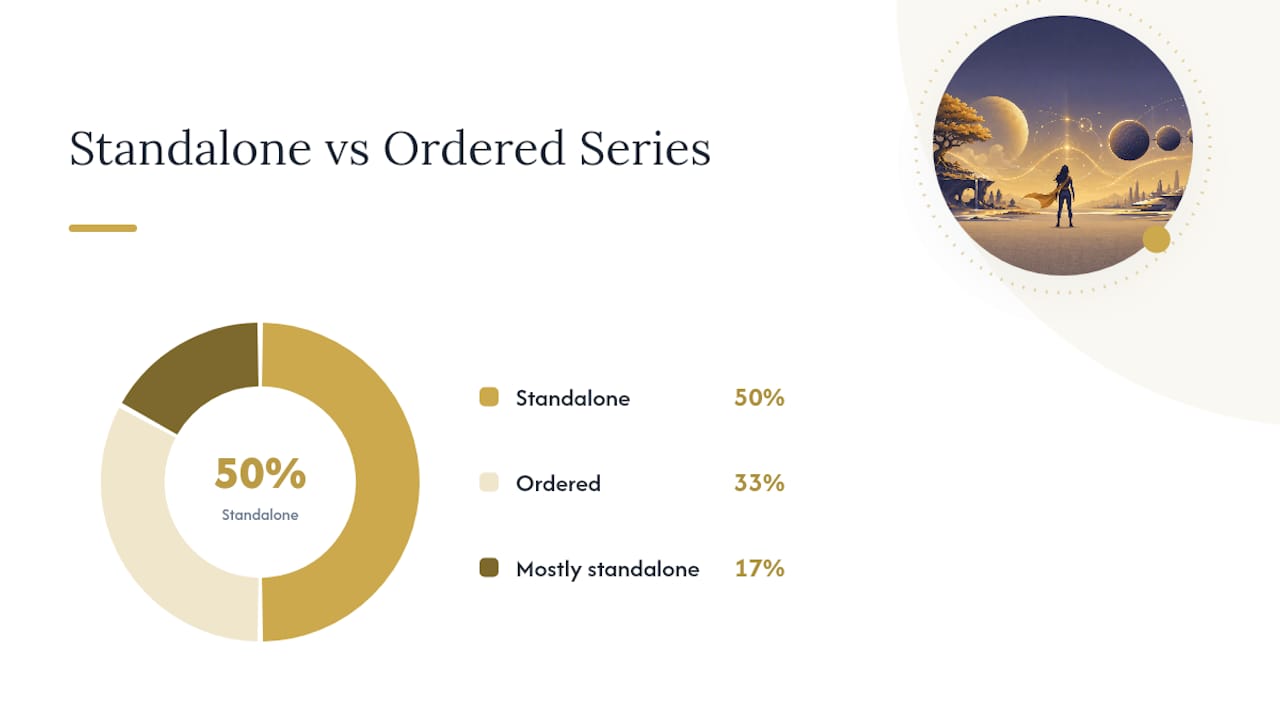
| Series | Author | Start With | Standalone? |
|---|---|---|---|
| Imperial Radch | Ann Leckie | Ancillary Justice | Yes, Book 1 works alone |
| Murderbot Diaries | Martha Wells | All Systems Red | Yes, each novella is accessible |
| The Locked Tomb | Tamsyn Muir | Gideon the Ninth | No, books build on each other |
| Parable series | Octavia E. Butler | Parable of the Sower | Yes, Book 1 is complete |
| Broken Earth | N. K. Jemisin | The Fifth Season | No, trilogy must be read in order |
| Lunar Chronicles | Marissa Meyer | Cinder | Mostly yes, each book has a new lead |
For binge reading, Murderbot is the easiest series to fall into: the novellas are short, the tone is consistent, and Wells releases them frequently enough that you rarely wait long between entries. The Locked Tomb demands more patience; Muir’s plotting is dense and the payoff is cumulative. Start Gideon the Ninth knowing you’re signing up for at least three books.
How to pick your next book from this list
- Start with mood. Want something funny and fast? Go to Murderbot (All Systems Red). Want something that will sit with you for days? Go to The Fifth Season or Parable of the Sower. Want something formally strange and politically charged? The Female Man or The Left Hand of Darkness.
- Consider your time. Novellas (Murderbot, Binti) run 150–200 pages and fit a weekend. Single-volume classics (The Handmaid’s Tale, Ancillary Justice) run 300–400 pages. Full trilogies (Broken Earth, Imperial Radch) are a multi-week commitment.
- Match the theme. Power and gender: Atwood, Russ, Alderman. Identity and AI: Wells, Leckie. Climate and survival: Butler, Jemisin. Mythology and culture: Okorafor, Muir.
Pro Tip: Before buying a series, sample the first chapter via your library’s ebook app (Libby or OverDrive) or the audiobook preview on your preferred platform. Tamsyn Muir’s voice is an acquired taste; Martha Wells’s is immediately accessible. Knowing which you’re dealing with saves money and frustration.
For readers who want short dystopian novels that can be finished in a single sitting, the Murderbot novellas and Binti are the strongest options on this list.
Why women’s voices have always mattered in science fiction
The assumption that SF was historically a male genre is a myth the evidence doesn’t support. Mary Shelley wrote Frankenstein in 1818. Ursula K. Le Guin and Joanna Russ were publishing landmark work in the 1960s and 70s. Alice Sheldon was winning Hugo Awards under a male pseudonym because the field’s gatekeepers assumed a woman couldn’t write that well. The Library of America’s The Future Is Female! anthology collects 25 stories from the pulp era onward that prove women were central to the genre’s development long before the current wave of recognition.
What’s changed is visibility. Octavia E. Butler’s MacArthur Fellowship and PEN Lifetime Achievement Award positioned her as a canonical literary figure, not just a genre writer. N. K. Jemisin’s three consecutive Hugo wins made it impossible to treat women’s SF as a niche. Nnedi Okorafor’s Africanfuturist work has expanded what the genre’s geographic imagination is even allowed to be.
N. K. Jemisin’s background in psychology and counseling is one concrete example of how non-literary training shapes this interior focus. Her characters don’t just survive systems; they metabolize them psychologically in ways that feel true.
Where to buy or borrow these books in the US
- Public library: Check your local catalog first. Most of these titles are available as physical books, ebooks, or audiobooks through library systems. HCLib and similar systems offer author-alert features so you can track new releases.
- Libby / OverDrive: Free with a library card. Both apps carry ebooks and audiobooks for nearly every title on this list. The audiobook for All Systems Red is particularly good.
- Bookshop.org: Purchases support independent bookstores. A strong choice if you want to own the book and prefer not to route money through large retailers.
- Local indie and women-owned bookstores: Worth checking. Many carry staff-recommended shelves that surface lesser-known titles by women authors. Smartreadshub’s discovery guide for books by women authors includes tips on finding curated sources.
- Used books: ThriftBooks and Better World Books carry most of these titles at low cost. Good option for sampling classics before committing to a full series.
How to spot feminist and political themes in women’s SF
For readers new to this subgenre, the themes aren’t always labeled. Here’s what to look for.
Who controls reproduction and bodies? Atwood’s The Handmaid’s Tale, Butler’s Parable series, and Russ’s The Female Man all center bodily autonomy as a political question. When a society in a novel regulates who can bear children, or who owns the labor of care, that’s the author’s argument in speculative form.
Who is treated as a tool? Leckie’s Ancillary Justice and Wells’s Murderbot both feature protagonists who were literally built to serve. The political question is whether personhood can be granted or revoked by the powerful. When a character has to argue for their own right to exist, that’s feminist SF doing what it does best.
Whose knowledge counts? Le Guin’s Gethenians, Okorafor’s Himba protagonist in Binti, and Jemisin’s orogenes in the Broken Earth trilogy all possess knowledge or ability that the dominant culture either fears or exploits. Watch for who gets to be the expert in the world of the novel.
Tone as a signal. Angry, satirical prose (Russ, Atwood) usually signals direct political critique. Lyrical or mythic prose (Okorafor, Le Guin) often signals a more anthropological approach. Humor (Wells, Muir) can be the sharpest political tool of all because it lowers the reader’s defenses before making the argument.
Films and TV adaptations worth watching alongside these books
Several of the most recommended titles on this list have strong screen adaptations that reward watching either before or after reading.
The Handmaid’s Tale (Hulu, 2017–present) is the most prominent. The first season tracks the novel closely and is widely considered one of the best literary adaptations in recent TV history. Seasons beyond the first are original material, so treat them as a companion rather than a continuation of Atwood’s story.
Parable of the Sower has been in development as a film and stage production for years. Octavia E. Butler’s estate has been protective of the adaptation rights, so no major screen version exists yet, but the novel’s influence is visible in films like Beasts of the Southern Wild and the TV series Station Eleven, both of which share its interest in community survival under collapse.
Annihilation (2018, dir. Alex Garland) is not an adaptation of any book on this list, but it shares DNA with Le Guin’s anthropological SF and Okorafor’s mythic approach. Readers who respond to The Left Hand of Darkness or Who Fears Death will likely find it rewarding.
Kindred (FX/Hulu, 2022) adapts Octavia E. Butler’s time-travel novel about a Black woman pulled back to antebellum Maryland. It’s a different Butler work than Parable, but it’s a strong introduction to her themes for viewers who want to start with screen before committing to the page.
For readers drawn to darker speculative fiction, the authors like Cormac McCarthy list covers bleak literary SF that pairs well with the political titles above.
An editorial perspective on why this list matters
The books on this list aren’t just good science fiction. Several of them are the reason readers who felt alienated by the genre’s older, more militaristic tradition found their way back to it. Atwood, Butler, and Le Guin built worlds that took social and psychological reality seriously at a time when much of the field was more interested in hardware than in people.
What strikes me most, reading across this list, is how often the central political argument arrives through a character’s interior experience rather than through plot mechanics. Jemisin’s orogene protagonist doesn’t explain systemic oppression; she lives it, and the reader metabolizes it alongside her. That’s a craft choice, and it’s one that women writers in this genre have been making for decades, often without the recognition the work deserved.
The real role of book recommendations for women is sometimes about more than finding a good read. Fiction that names power structures, that centers women’s survival and agency, can function as a kind of clarity. Readers navigating difficult situations often find that a well-chosen novel articulates something they couldn’t quite say themselves.
Smartreadshub has more curated reading lists for you
Smartreadshub is built for readers who want books that do real work, not just pass the time. The curated books landing page collects reading lists across fiction and nonfiction, including titles that help readers recognize emotional manipulation signs, understand toxic relationship patterns, and find their footing after difficult experiences. Science fiction by women is part of that library because the best of it does exactly what recovery reading should: it names the dynamics, centers the survivor, and refuses easy resolution.

If this list resonated, the discovery guide for books by women authors is the natural next step. It covers how to find more titles by era, theme, and mood, with links to the most useful curated sources.
Sources
- Parable of the Sower — Seven Stories Press
- The Future Is Female! 25 Classic Science Fiction Stories by Women — Library of America
- Home — Octavia E. Butler