
If you’re rebuilding your sense of safety after a toxic relationship, start with these four: The Polyvagal Theory by Stephen W. Porges for the science, Polyvagal Theory in Therapy by Deb Dana if you’re seeing a clinician or want clinical depth, Anchored by Deb Dana if you want the most accessible entry point, and The Polyvagal Theory Workbook for Trauma by Arielle Schwartz if you want structured exercises rather than theory. Add Polyvagal Exercises for Safety and Connection for daily practice once you’ve got the framework down.
Here’s the shortlist, with who each book actually serves:
- The Polyvagal Theory (Porges) — the original text. Best for readers who want the neuroscience straight from its source, or clinicians building a theoretical foundation.
- The Pocket Guide to the Polyvagal Theory (Porges) — a shorter, less academic companion. Best for readers who want Porges’s ideas without wading through the full research volume.
- Polyvagal Theory in Therapy (Dana) — a clinician’s manual. Best for therapists and counselors who want session-ready tools.
- Anchored (Dana) — the general-reader translation. Best for beginners who want to understand their own nervous system without clinical jargon.
- Polyvagal Practices and Polyvagal Exercises for Safety and Connection (Dana) — practice-first books. Best for anyone who already grasps the theory and wants daily exercises.
- The Polyvagal Theory Workbook for Trauma (Schwartz) — hands-on and body-based. Best for people actively working through trauma who want structure, not just concepts.
The nervous system doesn’t calm down because you understand it intellectually. It calms down through repetition: cues of safety, repeated often enough, in a body that’s ready to receive them. That’s the real argument for reading a foundational text and a practice book together, not one instead of the other.
Key Takeaways
Reading a foundational Polyvagal text alongside a practice-based or workbook title produces more usable results than reading theory or practice alone.
| Point | Details |
|---|---|
| Start with the right entry point | Beginners should read Anchored or the Pocket Guide before attempting Porges’s full academic text. |
| Pair theory with practice | Combine a foundational book with a practices book or workbook rather than reading one type exclusively. |
| Workbooks require paper format | Choose paperback for Schwartz’s workbook since the exercises require writing directly on the page. |
| Sequence exercises gradually | Adding too many somatic practices too quickly can increase dysregulation for readers with complex trauma histories. |
| Smartreadshub connects theory to relational trauma | Our recommendations link Polyvagal reading to specific patterns like gaslighting and manipulation, not generic stress relief. |
Table of Contents
- Polyvagal Theory Books: Full Shortlist and Comparison
- How Do You Choose the Right Polyvagal Book?
- What Order Should You Read These Books In?
- Is Polyvagal Theory Scientifically Solid?
- Where Should You Buy These Books?
- Why Smartreadshub Recommends These Specific Titles
- Explore Smartreadshub’s Curated Book Collection
- Sources
Polyvagal Theory Books: Full Shortlist and Comparison
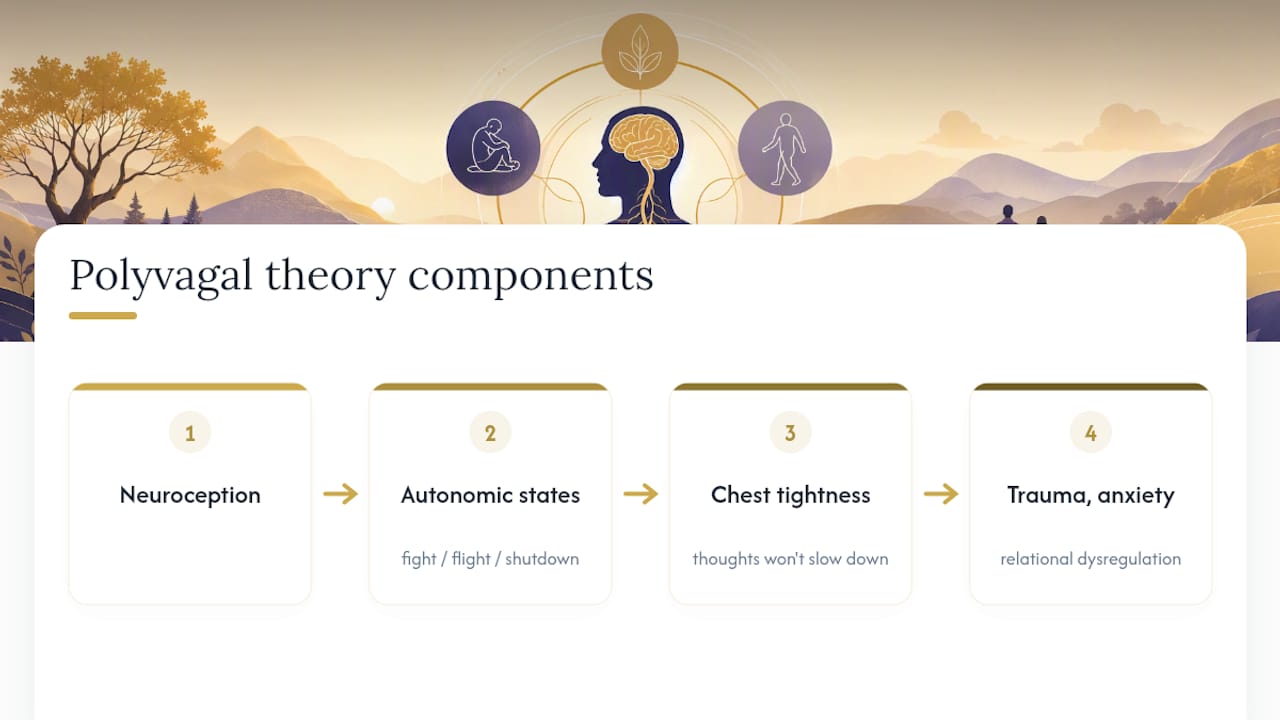
Polyvagal Theory started as an academic framework, but it’s become one of the most widely cited lenses for understanding trauma, anxiety, and relational dysregulation. The books built around it split into two camps: the ones explaining the science, and the ones translating that science into something you can practice at 11 p.m. when your chest is tight and your thoughts won’t slow down. Below is what each title actually offers.
The Polyvagal Theory: Neurophysiological Foundations of Emotions, Attachment, Communication, and Self-regulation — Stephen W. Porges. This is the origin text, first published in 2011 through W. W. Norton’s academic imprint, and it compiles decades of Porges’s own research into one volume. It’s dense. Porges wrote it for researchers and clinicians, not casual readers, and Harvard Book Store’s listing frames it as essential reading for anyone doing serious psychobiological work rather than a weekend self-help read. If you want the theory in the words of the person who developed it, this is the only place to get that.
The Pocket Guide to the Polyvagal Theory — Stephen W. Porges. Porges wrote this as a distillation of his own ideas for readers who found the original too technical. It covers the same core concepts (the vagus nerve, the three autonomic states, neuroception) in plainer language and a fraction of the page count. Clinicians often assign this one to clients as a bridge into the theory before recommending Deb Dana’s clinical work.
Polyvagal Theory in Therapy — Deb Dana. Dana is the clinician most responsible for turning Porges’s research into something therapists can use in a session. This book gives practitioners concrete assessment tools, including the “personal profile map” she developed to help clients track their own autonomic states. It’s written for professionals, but motivated self-help readers who want clinical-grade detail read it too.

Polyvagal Practices — Deb Dana. A shorter, exercise-driven follow-up. Where the therapy book explains frameworks, this one hands you specific practices: tracking triggers and glimmers, building a personal “map” of what pulls you into fight, flight, or shutdown. It works well as a second read once you’ve absorbed the basics.
Polyvagal Exercises for Safety and Connection: 50 Client-Centered Practices — Deb Dana. Exactly what the title says: 50 discrete exercises, often used by therapists between sessions or by readers doing self-directed work. It’s less about theory and more a reference you flip through when you need a specific tool for a specific moment.
Anchored: How to Befriend Your Nervous System Using Polyvagal Theory — Deb Dana. This is Dana’s general-audience book, and it’s the one Smartreadshub recommends most often to readers who are new to the theory and not looking for clinical training. It keeps the science but drops the jargon, and it’s built around the idea of building a “glimmers” practice, small moments that cue safety to the nervous system.
The Polyvagal Theory Workbook for Trauma — Arielle Schwartz. Schwartz is a clinical psychologist specializing in trauma recovery, and this workbook leans hard into structured, body-based activities rather than narrative explanation. It’s designed for readers actively processing trauma who want prompts, exercises, and worksheets rather than more reading about the theory itself. If you’ve read Porges or Dana and thought “okay, now what do I actually do,” this is the answer.
A few buying notes worth flagging before you click over to a retailer. Porges’s original text has stayed in print largely unchanged since 2011, so there’s no “new edition” to chase, but check the copyright page anyway if you’re buying used. Dana’s books have expanded over the past several years, so confirm you’re getting her most recent title rather than an early printing missing later exercises. Some links in this article are affiliate links, meaning Smartreadshub may earn a commission if you purchase through them, at no extra cost to you.
How Do You Choose the Right Polyvagal Book?
Match the book to what you’re actually trying to do, not to what sounds most impressive on a shelf. A workbook won’t satisfy someone craving the underlying science, and a 336-page academic text will exhaust someone who just wants a breathing exercise before a hard conversation with an ex.
Run through these criteria before you buy:
- Your goal: Are you trying to understand why your body reacts the way it does, or are you trying to change how it reacts? The first points you toward Porges or Dana’s theory books; the second points you toward Schwartz’s workbook or Dana’s practice titles.
- Your background: If you’re not familiar with basic nervous system vocabulary (vagus nerve, sympathetic and parasympathetic states), start with the Pocket Guide or Anchored, not the original Polyvagal Theory.
- Time commitment: The academic text is a multi-week read for most people. A workbook or practices book can be used in five-minute sessions.
- Format preference: Workbooks need to be paperback. You’re writing in them. Theory books work fine as ebooks or audiobooks if you process information better by listening.
- Whether you’re working with a therapist: If you are, ask which book they use in session. Many clinicians build homework around Dana’s Polyvagal Theory in Therapy or specific exercises from the 50 Client-Centered Practices book.
Before buying, ask yourself these questions:
- Do I want clinical detail, or do I want daily exercises I can start tonight?
- Am I dealing with a specific relational trauma (gaslighting, a toxic partnership, narcissistic manipulation), or general anxiety and stress?
- Do I need an audiobook because I process better by listening, or a paperback because I’ll be underlining and writing in the margins?
- Is there a newer edition or a more recent title from the same author that supersedes the one I’m looking at?
- Am I buying this to read alone, or to use alongside therapy?
Pro Tip: Pick one primary goal (understand the theory, or start practicing) and one secondary goal (pair it with a related read, like something from Smartreadshub’s attachment styles guide). Buying two books that serve the same goal is the most common mistake readers make here.
What Order Should You Read These Books In?
The mistake most people make is reading three practice books before ever touching the theory, then wondering why the exercises don’t stick. Understanding why your body responds the way it does tends to make the exercises land better, even if the theory chapters are slower going.
For a complete beginner with no clinical background:
- Start with The Pocket Guide to the Polyvagal Theory or Anchored — either gets you the core concepts without academic density.
- Move to Polyvagal Exercises for Safety and Connection to start applying what you just learned.
- If trauma is central to your experience, add The Polyvagal Theory Workbook for Trauma for structured, guided work.
For someone in active recovery from a toxic or manipulative relationship:
- Read Anchored first. Dana’s framing of safety cues and “glimmers” is directly useful for anyone rebuilding trust after gaslighting or emotional manipulation.
- Pair it immediately with the Schwartz workbook. Theory without structured exercise tends to stay abstract for trauma survivors specifically.
- Follow with Polyvagal Practices once the workbook exercises feel familiar, to widen your toolkit.
For a clinician or serious student of the theory:
- Read The Polyvagal Theory (Porges) in full, even the dense chapters.
- Follow with Polyvagal Theory in Therapy (Dana) to see how the theory translates into clinical practice.
- Keep 50 Client-Centered Practices on hand as a working reference for sessions.
Reasonable pairings: Porges’s foundational text with Dana’s practice books gives you science plus application. Anchored with the Schwartz workbook gives you accessible theory plus structured trauma work. Don’t try to read more than one theory-heavy book at a time. Give each title two to four weeks if you’re also doing the exercises, not just reading passively, and expect practice books to be revisited for months rather than read once and shelved.
Is Polyvagal Theory Scientifically Solid?
Porges’s core claim is that the autonomic nervous system operates in a hierarchy of three states: a calm, socially engaged state; a mobilized fight-or-flight state; and a shutdown, freeze-type state, with the vagus nerve central to how the body shifts between them. A summary of Porges’s research describes decades of work connecting these autonomic states to trust, intimacy, and self-regulation, which is why the theory has been adapted so widely for trauma, anxiety, depression, and autism-related interventions.
Autonomic states aren’t just background biology. They shape whether you can actually trust someone standing in front of you, whether your voice softens or tightens, whether you can hold eye contact. That’s the piece Porges’s research adds that pure talk therapy sometimes misses.
The theory isn’t without its critics, and it’s worth knowing this before treating every claim in a self-help adaptation as settled science. Some researchers argue the specific neuroanatomical mechanisms Porges proposes are more complicated, and less cleanly hierarchical, than the popular explanations suggest. Practice books written for general audiences often simplify these mechanisms further, which makes them more usable but also less precise than the original research.
There’s a broader, related body of work worth knowing about too. Research on the vagus nerve’s role in neuroimmunology shows the nerve’s relevance extends past psychology into inflammation and physical health, a reminder that “nervous system healing” claims in popular books sometimes stretch further than the underlying research supports. Treat physical-health claims in trade books with more skepticism than the psychological framework itself, which has a stronger evidence base behind it.
One practical point clinicians raise often: dysregulated responses (freeze, shutdown, hypervigilance) aren’t malfunctions. They’re adaptive defenses your body learned during real danger. The goal of most Polyvagal-informed work isn’t forcing yourself to “calm down,” it’s supporting graded transitions between states.
Pro Tip: If a practice makes you feel more agitated rather than less, stop and go slower. Sequencing exercises gradually matters more than doing all of them at once, especially if you have a complex trauma history.
Where Should You Buy These Books?
Availability is straightforward. All seven titles are widely stocked across major formats, though a few have specific quirks worth knowing before you order.
- Major retailers (Amazon, Barnes & Noble, Bookshop.org) carry every title on this list in paperback and ebook.
- Independent bookstores often special-order the Porges academic text if it’s not on the shelf, since it’s less of a mainstream stock item than Dana’s or Schwartz’s titles.
- Audiobook platforms (Audible, Libro.fm) carry Anchored and some of Dana’s other titles, but workbooks like Schwartz’s don’t translate to audio, since you need the page to write on.
- Used copies are easy to find for the Porges text since it’s been in print since 2011, and buying used here saves money without sacrificing content, since the material hasn’t changed.
- Library systems frequently stock the more popular titles (Anchored, Polyvagal Theory in Therapy) if you want to sample before buying.
Match format to use-case rather than habit. A workbook needs to be paper, full stop, since the exercises require writing and the pages are meant to be marked up. Theory-heavy books work well as audiobooks if you retain information better by listening during a commute. Practice-focused books land somewhere in between: useful in either format, though many readers prefer paperback so they can flag specific exercises to return to later. Before buying, double-check you’re getting the current printing, particularly for Dana’s titles, since her practice books have expanded over multiple editions.
Why Smartreadshub Recommends These Specific Titles
Every book on this list earned its spot by clearing two bars: does it hold up as legitimate science or clinical practice, and does it actually help someone rebuild a functioning nervous system after real relational harm. That second bar matters more to us than it might to a general books blog, because it’s the lens our entire site is built around.
Smartreadshub exists to help readers recognize and recover from gaslighting, manipulation, and narcissistic abuse, and Polyvagal Theory keeps coming up in that work for a specific reason: it explains, in concrete biological terms, why a person who’s been chronically manipulated can feel hypervigilant, shut down, or unable to trust their own perceptions long after the relationship ends. That’s not a personality flaw. It’s an autonomic nervous system doing exactly what it was trained to do under threat. Books like Anchored and the Schwartz workbook give readers language and tools for that experience that go beyond “just relax,” which is why they sit at the top of our shortlist rather than deeper in it.
We prioritized foundational science alongside daily, usable practice, because readers rebuilding their sense of safety need both: the “why” and the “what do I do right now.” A few links in this article are affiliate links, and Smartreadshub may earn a small commission on purchases made through them. That relationship never determines which books we recommend. If a title didn’t earn its place on this list on its own merit, it wouldn’t be here regardless of any commission.
Explore Smartreadshub’s Curated Book Collection
Choosing between seven titles covering the same broad theory gets easier when you’ve already narrowed down what you’re actually recovering from. That’s where Smartreadshub does something a general bookseller can’t: we connect specific books to specific relational patterns, so you’re not guessing whether a Polyvagal title actually addresses what happened to you.

If your nervous system dysregulation traces back to a relationship involving control, blame-shifting, or made you doubt your own perceptions, start with our guide on emotional dependency patterns to understand the relational context before diving into the neuroscience. Pairing that background with a foundational Polyvagal read like Anchored or a practice-focused title tends to land harder than reading either in isolation. This article contains affiliate links, and Smartreadshub may earn a commission on qualifying purchases at no added cost to you. Check current editions and formats before you buy, then pick one foundational book and one practice or workbook title to start.
Sources
- PMC article summarizing Porges’s Polyvagal Theory
- The Polyvagal Theory – Description | W. W. Norton & Company Ltd.
- The Polyvagal Theory: Neurophysiological Foundations of Emotions, Attachment, Communication, and Self-regulation (Norton Series on Interpersonal Neurobiology) | Harvard Book Store
- Heal Your Nervous System by Linnea Passaler – Porchlight Book Company