
The most effective boundary scripts with a narcissist are short, neutral, and detached from any explanation. Say the line, then leave or stop engaging. Here are two you can use right now: “I won’t discuss this. I’m leaving now,” and “That doesn’t work for me.” Neither invites debate, and neither will land if you don’t follow through without justifying, arguing, defending, or explaining yourself afterward.
TL;DR:
- Boundaries should be brief, neutral, and strictly enforced, with scripts like “I won’t discuss this” that are followed by immediate consequences.
- Techniques such as JADE, grey rock, and broken record prevent giving narcissists material to manipulate or argue over.
- Enforcement of consequences must be specific and consistently applied, like ending calls after yelling or blocking uninvited visits.
- Practice scripts aloud and rehearse pushback to deliver boundaries confidently during high-stress encounters.
- Scripts are a form of protection but must be supplemented with safety plans and professional support if threats or physical harm occur.
Table of Contents
- Quick Boundary Scripts for Narcissists, Organized by Moment
- Why These Scripts Actually Work: JADE, Grey Rock, and Broken Record
- Word-for-Word Scripts for Gaslighting, Guilt-Tripping, and Other Common Scenarios
- How to Enforce Consequences So the Scripts Actually Stick
- Practicing Scripts Before You Need Them
- When Scripts Aren’t Enough: Red Flags and Where to Get Help
- Why Boundary Scripts Are Protection, Not Punishment
- Practice These Scripts Before You Need Them Again
- Sources
- FAQ
Quick Boundary Scripts for Narcissists, Organized by Moment
You don’t need a speech. You need the right eight words for the situation you’re standing in right now. Below are scripts grouped by what’s happening, not by who the narcissist is to you, because the moment matters more than the relationship label.
To stop an in-person escalation:
- “I’m done talking about this.” (Use when the conversation is looping.)
- “I need you to lower your voice or I’m leaving.” (Use at the first sign of yelling.)
- “We can talk when things are calm.” (Use to signal a pause, not a debate.)
To end a phone call:
- “I’m hanging up now.” (Then hang up, mid sentence if necessary.)
- “This isn’t productive. Goodbye.” (Say it once, don’t repeat it three times first.)
To limit which topics get airtime:
- “I’m not discussing my finances with you.” (Use for any off-limits subject.)
- “That’s not up for discussion.” (Works for almost anything.)
To handle an uninvited visit:
- “This isn’t a good time. You need to leave.” (Say it at the door, don’t invite them in first.)
- “I didn’t agree to this visit.” (Use when they show up assuming access.)
To respond to a text attack:
- “I won’t respond to messages like this.” (Send once, then stop replying to that thread.)
- “I’m available to talk about logistics only.” (Use for co-parenting or work threads that turn personal.)
Pro Tip: Keep your voice flat and your sentence short enough to say in one breath. A calm tone paired with a brief line is what actually reduces escalation, according to Verywell Mind’s rundown of disarming phrases. A long sentence with emotion in it gives a narcissist something to grab onto and argue with.
Why These Scripts Actually Work: JADE, Grey Rock, and Broken Record
Clinicians who work with people leaving narcissistic relationships tend to point to the same handful of techniques, and the reason they show up everywhere is that they target the actual mechanism of narcissistic conflict: engagement is the fuel.
JADE stands for Justify, Argue, Defend, Explain. Every time you do one of those four things, you hand a narcissist material to twist. The rule is simple: state the boundary, skip the reasoning.
- Don’t: “I can’t come to dinner Sunday because I already told Mark I’d help him move, and honestly I’ve been exhausted, and last time I came I ended up…”
- Do: “I can’t make Sunday. I’ll see you another time.”
That second line gives nothing to argue with. Time’s reporting on narcissistic communication notes that a short, neutral script paired with immediate follow-through consistently outperforms lengthy explanations, largely because explanations get mined for contradictions and used later.
Grey rock means making yourself conversationally boring on purpose, short answers, flat tone, no emotional reaction to bait. If someone is fishing for a reaction to fuel a fight, grey rock starves it. Broken record is repeating the exact same line without variation, no matter how the question gets rephrased.
- Question: “So you’re just going to abandon your own mother?”
- Broken record answer: “I’m not coming Sunday.” (Repeat verbatim if pushed again.)
Varying your wording each time you’re pushed actually invites more pushing, because it signals the door is still open to negotiation. Repetition, oddly, is what closes it.
BIFF (Brief, Informative, Friendly, Firm) is the written-communication version of the same principle, useful for texts, emails, and co-parenting apps where a record gets kept. A BIFF message states the fact, skips the emotion, and doesn’t invite a reply.
Closed-loop enforcement means the consequence you named actually happens, every time, without a warning round two. A boundary you’ve stated three times without consequence isn’t a boundary anymore, it’s a suggestion.
Research on interpersonal manipulation patterns identifies DARVO (deny, attack, reverse victim and offender) as a common response to being confronted, which is exactly why correcting the misrepresentation in the moment rarely helps. You end up debating the distortion instead of holding the boundary. The narcissistic abuse tactics breakdown on Smartreadshub covers how these patterns show up across different relationship types, if you want the fuller picture before you’re in the middle of one.
The practical rule set: one boundary per sentence, neutral tone, short sentences, no exclamation points, no rhetorical questions.
Word-for-Word Scripts for Gaslighting, Guilt-Tripping, and Other Common Scenarios
Different manipulation tactics call for slightly different phrasing. Here’s what to say when each one shows up, along with a consequence you can actually enforce.
Gaslighting (when your memory or perception gets challenged):
- “I remember it differently. I’m not going to debate my own memory.” (Consequence: end the conversation if they keep pushing.)
- “I know what I experienced.” (Consequence: repeat verbatim, no elaboration, up to three times, then leave.)
- “I’m going to write down what happened so I have my own record.” (Consequence: actually do it, same day, timestamped.)
Anchoring your memory in writing matters more than it sounds like it should. A journal entry, a saved text, a timestamped note, all of it becomes evidence you can trust later when someone insists your version never happened. Smartreadshub’s gaslighting phrases and record-keeping guide walks through a simple documentation habit you can start today.
Guilt-tripping (when obligation gets weaponized):
- “I hear that you’re upset. I’m still not able to do that.” (Consequence: hold the line even if they escalate the guilt.)
- “I know this disappoints you. My answer is the same.” (Consequence: don’t offer a compromise unless you actually want to.)
- “I’m not responsible for how you feel about my decision.” (Consequence: end the call if the guilt trip continues past this line.)
That short validation clause, “I hear that you’re upset”, does real work here. Time’s reporting notes that a brief acknowledgment can lower defensiveness just enough to let the actual boundary land without triggering a bigger fight.
Love-bombing after a boundary (sudden warmth, gifts, or apologies right after you set a limit):
- “I appreciate that. The boundary still stands.” (Consequence: don’t change contact rules based on one good week.)
- “Let’s see how things go over time.” (Consequence: require consistent behavior for months, not days, before loosening anything.)
Love-bombing that follows a boundary is usually short-lived, which is exactly why the consequence matters more than the script. Don’t let a nice text undo three weeks of consistent limits.
Rage or threatening behavior (safety comes first, always):
- “I’m not going to continue this conversation while you’re yelling.” (Consequence: leave the room or hang up immediately.)
- “I need to go. We’ll talk later.” (Consequence: leave, don’t announce where.)
- “I’m calling for help if this continues.” (Consequence: follow through if there’s any physical risk.)
If there’s ever a real threat of physical harm, skip the script entirely and get out. Scripts are for verbal conflict, not for danger.
Co-parenting and workplace messages (written, BIFF-style):
- “Confirming pickup is at 5pm Friday. Please confirm receipt.” (Brief, informative, no commentary.)
- “I’ll respond to scheduling questions only through this app.” (Firm limit on channel and topic.)
- “Noted. My response stands.” (Use when they reply with a guilt-laced or accusatory follow-up.)
ReplyCalmly’s guide on responding to a narcissistic co-parent has additional BIFF templates worth saving if co-parenting communication is a daily grind for you. The format works in workplace threads too, especially with a manager or colleague who twists casual conversation into leverage later.
How to Enforce Consequences So the Scripts Actually Stick
A script without a consequence is just a sentence you said once. The consequence is what makes it a boundary.
The best consequences share three traits: they’re specific, time-limited, and something you can actually measure. “I’m taking space” is vague. “I won’t answer calls for 48 hours after a screaming match” is enforceable, because you’ll know exactly when you’re keeping it and when you’re not.
| Situation | Consequence | How to enforce it |
|---|---|---|
| Repeated yelling on calls | End the call immediately, no warning after the first time | Hang up, don’t answer for 24 hours |
| Uninvited visits | Don’t open the door or let them in | Text instead, ask them to leave via message |
| Guilt-laced texts | No reply for a measured time period | Mute the thread, respond only when calm |
| Gaslighting about past events | State your memory once, then disengage | Leave the room or end the call |
| Threats or physical intimidation | Contact authorities, leave the location | Call police or a domestic violence hotline |
Documentation is what makes enforcement defensible later, particularly in custody or workplace disputes. Save texts as screenshots with visible timestamps. Keep a short journal entry after any charged interaction, date, what was said, what you did. Email yourself a summary right after a phone call so there’s a written record with a timestamp attached.
Blocking is a legitimate consequence, not an overreaction, when someone has repeatedly ignored a stated limit. Limiting visits works the same way: fewer visits, shorter visits, or visits only with another person present. Watch for “flying monkeys,” people the narcissist sends to pressure you on their behalf, and tell a small trusted circle in advance what your boundary is so they’re not caught off guard or recruited without knowing it.
If a situation escalates toward physical harm, threats, or stalking behavior, call the police or a domestic violence hotline immediately. That’s not a boundary-script situation anymore, it’s a safety situation.
Practicing Scripts Before You Need Them
Saying a boundary line out loud in your car or in front of a mirror feels ridiculous the first time. Do it anyway. The gap between knowing a script and being able to say it while your heart is pounding is enormous, and rehearsal is what closes it.
- Say the script out loud, alone, until it doesn’t feel scripted anymore.
- Role-play the pushback with a trusted friend, have them argue back the way the narcissist actually would.
- Rehearse the consequence too, not just the line, practice actually hanging up, actually walking away.
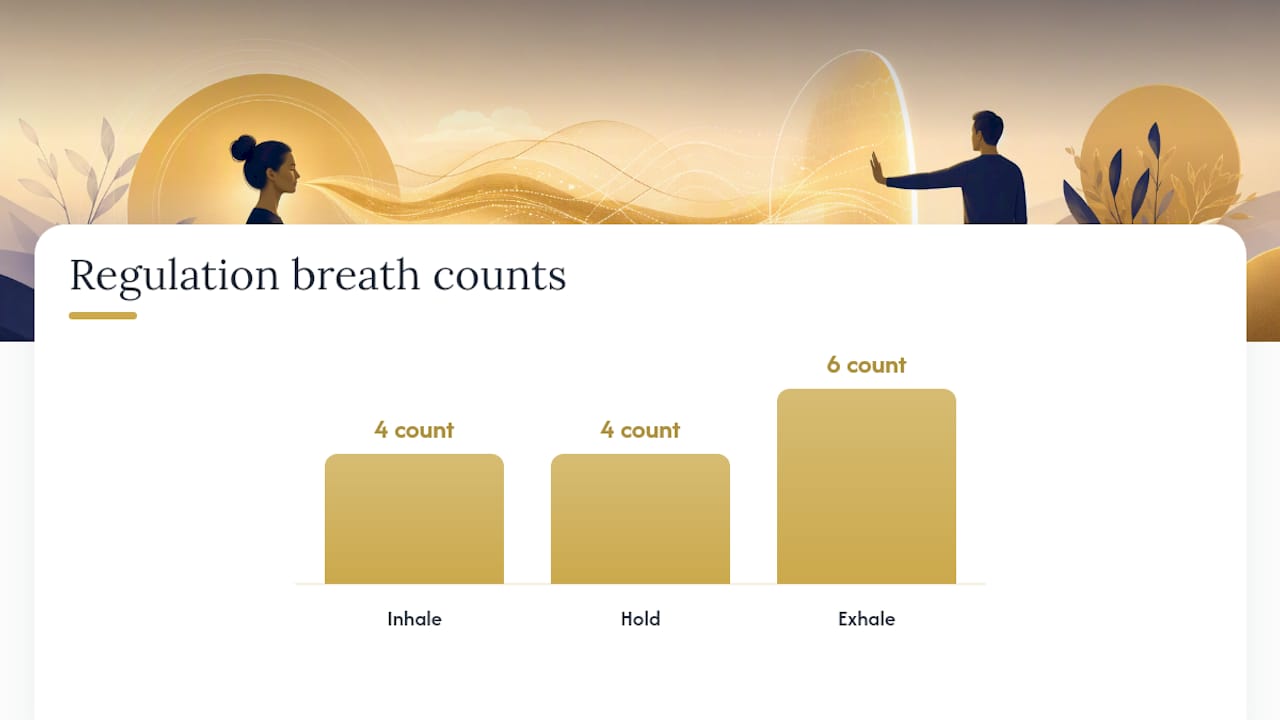
- Use a short regulation technique before a hard conversation: a 4 count inhale, 4 count hold, 6 count exhale, repeated three times.
- Keep one grounding phrase ready, something like “I only need to say one sentence,” to repeat silently if you freeze.
Research on rehearsal and stress response supports what this intuitively feels like: people who practice a statement beforehand are more likely to actually deliver it when the moment turns stressful. Rehearsing the consequence matters just as much as rehearsing the line, since the physiological jolt of actually enforcing it, hanging up, walking out, going quiet, is what most often causes people to cave and start JADEing.
Pro Tip: Practice the worst-case pushback, not the easy version. If you only rehearse the conversation going well, you’ll freeze the moment it doesn’t.
When Scripts Aren’t Enough: Red Flags and Where to Get Help
Scripts help with manipulation and conflict. They are not a safety plan for violence, and they’re not a substitute for legal or clinical support when the situation has moved past verbal conflict.
Watch for these red flags:
- Direct or implied threats of physical harm to you, your children, or pets.
- Escalating aggression that has crossed into pushing, blocking exits, or destroying property.
- Coercive control, monitoring your phone, restricting money, isolating you from friends or family.
- Repeated severe manipulation that’s affecting your sleep, work, or mental health despite consistent boundaries.
A therapist can help you build a safety plan and work through the fallout of long-term manipulation. A domestic violence advocate can help with safety planning specific to leaving or limiting contact. A lawyer becomes necessary for custody documentation or a restraining order if things have escalated that far.
If you feel at risk right now, contact the SAMHSA national helpline for immediate support and referrals. If there’s an immediate physical threat, call emergency services first.
Why Boundary Scripts Are Protection, Not Punishment
People second-guess boundary scripts because they feel cold, like you’re being unkind by refusing to explain yourself. That instinct is backwards. A boundary isn’t a punishment aimed at the other person, it’s a wall built around your own nervous system, and the discomfort you feel setting it is a signal you’re doing something new, not evidence you’re doing something wrong.
Start with the smallest, lowest-stakes version of a script before you try it in a high-conflict moment. Say it in a low-pressure interaction first, notice that the world doesn’t end, then carry that confidence into the harder one. Smartreadshub built its boundaries with narcissists resource around exactly this idea: the technique matters less than the repetition, and repetition is what turns a script into a reflex.
You don’t owe anyone your reasoning. You owe yourself consistency.
— Robert
Practice These Scripts Before You Need Them Again
Reading a script once at midnight after a bad phone call isn’t the same as being able to say it calmly while someone is actively pushing back. Most people who abandon a boundary mid-conversation don’t fail because the script was wrong, they fail because they never rehearsed it under pressure. Smartreadshub’s rehearse-and-respond gaslighting kit was built for exactly that gap: word-for-word scripts, a practice plan you actually run through out loud, and simple record-keeping templates for documenting incidents as they happen.

If your situation involves co-parenting or a repeat pattern of gaslighting, the gaslighting phrases and record-keeping guide pairs well with the kit, giving you both the language and the paper trail. Start with one scenario, pick the script that matches your hardest recurring conflict, and run through it out loud three times today.
Sources
For crisis-level situations, the SAMHSA national helpline offers immediate, confidential support. For clinician-level framing on why certain phrases work, Time’s reporting on narcissistic communication is a solid starting point. For the underlying research on manipulation tactics like DARVO, PubMed’s clinical literature offers the deeper background.
- The worst things to say to a narcissist (Time)
- 10 phrases to disarm a narcissist (Verywell Mind)
- PubMed: research on interpersonal manipulation and defensive reactions
- PubMed: studies on rehearsal and stress-response reduction
- SAMHSA national helpline
FAQ
What to say to a narcissist to set a boundary?
Keep it short, neutral, and free of justification: “That doesn’t work for me,” or “I’m not discussing this.” Follow the line with a consequence you’ll actually enforce if it’s ignored.
How to shut down a narcissist in an argument?
Use the broken record technique: repeat the exact same short line without variation, then physically or verbally exit if the pushback continues. Avoid explaining or arguing, which is the JADE trap.
What are the 4 C’s of boundaries?
Boundary frameworks vary by source, and no single “4 C’s” model dominates the clinical literature, so treat any version you see online as one interpretation rather than a fixed standard. The consistent elements across most reputable guidance are clarity, consistency, and consequences, which line up with the JADE-avoidance and enforcement principles covered above.
How to outsmart a narcissist manager?
Use BIFF-style written communication, brief, informative, friendly, firm, so requests and decisions are documented and hard to twist later. Keep verbal conversations short, avoid emotional engagement, and save every relevant email or message as a record.