
Books on women creativity are defined as literature and curated resources that document, celebrate, and activate the creative potential of women across art, design, writing, and everyday life. These books do more than inspire. They give you permission to claim your creative identity, push past self-doubt, and see your work as part of a long, powerful tradition. Phaidon, Penguin Random House, and independent publishers have all produced standout titles in this space. Smartreadshub has tracked the most impactful of these resources so you can find exactly what your creative life needs right now.
1. What are the best books on women creativity to start with?
The strongest entry point is a book that shows you the full scope of what women have built. Woman Made: Great Women Designers from Phaidon documents over 200 women product designers across more than 50 countries. That breadth matters because it proves female creative output is not a niche. It is a global force.
This book works as both a reference and a source of daily inspiration. You can open it to any page and find a woman who solved a real problem through design. The visual format makes it accessible even when you have limited reading time.
- Covers industrial design, furniture, textiles, and digital product design
- Profiles both historical figures and working designers active today
- Priced around $33.90 for the standard edition, making it a practical shelf investment
Pro Tip: Use this book as a visual warm-up before your own creative sessions. Spend five minutes with one profile before you start working.
2. How does historical context shape female creative identity?
Understanding where female creativity came from changes how you see your own work. Historical research shows that female creativity functioned as a tool for community building, resistance, and survival, not just personal expression. That reframes every creative act you take today as something with real weight and purpose.
Books like How to Be a Renaissance Woman challenge the modern myth that creativity is primarily a self-care practice. Women throughout history created in hidden or overlooked spaces, often for vital social functions. Knowing that history gives your creative work a lineage.
This context also counters the guilt many women feel about prioritizing creative time. When you see creativity as agency, not indulgence, the internal resistance softens. That shift alone is worth the read.
3. Which books offer practical strategies to unlock female creativity?
The Creativity Leap by Natalie Nixon is the most practical guide currently available for women who want to build a sustainable creative practice. The second edition includes 20% new content with fresh case studies on AI collaborations. That addition makes it directly relevant to how creative work is changing right now.
Nixon’s central argument is that creativity requires both wonder and rigor. Wonder without discipline produces scattered ideas. Rigor without wonder produces competent but lifeless work. The book teaches you to hold both at once.
- Structured exercises that fit into real schedules, not idealized creative retreats
- Case studies drawn from design, business, and the arts
- A clear framework for identifying where your creative process breaks down
4. How do books address the tension between life and creative work?
The guilt of choosing creative work over relational responsibilities is one of the most common blocks women report. Claudia Bepko and Emma Gannon both address this tension directly, offering strategies that normalize the struggle rather than pretend it does not exist. That normalization is itself a form of relief.
Women, Love and Creativity by Claudia Bepko goes further by naming the specific relational dynamics that suppress creative output. It is not about time management alone. It is about understanding why you feel you must earn the right to create. Books on women’s mental health and creativity often treat these two areas as separate. Bepko shows they are the same conversation.
5. What makes mindset-focused books more effective than instruction books?
Most readers initially seek step-by-step art instruction. Mindset-focused literature is what actually unlocks creative living for the long term. The difference is that technique books teach you what to do. Mindset books change how you think about doing it.
A Creative Compass by Emma Gannon builds this case through the concept of intuition, rest, and imperfect art as core creative tools. Gannon argues that pushing through creative blocks with more effort usually makes them worse. Stepping back, resting, and allowing bad work to exist on the page are the actual solutions.
This is a counterintuitive claim that most productivity-focused readers resist at first. The research behind it, drawn from creative psychology, consistently supports it. Rest is not the opposite of creative work. It is part of the process.
6. How do personal stories from creative women inspire readers?
Personal narratives do something that instructional books cannot. They show you that the mess, the doubt, and the detours are part of the path, not signs that you are on the wrong one. Wisdom of Wildly Creative Women collects interviews and photography from diverse women who built creative lives under real pressure.
“The most transformative creative books function as permission slips. They validate the courage it takes to define success on your own terms rather than by someone else’s norms.”
— Amy Smilovic, creative director and author of Almost Reckless
The themes that run through these stories are consistent. Women describe balancing societal expectations with personal creative vision. They talk about mental health, financial risk, and the specific loneliness of doing work that no one around you understands yet. Seeing those themes named and validated by other women is its own form of creative fuel.
- Stories span visual art, writing, music, fashion, and entrepreneurship
- Photography gives the book a tactile, gallery-quality feel
- Each profile includes the subject’s own words on what creativity means to her
7. Why do books on women artists matter beyond art history?
Books about women artists are not just art history. They are arguments about whose work gets preserved, celebrated, and taught. When those books reach a wide audience, they shift what readers consider possible for themselves. That is a direct effect on living creative women.
The Woman Made catalog is one of the clearest examples of this effect in print. By placing 200+ designers in a single volume, it makes the case that female creative output is not exceptional. It is the norm. That reframing changes how you see your own work in relation to a larger tradition.
You can find books by women authors across every creative discipline through dedicated discovery guides. The key is building a reading list that spans art history, personal narrative, and practical craft.
8. How do inspiration decks complement traditional female creative books?
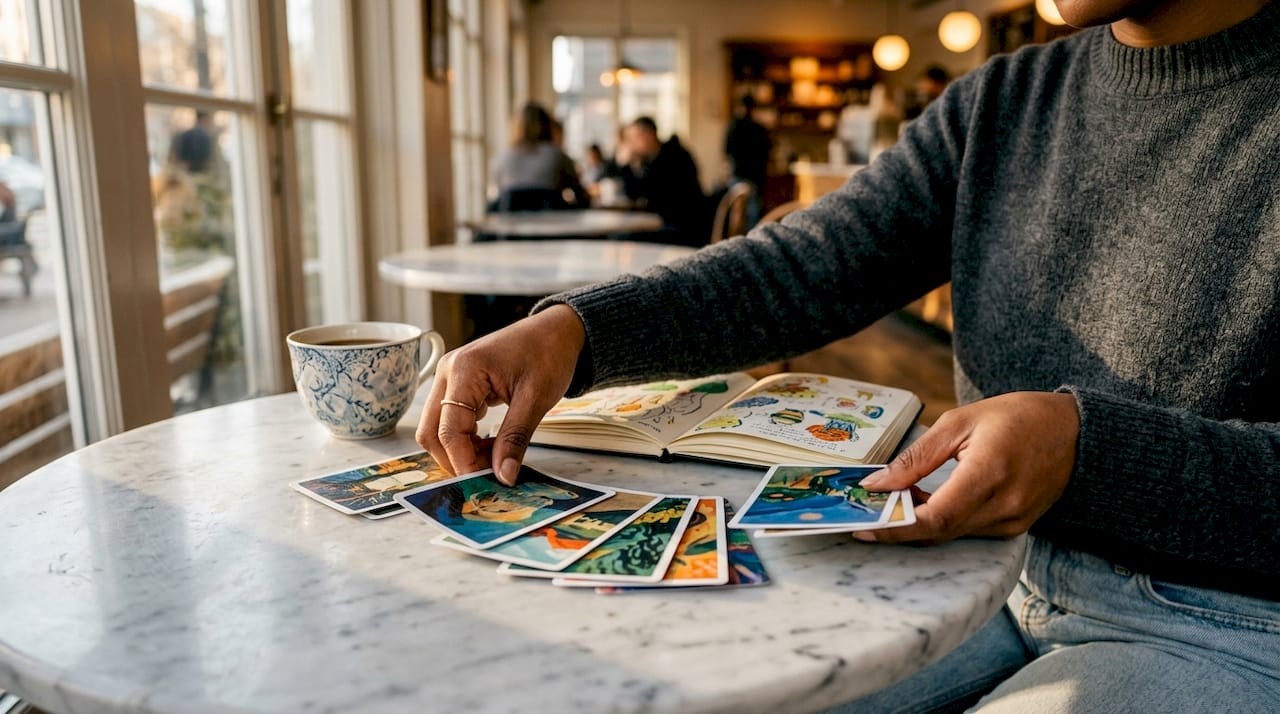
Not every creative resource needs to be a 300-page book. More Than Muses is a deck of 40 illustrated cards spotlighting visionary women who shaped creative history but rarely appear in mainstream curricula. Each card is 3×5 inches, full color, and paired with a guidebook for daily use.
The format solves a real problem. Long-form books require sustained attention. Inspiration decks work in two minutes before a meeting, during a lunch break, or as part of a morning ritual. They deliver a concentrated dose of creative context without demanding a reading session.
| Format | Best for | Time commitment |
|---|---|---|
| Long-form book | Deep mindset shifts and historical context | 30–60 minutes per session |
| Inspiration deck | Daily creative warm-up and quick motivation | 2–5 minutes per day |
| Essay collection | Targeted insight on specific creative challenges | 10–20 minutes per essay |
Pro Tip: Pull one card from the More Than Muses deck each morning and spend 60 seconds reading about that woman before you open your phone. It resets your creative frame for the day.
9. What role does creative writing play in women’s self-expression?
Creative writing is one of the most direct paths to self-expression available to women, and the literature supporting it reflects that. Books on creative writing for women go beyond grammar and structure. The best ones treat writing as a practice of self-discovery and reclamation.
The science behind how books empower women readers shows that reading narratives written by women with similar experiences reduces isolation and builds confidence. Writing your own narrative extends that effect. You move from reader to author of your own story.
Female creative books in this category often pair craft instruction with memoir, showing you both the technique and the emotional territory it can map. That combination is more useful than either element alone.
10. How do women empowerment books connect creativity to personal agency?
The strongest women empowerment books treat creativity not as a hobby but as a form of power. Amy Smilovic’s work frames the creative challenge most women face as a conflict between personal values and algorithmic expectations. Social media, workplace norms, and family roles all push toward conformity. Creative work pushes back.
Books that address this tension give you a framework for understanding why creative expression feels risky. That understanding reduces the fear. When you see the social pressure clearly, you can make a deliberate choice about how much weight to give it.
This is why literature on female creativity belongs alongside books on mental health and personal development. The categories overlap more than most reading lists acknowledge.
11. How to foster women’s creativity through a reading practice
A reading practice designed to support creativity works best when it mixes formats and disciplines. Reading only instructional books produces technique without vision. Reading only personal narratives produces inspiration without tools. The most effective approach combines both.
A practical structure looks like this: one mindset book per quarter, one historical or biographical title per quarter, and one practical craft book per quarter. Fill the gaps with shorter formats like essay collections or inspiration decks. That rhythm keeps your creative thinking active without overwhelming your schedule.
The role of book recommendations for women in shaping this practice is significant. A well-curated list saves you from spending months on books that do not match your current creative stage.
12. Which books are worth adding to your 2026 creative reading list?
The titles that belong on every creative woman’s 2026 reading list share three qualities. They are honest about difficulty, specific about solutions, and grounded in real female experience. Generic creativity books written for a broad audience rarely deliver all three.
Woman Made, The Creativity Leap, A Creative Compass, Wisdom of Wildly Creative Women, and the More Than Muses deck each meet that standard in different ways. Together they cover historical context, practical strategy, mindset work, and daily inspiration. That combination addresses the full range of what creative women actually need.
Start with whichever gap feels most urgent. If you feel disconnected from creative history, begin with Woman Made. If you are stuck in a creative block, start with A Creative Compass. If you need daily fuel, order the More Than Muses deck.
Key Takeaways
The most effective books on women creativity combine historical validation, mindset tools, and personal narrative to produce lasting creative confidence, not just short-term motivation.
| Point | Details |
|---|---|
| History builds identity | Books documenting women’s creative history reframe your own work as part of a powerful tradition. |
| Mindset beats technique | Mindset-focused literature produces longer-lasting creative change than step-by-step instruction alone. |
| Rest is a creative tool | Allowing imperfect work and prioritizing rest resolves creative blocks more effectively than pushing harder. |
| Format variety sustains practice | Mixing long-form books with decks and essays keeps creative motivation active across different schedules. |
| Personal stories reduce isolation | Narratives from real creative women normalize struggle and validate the courage required to create. |
Why diverse creative narratives changed how I read
Robert here. I spent years recommending creativity books that focused almost entirely on output: how to produce more, faster, and with less friction. Those books have their place. But the ones that actually changed how women I know relate to their creative work were the ones that told the truth about the cost of creating while managing everything else life demands.
The insight from historical research that female creativity was always about community and resistance, not just personal expression, reframed everything for me. It means that when you carve out time to write, paint, or design, you are not being selfish. You are participating in something women have always done under pressure, often invisibly.
I also think the guilt conversation is underserved in most female creative books. Bepko’s work on love and creativity names something real. You cannot separate the creative block from the relational context it lives in. Books that ignore that context give you half the picture.
My honest recommendation: do not build a reading list that is all inspiration and no challenge. The books that push back on your assumptions about what creativity is and who gets to claim it are the ones worth returning to.
— Robert
Smartreadshub’s curated picks for creative women
Smartreadshub specializes in curated book recommendations that match where you actually are, not where a generic reading list assumes you should be. For women building or rebuilding a creative life, that specificity matters.

The Smartreadshub collection covers both traditional long-form titles and innovative formats like inspiration decks, organized by the creative challenge you are facing right now. Whether you need historical grounding, practical strategy, or daily motivation, the book recommendations for women on Smartreadshub are selected with your specific experience in mind. You can also use the women authors discovery guide to build a reading list that grows with your creative practice.
FAQ
What are the best books on women creativity for beginners?
Woman Made: Great Women Designers and A Creative Compass by Emma Gannon are the strongest starting points. The first builds historical context; the second addresses the mindset blocks that stop most beginners from sustaining a creative practice.
How do I find books about women creativity that match my creative stage?
Curated discovery guides organized by creative challenge are the most efficient method. Smartreadshub’s women authors discovery guide filters recommendations by the specific need you are trying to address, whether that is overcoming blocks, building confidence, or deepening craft.
Are inspiration decks as effective as traditional books for women’s creativity?
Inspiration decks like More Than Muses serve a different function than books. They work best as daily warm-up tools that sustain motivation between longer reading sessions, not as replacements for in-depth literature.
What themes appear most often in literature on female creativity?
The most consistent themes are the tension between relational roles and creative work, the need for historical validation, and the importance of rest and imperfection as part of the creative process. Books by Claudia Bepko, Emma Gannon, and Amy Smilovic each address these themes directly.
How do women empowerment books differ from general creativity books?
Women empowerment books treat creativity as a form of personal agency and address the specific social pressures that suppress female creative expression. General creativity books rarely account for the relational and societal context that shapes how women experience creative work.