
Self-help breakup books are structured recovery resources that combine psychological frameworks, practical exercises, and emotional guidance to help you rebuild your identity after a relationship ends. Unlike general inspirational reads, the best breakup self-help books follow a defined program, moving you through grief phases with writing prompts, boundary-setting tools, and daily worksheets. Titles like Unhitched by Oona Metz and Conscious Uncoupling by Katherine Woodward Thomas represent this evidence-based category. When you know how to find self-help books for breakup recovery that match your specific emotional stage, you stop drifting through pain and start moving through it with purpose.
The single most important criterion when selecting a healing after breakup book is the author’s clinical or professional background. A therapist, psychologist, or certified counselor brings frameworks that have been tested with real clients. Oona Metz, for example, draws on over 30 years of clinical experience to map the five phases of divorce grief in Unhitched, giving readers a credible roadmap rather than personal opinion dressed up as advice.
Beyond credentials, look for books that offer structured, evidence-based frameworks rather than vague affirmations. A book that tells you to “love yourself more” without showing you how is not a recovery tool. It is a greeting card. The most effective self-help books for heartbreak include writing prompts, guided reflections, and daily exercises that force you to process emotion rather than simply read about it. Practical tools like these help you articulate pain you may not yet have words for.
Inclusivity matters more than most readers realize before they start searching. If a book assumes every reader is a heterosexual woman leaving a long-term marriage, it will feel alienating if your situation differs. Unhitched specifically addresses both heterosexual and LGBTQ+ relationships and centers identity rediscovery, which broadens its usefulness considerably.
Here is what to evaluate before committing to a title:
Pro Tip: Before purchasing, read the table of contents and the first chapter sample. If the structure is clear and the exercises are visible within the first 20 pages, the book is built for action. If the first chapter is entirely narrative, treat it as a memoir, not a recovery program.
The titles below represent the strongest options currently available for structured breakup recovery. Each takes a distinct approach, so your choice should reflect where you are emotionally and what kind of support you need most.
| Book | Author | Core Approach | Best For |
|---|---|---|---|
| Unhitched | Oona Metz | Five phases of divorce grief with psychological tools and vignettes | Women navigating divorce or long-term relationship loss |
| Conscious Uncoupling | Katherine Woodward Thomas | 5-step evidence-based method to transform wounds into new beginnings | Anyone seeking intentional, reflective separation |
| Goodbye, I Loved You! | Sumaa Tekur | Active, conscious healing with practical and soulful reflection | Readers stuck in grief who need structured momentum |
| 30-Day Breakup Recovery Program | Thrive After Breakup | Daily worksheets across five recovery phases | Those who want a day-by-day program with crisis tools |
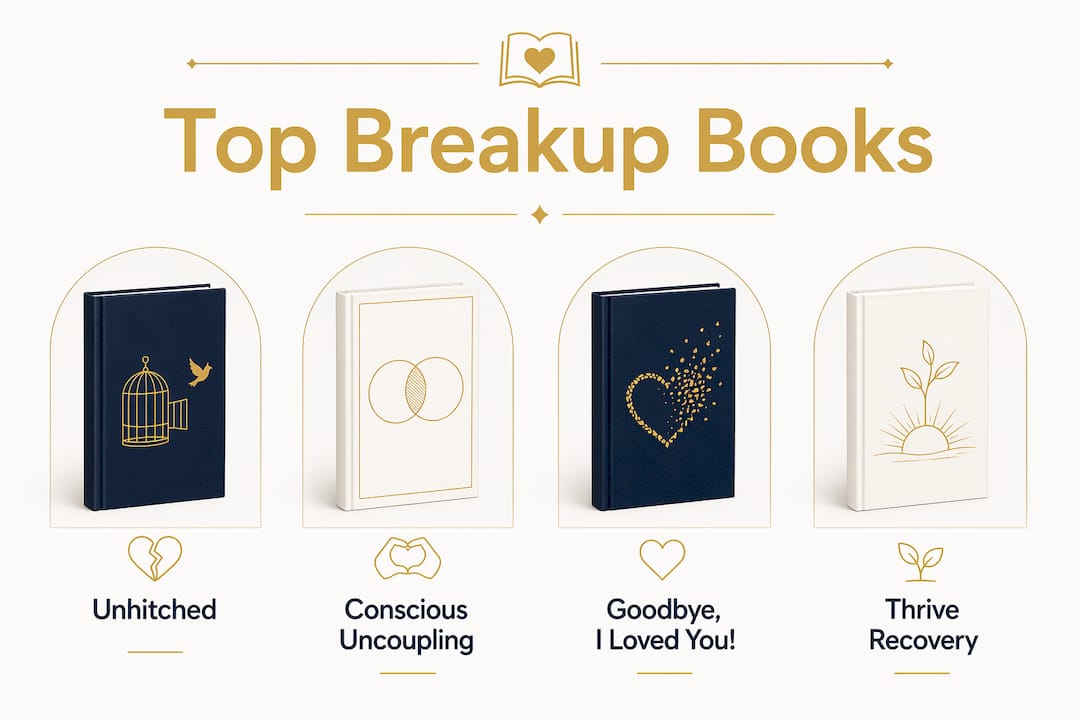
Unhitched stands out because it blends psychological theory with relatable real-life vignettes, making abstract concepts like grief phases feel personal and recognizable. Therapists find that books with a clear roadmap and exercises empower clients to navigate complex emotional phases far more effectively than inspirational memoirs alone.
Conscious Uncoupling by Katherine Woodward Thomas takes a different angle. The five-step method focuses on healing through intentional separation and reflection, guiding you to examine the emotional patterns you brought into the relationship. This approach is particularly useful if you find yourself repeating the same relationship dynamics and want to understand why.
Sumaa Tekur’s Goodbye, I Loved You! makes one of the most direct claims in this category: time alone does not heal. Active, conscious engagement with structured tools is what moves you from grief to recovery. That premise drives every chapter and exercise in the book.
The 30-day breakup recovery program from Thrive After Breakup is the most structured option on this list. It includes emotional independence modules, boundary-setting exercises, and crisis check-in pages, giving you a physical tool you interact with daily rather than a text you read once and shelve.
Reading is not healing. Healing happens when you put the book down and do the work it prescribes. This distinction separates readers who feel better after finishing a book from those who feel exactly the same six months later. The following steps will help you engage with any top self-help guide for breakups at the level it requires.
Pro Tip: Keep a dedicated journal separate from any book exercises. After each session, write one sentence describing what shifted for you that day. Over 30 days, this record becomes evidence of your own progress, which is one of the most powerful motivators to continue.
You can also explore the science of healing behind why structured reading programs produce measurable emotional results, which reinforces why the daily commitment matters so much.
The most damaging mistake readers make with self-help books for heartbreak is treating them as passive entertainment. Structured daily programs produce more reliable breakthroughs than time alone, but only when you engage with the structure. Reading a chapter and moving on without completing the exercises is the equivalent of watching a workout video and expecting to get fit.
Chasing closure from your ex is the second major obstacle. Seeking external validation from the person who caused the breakup traps individuals in unhealthy emotional cycles that prevent autonomous healing. No conversation, apology, or explanation from them will give you what you are actually looking for. That resolution has to come from within, and the right book will show you how to find it.
Watch out for books that rely heavily on vague affirmations without practical structure. Phrases like “you deserve love” and “trust the process” are not recovery tools. They are filler. If a book’s exercises section is shorter than its inspirational narrative, it is probably not built for the kind of active healing you need.
“The one who broke you cannot heal you. Healing is an inside job, and the right tools make that job possible.” — Najwa Zebian
Recognizing when professional help is needed is not a failure. If you find yourself unable to function at work, experiencing persistent anxiety or depression, or feeling unsafe, a licensed therapist is the appropriate first resource. Self-help books for emotional healing work best for people who are stable enough to engage with structured reflection. They complement therapy. They do not replace it.
Maintaining emotional stability during the process also means pacing yourself. You do not need to finish a 30-day program in two weeks. Moving through grief phases at the pace the program sets is part of how the structure works. Rushing signals avoidance, not progress.
The most effective self-help books for breakup recovery combine clinical expertise, structured phases, and practical exercises that require your active participation every single day.
| Point | Details |
|---|---|
| Choose credentials first | Select books by licensed therapists or certified coaches with documented clinical experience. |
| Prioritize structured programs | Books with defined phases, daily worksheets, and exercises outperform inspirational memoirs for recovery. |
| Release the closure trap | Healing does not require your ex’s participation; self-witnessing builds faster emotional independence. |
| Engage actively, not passively | Complete every exercise as written; passive reading without action prolongs emotional pain. |
| Combine books with therapy | Self-help resources work best alongside professional counseling, not as a standalone replacement. |
Robert here. After years of reviewing self-help resources for people navigating painful relationship endings, the pattern I see most often is this: readers gravitate toward books that feel comforting rather than books that will actually challenge them. A beautifully written memoir about someone else’s heartbreak is soothing. A workbook that asks you to examine your attachment patterns is not. But the workbook is what moves the needle.
The books that consistently produce real change, titles like Unhitched and structured programs like the Thrive After Breakup 30-day system, share one quality: they make you do something. They do not let you stay in the observer seat. That friction is the mechanism of healing, not a flaw in the design.
I also want to name something most articles in this space avoid. The books you choose need to feel like they were written for someone like you. Inclusivity in breakup resources is not a marketing checkbox. It is a functional requirement. If the examples, language, and assumptions in a book do not reflect your life, you will disengage before the exercises can work. Check for that fit before you buy.
If you are drawn to books on emotional detachment as part of your recovery, those resources pair well with the structured programs above. Use them together intentionally.
— Robert

Smartreadshub curates book recommendations specifically for people healing from emotionally complex relationships, including breakups involving manipulation, gaslighting, and narcissistic dynamics. Every recommendation on the site is selected for its practical value, not just its popularity. You can browse the full books collection for in-depth reviews organized by healing stage, or explore the top resource alternatives for discovering breakup recovery programs beyond the mainstream titles. Whether you are at the beginning of your grief or rebuilding your identity months later, Smartreadshub connects you with resources that meet you where you are and move you forward.
Effective breakup self-help books combine clinical expertise with structured exercises like writing prompts, boundary tools, and phased recovery programs. Passive reading without active engagement produces little lasting change.
Evaluate the author’s credentials, check for structured phases and practical exercises, and confirm the book addresses your specific relationship type and emotional stage before purchasing.
A 30-day structured program like the one from Thrive After Breakup provides daily accountability and crisis tools that a single book may not, making it a stronger option for those who need consistent, guided support.
Dr. Ramani Durvasula and Najwa Zebian both identify closure-seeking as a barrier to recovery. The most effective books redirect that energy toward self-witnessing and internal resolution instead.
Self-help books for heartbreak work best alongside therapy, not as a substitute. If you are experiencing persistent depression, anxiety, or inability to function, a licensed therapist should be your first resource.