
Healing after gaslighting is possible, and it starts with one move: restore your safety, then start believing your own memory again. That means limiting contact with the person distorting your reality, naming what happened out loud or on paper, and finding one person or professional who will simply believe you. The fog, self-doubt, and anxiety you feel right now are common reactions to psychological manipulation, not proof that something is wrong with you.
TL;DR:
- Limiting contact with the gaslighter and documenting interactions help establish evidentiary support and reduce emotional confusion.
- Rebuilding trust involves making small decisions independently and practicing neutral, rehearsed responses to dismiss attempts at manipulation.
- Therapy modalities like trauma-informed CBT, DBT, and EMDR address memory distortion, emotional regulation, and intrusive traumatic memories, aiding recovery.
- Consistent daily exercises, such as journaling factual events and practicing sensory grounding, accelerate progress by reinforcing self-trust.
- Recovery paths often involve persistent repetition and patience, with key milestones including less frequent memory doubts and physical calmness around safe people.
Table of Contents
- A Step-by-Step Plan for Recovering From Gaslighting
- What Gaslighting Actually Sounds Like in Real Life
- Which Therapy Actually Helps After Gaslighting?
- Daily Exercises to Rebuild Trust in Yourself
- How Long Does Gaslighting Recovery Take?
- A Straightforward Take on What Actually Moves the Needle
- Where to Find Structured Reading and Recovery Tools
- Sources
- FAQ
A Step-by-Step Plan for Recovering From Gaslighting
Recovery follows a rough sequence: safety first, then telling your story to someone trustworthy, then reconnecting with your own judgment. You don’t have to do these perfectly or in order, but skipping straight to “just move on” rarely works.
- Name it and validate it. Gaslighting is a pattern where someone repeatedly denies your reality, minimizes your feelings, or insists your memory is wrong. A useful self-validation script: “I remember what happened. My reaction made sense given what I experienced.”
- Create physical and emotional safety. No contact is the clearest option when it’s available. When it isn’t (co-parenting, shared workplaces), limited or structured contact, communicating only in writing, works as a middle path.
- Find people who will believe you. Tell one trusted friend, join a support group, or call a hotline before you tell anyone connected to the person who hurt you.
- Document your reality. Keep a running timeline, voice-memo yourself after confusing conversations, and save texts. Documentation acts as evidentiary armor against a manipulator’s revisions of events.
- Rebuild self-trust through small decisions. Choose what to eat, wear, or watch without asking for outside approval. Repetition matters more than the size of the decision.
- Bring in professional support when the fog doesn’t lift. A therapist trained in trauma helps you process what a friend cannot.
Journaling deserves its own line item here. A simple structure works: what happened, what you actually remember, how you felt, and one detail that backs up your version. Psychology Today calls this writing down your “thought traps,” and it’s one of the fastest ways to interrupt the doubt loop gaslighting creates. You can pair this with learning to recognize the mechanics of gaslighting so future confusion resolves faster.
- Reduce contact where you safely can.
- Tell someone before you second-guess yourself out of it.
- Write it down the same day, while details are fresh.
Pro Tip: Keep a two-line “reality log” on your phone. Date, one sentence about what was said, one sentence about what you know to be true. Six weeks of entries is often enough to see the pattern clearly.
What Gaslighting Actually Sounds Like in Real Life
Gaslighting rarely announces itself. It shows up as small, repeated moments that add up to a survivor doubting their own mind.
- A partner who says “that never happened” about a fight you both remember clearly, then acts wounded when you push back.
- A boss who denies giving an instruction, then blames you for the resulting mistake, a classic minimization tactic.
- A family member who flips the script when confronted, accusing you of being “too sensitive” or “the real problem,” a pattern known as DARVO (Deny, Attack, Reverse Victim and Offender).
- A friend who insists you’re “remembering it wrong” every time you bring up something hurtful they said.
One survivor pattern shows recovery in motion: a woman started a nightly voice memo after tense calls with her ex, brought the recordings to a trauma-informed therapist, and set a boundary around text-only contact for co-parenting logistics. Within a few months, the panic before each exchange had eased. Grief, brain fog, and flashes of anger are typical during this stretch. They tend to fade as safety and validation take hold.
Which Therapy Actually Helps After Gaslighting?
No single therapy fixes gaslighting recovery, because the damage hits memory, self-trust, and nervous-system regulation all at once. Recovery often requires both immediate safety planning and longer-term trauma processing, and different modalities serve different stages.
- Trauma-informed CBT helps challenge the distorted self-blame gaslighting installs.
- DBT builds emotional regulation skills for the anxiety spikes that follow manipulation.
- IFS (Internal Family Systems) works well for the internal “parts” conflict many survivors describe, the part that wants to trust their gut and the part still braced for correction.
- EMDR or brainspotting targets specific traumatic memories that feel stuck or intrusive.
- Somatic therapies address the physical bracing, jumpiness, or numbness that talk therapy alone often misses.
A note on prevalence: emotional abuse and gaslighting appear frequently enough in survivor populations that most university and community counseling centers now maintain dedicated resource lists for it, which is worth checking if you’re on a campus or near one.
When you interview a therapist, ask directly: “Have you worked with clients recovering from narcissistic abuse or gaslighting?” A clinician who minimizes what happened, blames both parties equally, or pushes reconciliation before you feel safe is a red flag. Teletherapy platforms and community mental health clinics both lower the cost barrier if private practice rates are out of reach, and a full comparison of narcissistic abuse recovery approaches can help you match the modality to your specific symptoms.
Daily Exercises to Rebuild Trust in Yourself
Recovery accelerates with repetition, not intensity. A few minutes a day beats one long session once a week.
- The four-part journal entry. Write the event, the facts you remember, your emotional response, and one corroborating detail (a text, a witness, a date). This structure trains your brain to hold onto evidence instead of spiraling into doubt.
- Three-minute sensory grounding. Name five things you see, four you hear, three you can touch, two you smell, one you taste. It pulls you out of a flashback and back into your body.
- Micro-decision drills. Pick your own lunch, route, or playlist once a day without checking it against anyone else’s opinion. Small, low-stakes choices rebuild the muscle gaslighting weakened.
- Rehearsed calm scripts. Practice a short, neutral response for if the person contacts you again: “I remember it differently, and I’m not going to debate it.” Scripted responses reduce the panic of being caught off guard and keep you from over-explaining yourself.
Pro Tip: Say your calm script out loud in the shower or car before you ever need it live. Rehearsal makes the words automatic instead of something you have to invent under stress.
How Long Does Gaslighting Recovery Take?
There’s no fixed timeline, and progress rarely moves in a straight line. Expect stretches of clarity followed by a bad week when a smell, song, or comment pulls you back. That’s normal, not a setback.
Watch for these signs that healing is taking hold: you check your memory against outside proof less often, your body stays calmer around people who treat you well, and you can recall painful events without the same physical panic.
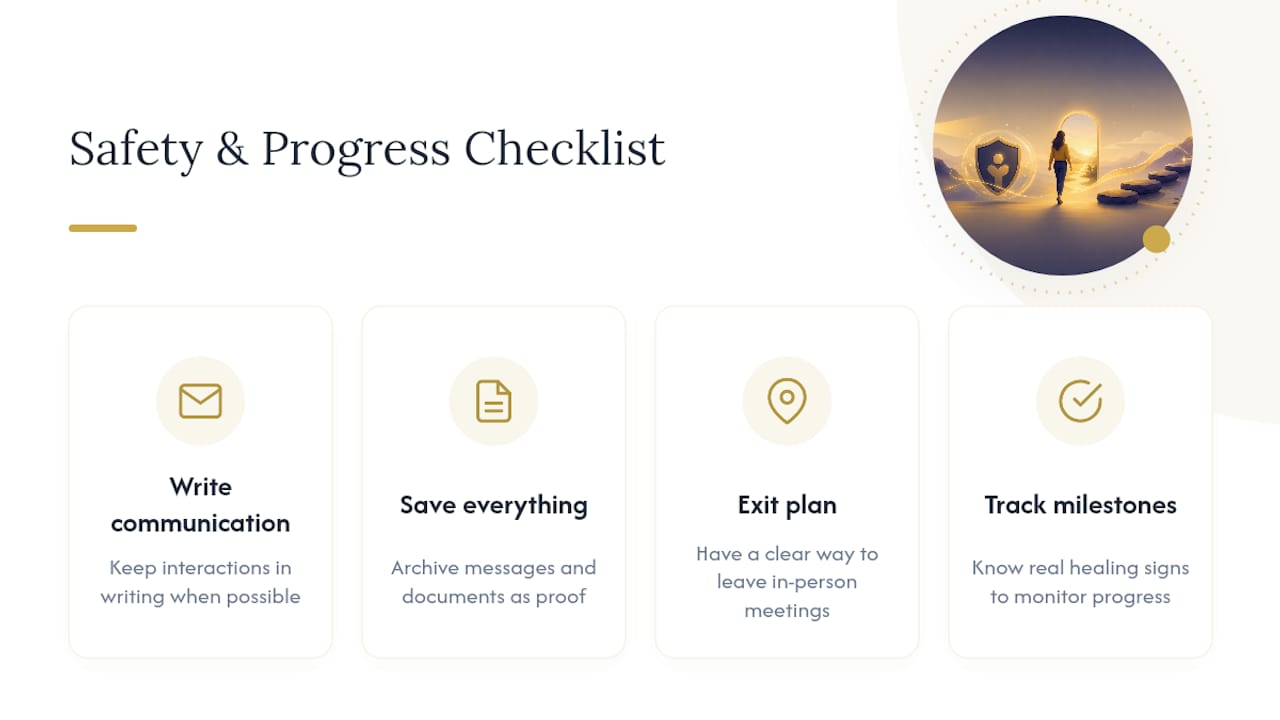
For anyone still in contact through co-parenting or work, a short safety checklist helps: keep communication in writing, save everything, have an exit plan for in-person interactions, and know what genuine healing milestones look like so you can track your own progress instead of guessing.
A Straightforward Take on What Actually Moves the Needle
Most advice on gaslighting recovery is correct but vague. The part people underestimate is how much boring repetition matters more than any single breakthrough session. Restore safety, practice believing yourself out loud, and stack small decisions daily. Many readers describe emotional relief once they finally have language for what happened to them. Start there: name it, write it down, then act on one small choice today.
— Robert
Where to Find Structured Reading and Recovery Tools
If you want to keep building on what you just read, A specialized site gives you a faster path than sifting through generic self-help forums. Curated lists can be built specifically around distorted-reality relationships, so you spend less time guessing which book actually applies to gaslighting versus general breakup grief.

Head to our books page for therapist- and survivor-recommended titles on gaslighting and narcissistic abuse if you want structured, guided reading to work through at your own pace. If you’re closer to needing therapy but unsure where to start, our resources hub compares therapy platforms and tools so you’re not choosing blind. And if reading feels like the easier entry point right now, our emotional-abuse book roundup gives you five solid starting picks chosen by therapists and survivors. Pick one page, click through, and take the next small step today.
Sources
- 7 tips to un-gaslight yourself after domestic abuse — Psychology Today
- What Is Gaslighting Recovery? 7 Steps — My LA Therapy
- Gaslighting Recovery: Reclaiming Your Reality — Annie Wright
FAQ
How Do You Respond to a Gaslighter?
Keep your response short, neutral, and free of debate: state what you remember once and disengage. Over-explaining or arguing gives a gaslighter more material to twist, so a rehearsed line like “I know what I experienced” works better than a long justification.
How Long Does It Take to Heal From Narcissistic Abuse?
There’s no set timeline, and progress usually comes in uneven stretches rather than a straight line. Most survivors notice real shifts, calmer reactions, clearer memory, less need for outside reassurance, within months of consistent safety, support, and trauma-informed therapy, though full healing often takes longer.
Will a Gaslighter Ever Change?
Some people who gaslight unintentionally, out of poor communication habits rather than a manipulation pattern, can change with insight and effort. Chronic or deliberate gaslighters tied to narcissistic traits change far less often, so your safety plan shouldn’t depend on them changing at all.
How Do You Stop Unintentional Gaslighting?
Unintentional gaslighting usually comes from dismissing someone’s feelings reflexively rather than intending harm. The fix starts with pausing before responding, validating the other person’s experience even when you see it differently, and asking what they need instead of correcting their perception.
What Books Help With Recovering From Gaslighting?
Smart Reads Hub’s curated book collection focuses specifically on gaslighting and narcissistic abuse recovery rather than general self-help. Current titles and pricing are listed directly on the site.