
For most people caught in a manipulative in-law dynamic, the fastest starting points are Toxic In-Laws by Susan Forward for naming the pattern and Will I Ever Be Good Enough? by Karyl McBride for understanding the deeper family psychology behind it. Pair either one with a boundary-focused workbook, and read curated guides for a structured plan you can start today.
TL;DR:
- Choose books that match your immediate goal, whether for understanding behaviors, boundary setting, or emotional validation.
- Pair clinical texts with workbooks to gain both knowledge and practical scripts for managing in-law interactions.
- Recognize the importance of understanding whether your in-law is grandiose or vulnerable narcissistic to select effective responses.
- Incorporate therapy and support groups alongside reading to address underlying attachment issues and limit harm.
- Focus on practical application by practicing boundary scripts and consulting professionals before situations escalate into crises.
Table of Contents
- Best Books About Narcissistic In-Laws and Toxic Family Dynamics
- How to Choose the Right Book for Your Situation
- What the Research Says About Parental Narcissism and Why Reading Helps
- Counseling, Support Groups, and Other Resources to Pair With Reading
- A Reading Plan That Actually Changes How You Handle Your In-Laws
- Start With a Plan, Not Just a Reading List
- Sources
Best Books About Narcissistic In-Laws and Toxic Family Dynamics
Choosing the right narcissistic in-laws books depends less on ratings and more on what you actually need right now: language for what’s happening, a plan for protecting yourself, or proof you’re not overreacting. The titles below cover different entry points into that same problem.
- Toxic In-Laws: Loving Strategies That Work by Susan Forward. A clinical, no-nonsense breakdown of manipulative in-law tactics with sample dialogue you can adapt for your own family. Best for readers who need a name for the behavior and a script for the next holiday dinner. Available in paperback, ebook, and audiobook.
- Will I Ever Be Good Enough? Healing the Daughters of Narcissistic Mothers by Karyl McBride. McBride, a therapist who has treated adult daughters of narcissistic mothers for decades, explains how those early patterns replay when a narcissistic mother becomes a narcissistic mother-in-law. Best for readers untangling why their partner minimizes their own parent’s behavior. Paperback and ebook widely available.
- Adult Survivors of Toxic Family Members by Sherrie Campbell. A workbook built around boundary-setting exercises, guilt management, and step-by-step scripts for reducing contact. Best for readers who already understand the diagnosis and want tactics, not theory. This is the one clinicians most often recommend for pairing reading with boundary-setting work in therapy.
- The Narcissist in Your Life by Julie L. Hall. Part memoir, part clinical guide, tracing how narcissistic family systems assign roles like the golden child and the scapegoat, and how those roles resurface once you marry into a new one. Best for readers who want validation alongside structure. Paperback, ebook, and audiobook editions exist.
- The Narcissistic Family by Stephanie Donaldson-Pressman and Robert Pressman. An older but still widely cited clinical text on how narcissistic family systems function as a whole unit rather than one difficult person. Best for readers trying to explain the dynamic to a confused spouse.
- Narcissistic Mother-in-Law memoirs and community-favorite titles. Several niche memoirs focused specifically on in-law relationships circulate heavily on Goodreads and reader forums, offering validation for the specific in-law flavor of narcissistic control rather than the parent-child version most clinical books address.
A peer-reviewed systematic review of parental narcissism found consistent links between narcissistic parenting and poorer relationship quality, which is exactly why clinician-authored books tend to outperform generic self-help titles here: they’re describing a documented pattern, not a personality quirk. When a book cites actual research instead of anecdotes, it’s usually the safer bet for anyone trying to make real decisions about contact.
For readers whose in-law problem overlaps with their partner’s own unresolved attachment wounds, a title like books about unhealthy attachment rounds out the picture nicely.
How to Choose the Right Book for Your Situation
Start by naming your actual goal, not just your frustration. Are you trying to survive one more holiday visit, rebuild your own confidence after years of being blamed, or decide whether estrangement is the right call? Each goal points to a different type of book.
- Define the goal first. Safety and immediate tactics call for a workbook like Campbell’s; understanding the psychology behind a partner’s parent calls for McBride or Hall.
- Match author credentials to your need. If you need a diagnosis or language for what’s happening, prefer therapist-authored books over blogger-written ones.
- Pick workbooks for action, memoirs for validation. Workbooks give you scripts and checklists; memoirs give you the relief of “someone else lived this too.”
- Check for trauma-informed language. A book that blames victims for “provoking” a narcissistic in-law, or promises a fast fix, is a warning sign, not a resource.
- Look for citations or clinical grounding. Books that reference actual research on personality disorders tend to age better than ones built purely on the author’s personal story.
Watch for these red flags before you buy: blame-shifting language aimed at the reader, promises of a quick personality change in the narcissistic relative, absence of any citations or clinical framing, dismissive treatment of trauma responses, and advice that assumes every family situation is safe to confront directly.
Pro Tip: Buy one clinical book and one workbook together. Read the clinical one for understanding, then use the workbook for the actual scripts and boundary language you’ll need at the next family gathering.
What the Research Says About Parental Narcissism and Why Reading Helps
Reading about narcissistic family dynamics does more than pass the time. It changes how you interpret the next confusing conversation with your in-law, because you finally have a framework instead of just a gut feeling that something’s off.
A systematic review covering multiple empirical studies found that parental narcissism, particularly the vulnerable subtype, is consistently linked to attachment insecurity and worse outcomes for children raised in that environment.
That distinction between grandiose and vulnerable narcissism matters more than most books admit upfront. A grandiose narcissistic mother in-law dominates the room; a vulnerable one plays the victim to get the same control. Recognizing which type you’re dealing with changes which scripts actually work. The same review is why clinicians increasingly recommend pairing psychoeducation, meaning structured reading like this, with actual therapy rather than treating a book as the whole solution.
Counseling, Support Groups, and Other Resources to Pair With Reading
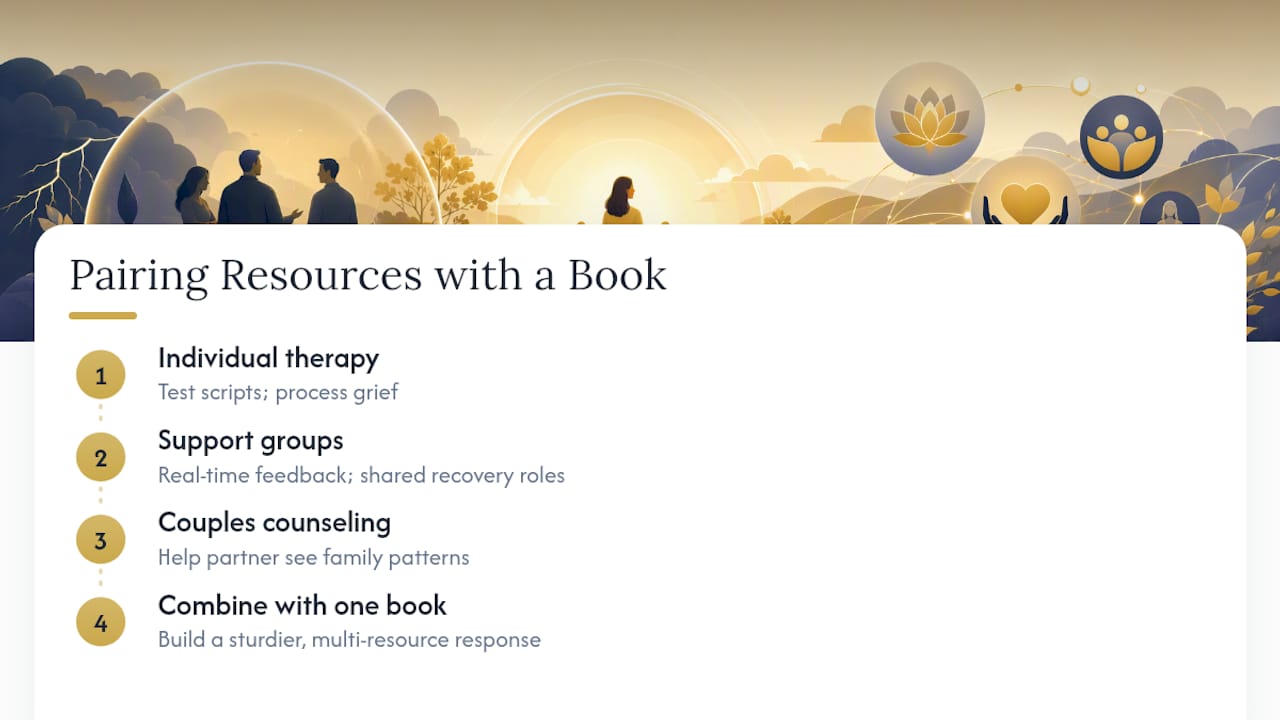
No book replaces a licensed therapist, and none of the authors above claim otherwise. Individual therapy with someone trained in family systems or personality disorders gives you a place to test scripts before using them on your actual in-law, and to process the grief that comes with limiting contact with your partner’s parent.
Support groups, whether local or online communities built around narcissistic abuse recovery, offer something books can’t: real-time feedback from people currently living through the same dynamic. Psychology Today’s breakdown of dysfunctional family roles is a useful companion piece here, since group members often self-identify as the scapegoat or the golden child within minutes of describing their family.
Couples counseling deserves a specific mention. If your partner still minimizes their parent’s behavior, a couples therapist familiar with family-of-origin work can do what no book manages alone: get your partner to see the pattern from the inside. Combine that with a support group and one solid book, and you’ve built a far sturdier response than any single resource offers.
A Reading Plan That Actually Changes How You Handle Your In-Laws
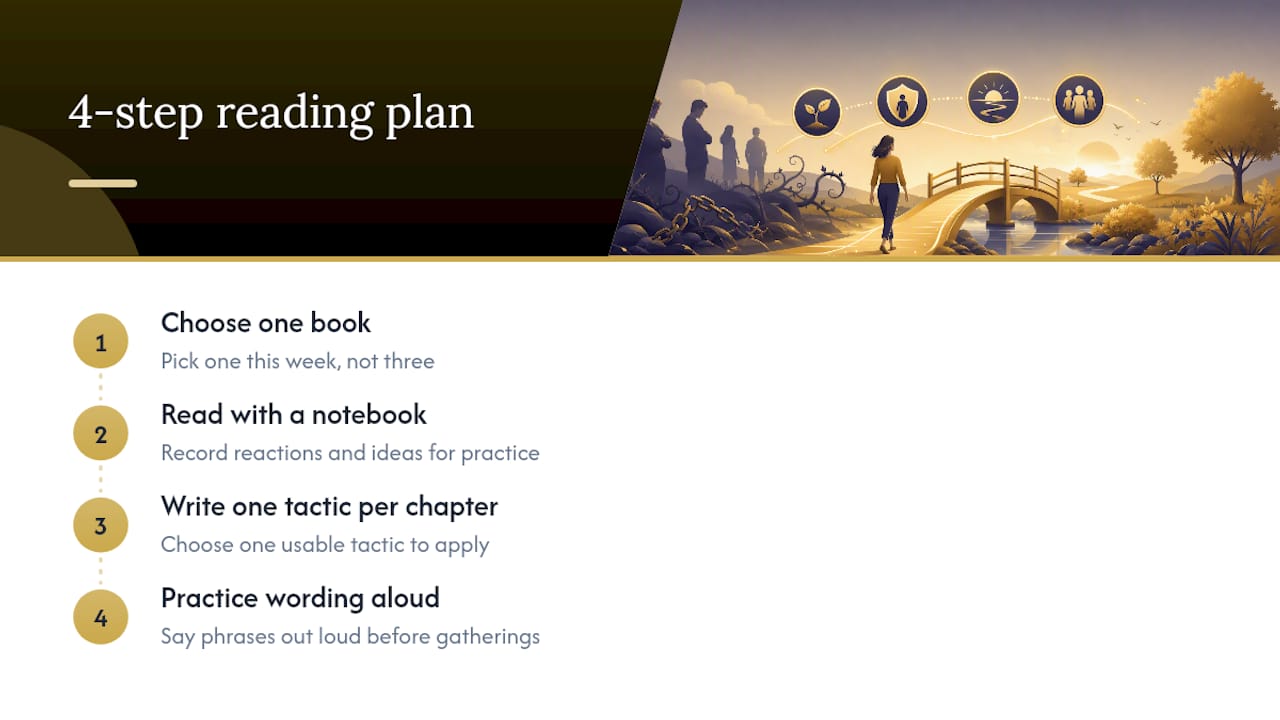
Here’s the plan I’d hand a friend: pick one book this week, not three. Read it with a notebook, and after each chapter, write down one tactic you can actually use, then practice the wording out loud before you need it.
Stop reading and call a professional the moment things escalate: threats, financial control, or a mental health crisis in you or your partner. Books inform decisions; they don’t manage emergencies.
Some reading lists are built around this kind of practical pairing, matching book type to reader goal rather than just ranking titles by popularity.
— Robert
Start With a Plan, Not Just a Reading List
This resource helps more than a random bookstore shelf because it matches your specific in-law problem, boundaries, estrangement grief, or a partner who won’t see the pattern, to the book and exercise that actually fits it, instead of handing you a generic top ten.
The hub’s emotional recovery after abuse guide walks through the same validation-plus-action structure covered above, built specifically for readers rebuilding confidence after years of being blamed. If your main issue is learning to hold a line with your in-laws without guilt, the best books on setting boundaries page picks up right where this article leaves off.
| Step | What to do |
|---|---|
| Read | Pick one clinician-authored book matching your goal |
| Practice | Write and rehearse one boundary script from it |
| Seek help | Bring the script to a therapist or support group for feedback |
Start with the emotional recovery guide today, pick your first book from it, and give yourself one week to test a single script before adding another resource.
Sources
- Impact of Parental Narcissistic Personality Disorder on Parent-Child Relationship Quality and Child Well-Being: A Systematic Review
- The 12 Rules of a Dysfunctional Narcissistic Family | Psychology Today
- Adult Survivors of Toxic Family Members