

There is something strange about reaching for a book you know will make you cry. Yet millions of readers do exactly that, especially when life feels heavy or uncertain. The question of why sad books feel comforting is not just a curiosity. It points to something real about how the human mind processes grief, loneliness, and loss. Understanding this psychological paradox reveals why comfort in sad literature goes far deeper than escapism, and why the right tearjerker can actually leave you feeling steadier than when you started.
Table of Contents
- Key takeaways
- Why sad books feel comforting: the psychology explained
- The science and therapeutic benefits of reading sad books
- How sad books compare to other coping strategies
- How to choose and read sad books mindfully
- My take on why sad books are underrated medicine
- Find your next emotionally resonant read
- FAQ
Key takeaways
| Point | Details |
|---|---|
| Emotional validation matters | Sad books make readers feel seen by reflecting authentic human struggles back at them. |
| Catharsis is real and measurable | Reading sad stories triggers genuine mood regulation through safe, vicarious emotional release. |
| Science supports the benefit | Structured reading of sad literature can reduce PTSD symptoms and stress significantly. |
| Literary fiction builds empathy | Sad novels sharpen emotion recognition, improving how readers relate to others in real life. |
| Mindful reading amplifies gains | Choosing books with intention and reflecting on them deepens the emotional benefit. |
Why sad books feel comforting: the psychology explained
The first thing to understand is that sad books are not asking you to feel worse. They are offering you something most daily life does not: complete emotional honesty.
When you read about a character losing someone they love, or navigating grief they cannot name, something shifts. You stop feeling alone in your own experience. That recognition, that moment of “this is exactly how it feels,” is the core of what makes sad literature comforting rather than depleting.
Psychologists call this emotional validation, and it is more powerful than it sounds. Most people spend significant energy managing their emotions in public, at work, and even with family. Sad books create a private space where no management is required. The feeling is allowed to exist fully.
There is also the concept of vicarious sorrow. Research identifies 10 motives for why people read sad stories, including comfort, catharsis, and emotional preparation. One of the most compelling is the ability to experience sorrow without real-world threat. You feel the weight of loss through a character, but you remain safe. Your nervous system gets the release without the actual wound.
Several mechanisms work together to produce this comfort:
- Emotional mirroring: Characters who struggle with recognizable emotions confirm that your own feelings are normal and human.
- Narrative container: Sad literature functions as an emotional container, giving shape to chaotic feelings that would otherwise stay unprocessed.
- Mood regulation: The structured arc of a story, from tension to resolution, teaches your nervous system how emotions move through and eventually pass.
- Companionship in solitude: Reading feels like someone is sitting with you in your pain, even when no one physically is.
Pro Tip: If you finish a sad book and feel unexpectedly lighter, that is catharsis doing its job. The emotional weight you carried into the book found a place to land.
The emotional connection to sad books is not accidental. Authors who write grief, loss, or trauma are often writing toward something true, and readers feel that truth in their bodies before their minds catch up.
The science and therapeutic benefits of reading sad books
The psychology of sad books has moved well beyond theory. Research is now clarifying what readers have intuitively known for centuries.

One of the most striking findings involves trauma recovery. Structured reading of trauma-focused literature significantly reduces PTSD symptoms. In an 8-week study of 105 students, participants in trauma literature reading groups showed the largest reduction in PTSD symptoms compared to control groups, with results reaching statistical significance at p < 0.001. That is not a small effect. That is a measurable shift in how the brain holds painful memory.
The stress reduction data is equally compelling. Six minutes of reading can reduce stress by up to 68%, and bibliotherapy, structured therapeutic reading, shows lasting effects on depression and anxiety that persist for up to a year. These numbers matter because they reframe sad books from indulgence to genuine mental health tool.
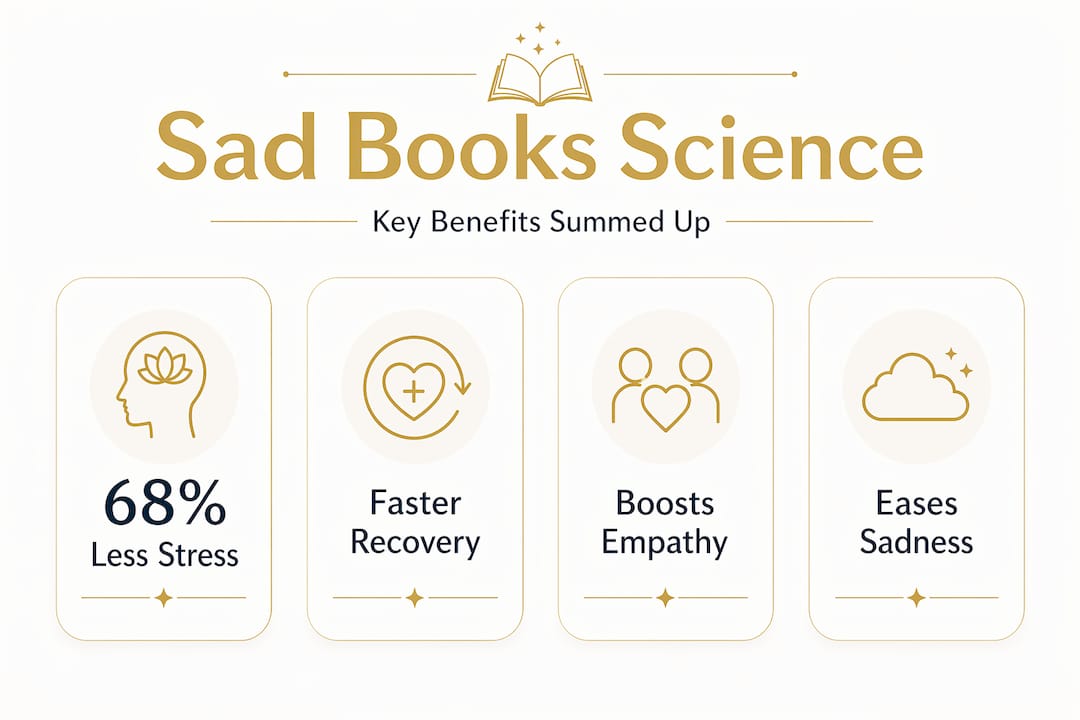
| Benefit | What the research shows |
|---|---|
| PTSD symptom reduction | Trauma literature groups showed significant symptom reduction in 8 weeks |
| Stress relief | Reading reduces stress by up to 68% in as little as 6 minutes |
| Depression and anxiety | Bibliotherapy effects on mood disorders can last up to 12 months |
| Empathy and social cognition | Literary fiction improves emotion recognition through inferring character states |
| Emotional regulation | Structured reading builds capacity to process rather than suppress difficult feelings |
The empathy research deserves its own attention. Literary fiction improves empathy and emotion recognition by requiring readers to infer what characters are feeling from subtle, implicit cues. This is different from watching a film where expressions and music tell you how to feel. In a novel, you do the emotional inferring yourself. Over time, that practice makes you better at reading real people in real situations.
“Sad literature provides an emotional space where readers can confront and process complex feelings safely.” — Psychology of comfort in sad art
The benefits of reading sad novels are not limited to dramatic cases of trauma or depression. Even readers managing ordinary stress, loneliness, or life transitions report that emotionally resonant fiction helps them feel oriented again. The story gives the chaos a shape, and that shape is comforting in itself.
How sad books compare to other coping strategies
Sad music is probably the closest comparison to sad books, and the parallels are genuinely interesting. Sad music and sad books share therapeutic features including emotional validation, catharsis, and mood regulation. Both offer a sense of companionship during loneliness and a safe channel for releasing feelings that have nowhere else to go.
But there is a meaningful difference in what literature adds. Music works on mood through sound, rhythm, and tempo. It bypasses cognition and hits the emotional brain directly. That is powerful, but it is also passive. A sad book requires active participation. You construct the world, voice the characters, and infer the emotional undercurrents from language. That cognitive engagement is part of why the benefits of reading sad novels tend to be more durable.
| Coping strategy | Emotional release | Cognitive engagement | Narrative structure | Social skill building |
|---|---|---|---|---|
| Sad books | High | High | Yes | Yes |
| Sad music | High | Low | Partial | No |
| Journaling | Medium | High | No | No |
| Guided meditation | Low | Medium | No | No |
Self-help books occupy a different lane entirely. They target the rational mind and provide frameworks for change, which is useful. But they rarely provide the feeling of being understood that fiction delivers. A reader processing grief does not always need a five-step plan. Sometimes they need someone to say, through a character, “I know exactly what this feels like.”
A few things to keep in mind when choosing sad books over other coping strategies:
- Sad books work best when you choose them with some self-awareness about your current emotional state.
- If you are in acute crisis, structured guidance from a therapist or counselor should come before independent reading.
- Fiction can complement other strategies. A reader using emotional clarity exercises alongside literary reading often finds that each practice deepens the other.
How to choose and read sad books mindfully
Knowing why we love sad stories is one thing. Knowing how to read them well is another.
The goal is not to punish yourself with sadness but to engage it productively. There is a real difference between a book that processes grief and one that reopens a wound without offering any resolution. Here is how to tell the difference and make the most of what you read.
-
Match the book to your emotional bandwidth. A novel about losing a child may be too close to home if you are in active grief. Choose a book that touches your experience without replicating it exactly. You want resonance, not overwhelm.
-
Read with intention. Before you open the book, take thirty seconds to acknowledge what you are hoping to feel or understand. This small act shifts reading from passive consumption to reflective practice.
-
Pause and sit with what moves you. When a passage hits hard, stop. Do not rush past it. That reaction is information about your own emotional landscape.
-
Revisit books that once helped. Rereading nostalgic or emotionally resonant books deepens emotional insight and anchors readers in comforting memories. A book that helped you at twenty can reveal entirely different layers at thirty-five.
-
Consider guided bibliotherapy. Guided bibliotherapy is more effective than unguided reading alone for reducing depression symptoms. If you are reading to support mental health specifically, working with a therapist or joining a structured reading group amplifies the outcome.
Pro Tip: Readers navigating major life transitions often find that books featuring characters in similar circumstances help them frame their own experience with more clarity and less fear.
What makes sad books comforting ultimately comes down to intentionality on both sides. The author writes toward truth. You bring your own honest emotional state to the page. The meeting point is where healing tends to happen.
My take on why sad books are underrated medicine
I have read hundreds of books across every genre, and the ones that changed how I understand myself have almost always been the sad ones. Not the books that destroyed me and left me there, but the ones that walked me into grief and then showed me the way out.
What I find limiting about the conventional view of sadness is that it treats the emotion as a problem to solve. You feel sad, you get help, you feel better, you move on. But the readers I observe, and my own experience, suggest that the most significant emotional growth happens when you sit inside the feeling long enough to learn what it contains.
Sad books let you do that safely. You are not alone in the feeling because a character is there with you. You are not without direction because narrative structure exists. And you are not without hope because even the most devastating novels tend to carry something honest about endurance.
The science confirms what attentive readers have always sensed. Comfort from sad books is rooted in feeling understood, in honest emotional expression, and in recognizing the shared texture of human experience. That is not passive entertainment. That is one of the oldest and most effective forms of self-knowledge available.
— Robert
Find your next emotionally resonant read
If this article has you thinking about which book to reach for next, Smartreadshub exists to make that choice easier.

The curated book collections at Smartreadshub are organized with emotional resonance in mind, not just genre or bestseller lists. Whether you are looking for fiction that processes grief, captures loneliness with precision, or simply reminds you that difficult feelings are part of a fully lived life, the selections are chosen to deliver genuine emotional value. Explore the library, find a title that meets you where you are, and let the reading do some of the heavy lifting. Sometimes the most useful thing you can do for your mental state is choose the right book.
FAQ
Why do sad books make us feel better?
Sad books trigger emotional catharsis and validation, allowing readers to process their own difficult feelings through a character’s experience. Research on 10 reading motives confirms that vicarious sorrow provides comfort without real-world risk.
Is reading sad books actually good for your mental health?
Yes. Bibliotherapy using emotionally resonant literature can reduce stress by up to 68% and has lasting effects on depression and anxiety. Structured reading programs using trauma-focused texts also show measurable PTSD symptom reduction.
What is bibliotherapy and how does it work?
Bibliotherapy is the therapeutic use of reading to support mental health and emotional processing. Guided bibliotherapy is more effective than reading alone, with meta-analyses showing improved emotional regulation when reading is paired with structured discussion.
Why do sad books feel like comfort rather than more sadness?
Sad books provide narrative structure that gives shape to chaotic emotions, making feelings manageable rather than overwhelming. The emotional container function of literature helps readers process feelings rather than suppress them.
Can sad books improve empathy?
Yes. Literary fiction enhances emotion recognition by training readers to infer emotional states from subtle cues in the text, which transfers to improved social cognition and empathy in real-world interactions.