
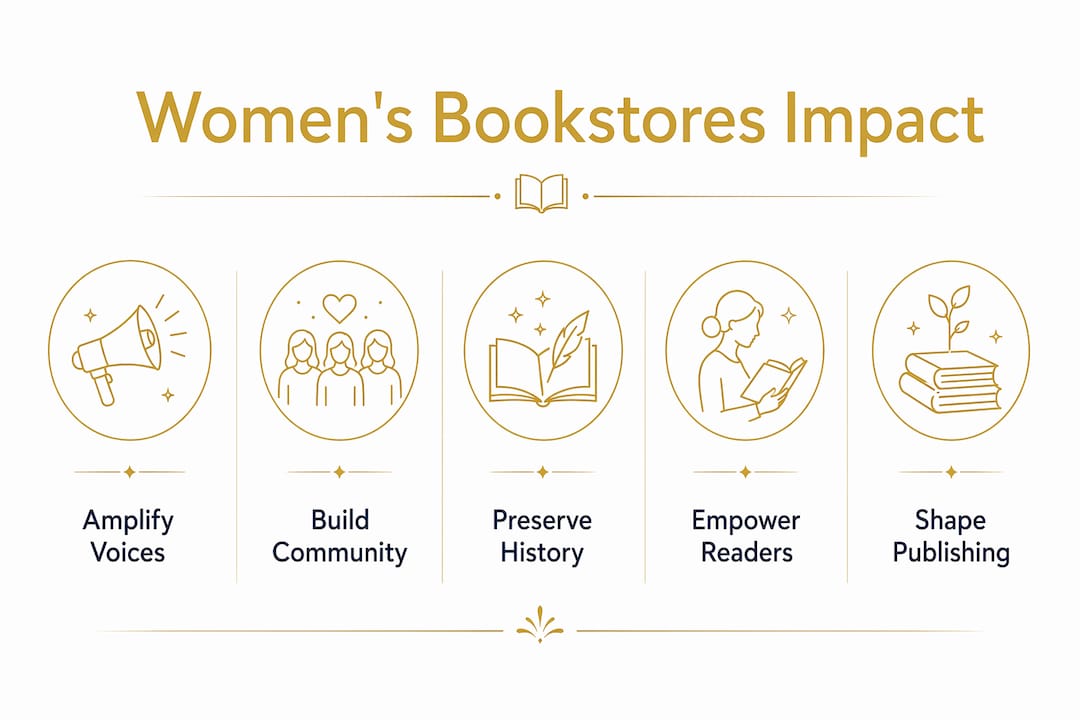
Women’s bookstores are defined as mission-driven retail spaces that center women’s voices, feminist history, and underrepresented literature as their primary purpose. Understanding why women’s bookstores matter means recognizing that these stores do far more than sell books. They preserve feminist archives, build community for marginalized readers, and act as activist hubs in ways that mainstream retail never has. From BookWoman in Austin to Acorn Bookshop in St. Paul, these spaces have shaped how women’s literature reaches readers who need it most.
Why women’s bookstores matter for amplifying underrepresented voices
Women’s bookstores are the most direct pipeline between underrepresented authors and the readers who need their stories. Mainstream publishing has historically centered white male voices, leaving Black women, LGBTQ+ writers, and intersectional feminist authors with far less shelf space and marketing support. Women’s bookstores correct that imbalance through deliberate curation.
Acorn Bookshop, which opened in 2026 in St. Paul, dedicates 75% of new titles to women authors. That number is not a marketing claim. It reflects a structural commitment to changing whose stories get told and who profits from storytelling. When a bookstore builds its entire inventory around that mission, it creates a discovery environment that no algorithm replicates.
The curatorial work goes deeper than gender. The best women’s bookstores maintain dedicated sections for Black women authors, lesbian literature, and intersectional feminist theory. This specificity matters because a reader searching for a memoir about navigating race and gender simultaneously will not find it easily in a general bookstore. Women’s bookstores make that search short.
- Dedicated sections for Black women’s fiction, LGBTQ+ literature, and feminist theory give readers direct access to niche voices.
- Curated new arrivals prioritize debut authors from underrepresented communities who lack major publisher marketing budgets.
- Staff recommendations from booksellers who share readers’ lived experiences carry a credibility that algorithmic suggestions cannot match.
- Author events spotlight writers who rarely get invited to mainstream literary festivals.
Pro Tip: When you visit a women’s bookstore, ask a staff member for a recommendation outside your usual genre. Their knowledge of intersectional literature is one of the store’s most underused resources.
Independent women’s bookstores also focus on global Black storytelling and culinary niches to represent diverse experiences that larger chains ignore entirely. That specificity builds a loyal readership and a cultural record that outlasts any single title.
How do women’s bookstores serve as safe and empowering community spaces?
Women’s bookstores function as third spaces offering mental escape, accountability, and a sense of belonging that large online retailers cannot provide. The concept of a “third space” refers to any location that is neither home nor work but provides community and identity. For many women, especially those navigating isolation, trauma, or marginalization, a women’s bookstore fills that role precisely.
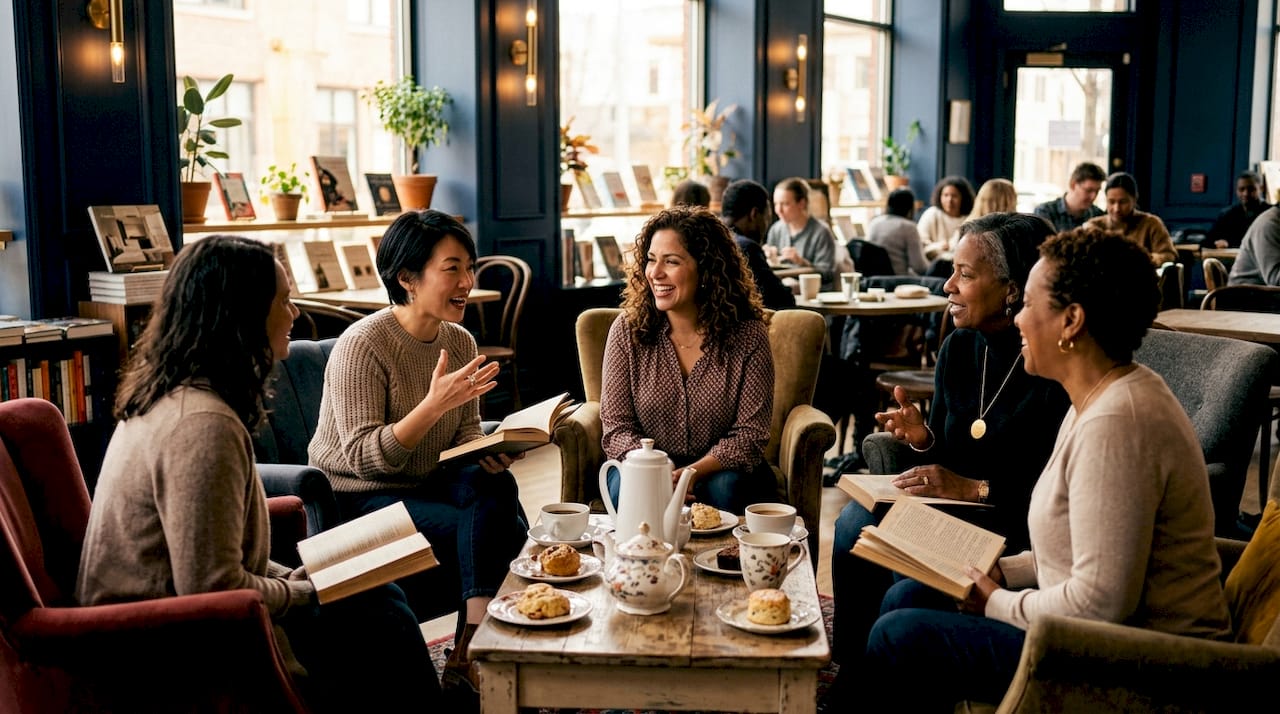
BookWoman in Austin and Womencrafts in Provincetown both evolved well beyond retail. They host book clubs, poetry readings, spiritual gatherings, and activist meetings. These programs create recurring reasons to return, which builds the kind of sustained community that changes lives rather than just afternoons. Readers who find books that empower them often trace that discovery back to a recommendation made in one of these spaces.
Womencrafts takes its community role further by offering queer discounts and maintaining explicit policies welcoming transgender and nonbinary people. That practice is not incidental. It signals to every person who walks through the door that the space was built for them. Feminist bookstores remain politically charged spaces that navigate hostile policy environments to keep marginalized identities centered.
- Book clubs create accountability structures that keep readers engaged with feminist and social justice literature over time.
- Poetry readings and open mics give local writers a platform that builds confidence and community simultaneously.
- Activist meetings use the bookstore as a neutral, trusted venue for organizing around reproductive rights, LGBTQ+ protections, and racial justice.
- Inclusive pricing policies like queer discounts lower financial barriers for the readers who most need these spaces.
Pro Tip: Check a women’s bookstore’s events calendar before your visit. Many of the most valuable programs, including free author talks and reading groups, are not widely advertised outside the store’s own newsletter.
The mental and emotional relief these spaces provide is not a soft benefit. For readers managing the weight of psychologically harmful relationships or systemic stress, a bookstore that understands their experience is a genuine resource. Smartreadshub recognizes this connection between curated reading and emotional recovery, which is why the role of independent bookstores in healing communities deserves serious attention.
What is the historical and evolving legacy of feminist bookstores?
Feminist bookstores emerged during second-wave feminism in the early 1970s as deliberate political projects. They were not simply stores that happened to sell books by women. They were cultural distribution power centers that promoted feminist publishing, connected activist networks, and gave marginalized women’s literature a physical home.
At their peak, over 100 feminist bookstores operated across the United States and United Kingdom. Fewer than 20 of those original stores remain as of 2026. That decline reflects the combined pressure of the internet, big-box retail, and the economic fragility of mission-driven small businesses. The stores that survived did so by evolving.
| Era | Key development | Representative stores |
|---|---|---|
| 1970s | Feminist bookstores founded as political projects | BookWoman (Austin), Silver Moon Bookshop (London) |
| 1980s–1990s | Peak of over 100 stores; national feminist publishing networks | Womencrafts (Provincetown) |
| 2000s | Decline begins with rise of online retail | Many closures across the US and UK |
| 2010s | Survivors pivot to community programming and events | BookWoman, Womencrafts adapt their models |
| 2020s–2026 | New wave of women-owned stores with intersectional missions | Acorn Bookshop (St. Paul) |
BookWoman and Womencrafts now serve as critical archival hubs for feminist and LGBTQ+ history. Their longevity is owed directly to their evolved community roles beyond retail, serving as spaces for activism, spirituality, and literary culture. A bookstore that only sells books closes when sales drop. A bookstore that hosts a community stays open because the community needs it to.
The new wave of women’s bookstores, represented by stores like Acorn, carries that legacy forward with an explicitly intersectional lens. These stores do not simply replicate the 1970s model. They address the gaps that second-wave feminism left behind, centering Black women, queer women, and women of color from the start.
Why is supporting women’s and Black women-owned bookstores crucial?
Supporting women’s bookstores is a direct investment in cultural preservation and local economic health. These stores operate on thin margins. They carry inventory that larger retailers will not stock, host events that generate community value without generating ticket revenue, and employ booksellers whose expertise is irreplaceable.
Community leaders recommend spending at least $25 monthly at Black women-owned bookstores to help sustain them and their cultural work. That figure is not arbitrary. It represents the kind of recurring, predictable revenue that allows a small bookstore to plan inventory, pay staff, and commit to programming. One-time purchases during Women’s History Month do not build the financial foundation these stores need.
Running a mission-driven, woman-owned bookstore requires balancing curated inventory with demanding operational realities. Rent, distribution costs, and competition from large online retailers create constant pressure. Many owners collaborate with each other to share resources, negotiate with publishers, and cross-promote titles. That collective approach is not just practical. It reflects the same values of mutual support that the stores themselves model for their communities.
- Buy books directly from the store rather than through large online platforms to maximize the revenue that stays local.
- Attend paid events like author readings and workshops, which generate income beyond book sales.
- Subscribe to newsletters and share event announcements to extend the store’s reach without cost to the owner.
- Gift books from women’s bookstores rather than general retailers to direct spending toward mission-aligned businesses.
Bookstores that center women’s voices and diverse storytelling also shape what gets published next. Publishers pay attention to where books sell and which communities show up consistently. When readers support women’s bookstores, they influence the entire publishing pipeline, not just the store’s bottom line.
Key Takeaways
Women’s bookstores are irreplaceable cultural institutions that amplify underrepresented voices, build community, and preserve feminist history in ways no mainstream retailer replicates.
| Point | Details |
|---|---|
| Deliberate curation changes access | Stores like Acorn Bookshop dedicate 75% of new titles to women authors, filling gaps mainstream retail ignores. |
| Third spaces serve real needs | Women’s bookstores provide mental escape, community, and activist infrastructure beyond what any online platform offers. |
| Historical legacy is fragile | Fewer than 20 original feminist bookstores from the 1970s survive; supporting them preserves irreplaceable archives. |
| Financial support has a direct impact | Spending at least $25 monthly at Black women-owned bookstores provides the recurring revenue these stores need to survive. |
| New stores carry the mission forward | Contemporary women’s bookstores expand the original feminist model with intersectional and LGBTQ+ inclusive missions. |
What I’ve learned from watching these spaces fight to survive
I’ve followed women’s bookstores for years, and the pattern I keep seeing is this: the stores that close are the ones that stayed purely retail. The ones that survive are the ones that became something harder to replace than a place to buy books.
That shift is not accidental. It reflects a hard-won understanding that a women’s bookstore’s real product is belonging. The books are the medium. The community is the point. When BookWoman hosts a feminist theory reading group or Womencrafts offers a queer discount to a first-time visitor, those decisions build loyalty that no discount algorithm can manufacture.
What surprises most people is how politically active these spaces remain. They are not nostalgic relics of second-wave feminism. They are live wires in the current political moment, stocking books on reproductive rights, trans identity, and racial justice precisely because those topics face suppression elsewhere. A bookstore that carries what others won’t is doing something genuinely courageous.
My honest recommendation: visit a women’s bookstore before you decide you don’t need one. Spend an hour with a knowledgeable bookseller. Attend one event. The experience of being in a space that was built specifically for your intellectual and emotional life is not something you can replicate by browsing online. These stores deserve your presence as much as your purchases.
— Robert
Smartreadshub and the books that women’s bookstores champion
Women’s bookstores point readers toward literature that heals, challenges, and validates. Smartreadshub extends that mission into the digital space by curating books specifically for women navigating difficult emotional terrain.

If you’ve ever walked out of a women’s bookstore with a book that changed how you understood your own life, Smartreadshub offers that same curatorial care online. The site’s guide to books by women authors connects readers with titles that address gaslighting, narcissistic relationships, and emotional recovery. These are exactly the books that women’s bookstores have always championed. Smartreadshub also covers women’s mental health reading for readers who want literature that speaks directly to their experience.
FAQ
Why do women’s bookstores matter more than general bookstores?
Women’s bookstores dedicate their entire inventory and programming to amplifying voices that mainstream retail underrepresents. They serve as activist hubs, community spaces, and cultural archives that general bookstores do not replicate.
How many feminist bookstores still exist in 2026?
Fewer than 20 of the original feminist bookstores from the 1970s remain open as of 2026, with BookWoman in Austin and Womencrafts in Provincetown among the most prominent survivors.
How can I support a women’s bookstore financially?
Community leaders recommend spending at least $25 monthly at women-owned and Black women-owned bookstores. Buying directly from the store, attending paid events, and gifting books from these retailers all direct revenue where it matters most.
What makes women’s bookstores safe spaces for LGBTQ+ readers?
Stores like Womencrafts offer queer discounts and maintain explicit policies welcoming transgender and nonbinary people, creating an environment where marginalized identities are centered rather than accommodated.
Are new women’s bookstores still opening?
Yes. Acorn Bookshop opened in St. Paul in 2026 with a mission to dedicate 75% of new titles to women authors, demonstrating that the significance of female-centric bookstores continues to grow alongside demand for intersectional feminist literature.