
Sharing book recommendations with friends is defined as the practice of offering personalized, context-driven reading suggestions tailored to a specific person’s tastes, mood, and current life needs. Generic lists miss the point entirely. The best book recommendations land because they feel chosen, not generated. Social reading platforms like Literal and BookBuddies have made it easier than ever to share favorite reads in real time, track what friends are reading, and build ongoing literary conversations that go far beyond a quick text message.
How to share book recommendations friends will actually read
The most effective peer recommendations include a brief “why” note explaining the personal impact or relevance of the book. That single sentence of context increases the chance your friend will actually pick it up. Without it, even a brilliant title feels like homework.
Dedicated social reading platforms outperform generic social media for this exact reason. Specialized apps reduce the performative pressure of broadcasting to a wide audience and create a more intimate, authentic exchange. You are not posting for likes. You are talking to one person about one book.

Literal reports thousands of monthly active users engaging in focused book sharing and discussion. That scale shows that readers want a dedicated space for this, not a buried post in a crowded feed.
Choosing the right platform for your reading circle
Different platforms serve different needs. Literal works well for readers who want clean shelves, progress tracking, and a focused social feed. BookBuddies suits friend groups that want group reading goals and accountability features like leaderboards and streaks. Apps like Rexx and Readwell let readers organize books into unlimited custom categories and generate shareable private links, usually with a free base version.
The table below compares key feature categories across platform types.
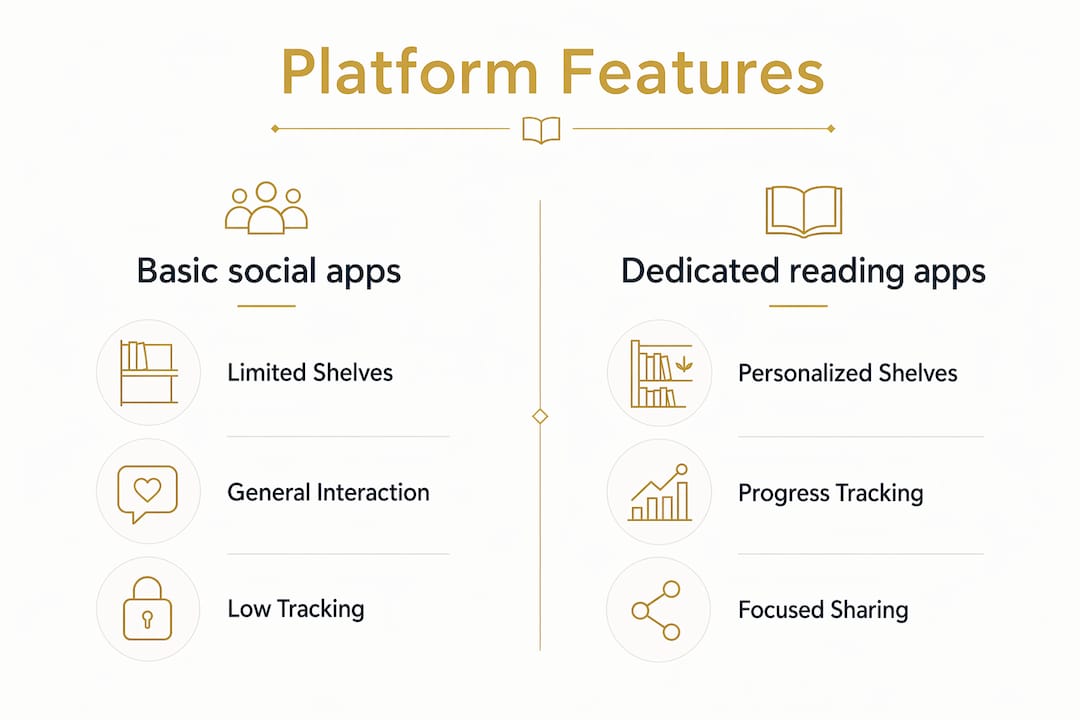
| Feature category | Basic social apps | Dedicated reading apps |
|---|---|---|
| Personalized shelves | Limited | Full custom categories |
| Progress tracking | None | Real-time sync |
| Private sharing | No | Yes, via direct links |
| Group reading goals | No | Yes, with streaks |
| Cost | Free | Free with optional premium |
Pro Tip: Start with one platform and invite two or three close friends before expanding. A small, engaged circle beats a large, silent one every time.
How do you tailor suggestions to a friend’s unique tastes?
Effective book suggestions among friends start with understanding your friend’s current emotional state, not just their favorite genre. Books editor Namara Smith of The New Yorker puts it directly: "what counts as good depends on the particular taste," which means recommendations must account for where your friend is right now, not just what they liked two years ago.
Personal reading curators reinforce this point. Emotional and thematic resonance beats algorithmic genre matching for meaningful suggestions. An algorithm knows your friend reads thrillers. You know they just went through a breakup and need something that feels like a warm conversation.
Ask yourself three questions before suggesting a title:
- What feeling does my friend want from a book right now?
- Does this book speak to a question they are currently living with?
- Can I explain in one sentence why this book suits them specifically today?
The third question is the most important. If you cannot answer it, the recommendation is not ready yet. A title without context is just a title. A title with a personal note is a gift.
Pro Tip: Frame your suggestion around a feeling, not a plot summary. “This one felt like a long exhale” lands better than “it’s a literary novel set in 1940s Paris.”
Avoid the trap of recommending books you loved without filtering them through your friend’s current needs. A book that changed your life may feel completely irrelevant to someone in a different season. The goal is resonance, not endorsement.
What is the step-by-step process for sharing book suggestions?
A clear workflow turns a casual suggestion into a meaningful exchange. The process below works across platforms and friend groups.
- Choose your platform. Pick one dedicated reading app that matches your group’s habits. Literal suits solo sharers. BookBuddies suits groups.
- Build a personalized list. Create a shelf or list with two to four titles maximum. More than that overwhelms friends and reduces the chance any book gets read.
- Add a personal note to each title. Write one to two sentences explaining why this book suits your friend right now. Reference something specific about their life or mood.
- Share the link or invite directly. Use the platform’s private sharing feature or send a direct message with the list link. Avoid posting publicly unless your friend prefers that.
- Invite reciprocal feedback. Ask your friend what they thought after a few weeks. A stepwise sharing workflow turns a one-off suggestion into an ongoing dialogue.
- Keep the exchange alive. Follow up with one new suggestion every few weeks rather than sending a batch all at once.
The goal is not to curate a library. The goal is to start a conversation. Each suggestion should feel like a natural extension of your friendship, not a reading assignment.
| Step | Action | Key detail |
|---|---|---|
| 1. Choose platform | Select a dedicated reading app | Match the app to your group size |
| 2. Build list | Limit to 2–4 titles | Fewer choices increase follow-through |
| 3. Add notes | Write a personal “why” for each title | One to two sentences per book |
| 4. Share | Use private link or direct message | Avoid public posts unless preferred |
| 5. Follow up | Ask for feedback after a few weeks | Turns suggestion into discussion |
Common mistakes when recommending books to friends
The most common mistake is volume. Sending a friend a list of ten books signals enthusiasm but produces paralysis. Waiting for natural openings, such as when a friend mentions a reading rut or a specific mood they want, produces far better results than unsolicited bulk suggestions.
The second mistake is relying entirely on algorithmic lists without adding personal context. An app-generated “you might also like” list carries zero emotional weight. Your friend can find that on their own. What they cannot find on their own is your specific reason for thinking of them when you read a particular book.
“The best recommendation is not the most popular book or the most acclaimed one. It is the one you chose specifically for this person, at this moment, because you know them.”
Three other pitfalls to watch for:
- Ignoring mood shifts. A friend who loved dark literary fiction last year may need something lighter right now. Check in before suggesting.
- Skipping follow-up. Recommending without asking later what they thought closes the loop on the conversation. Follow-up is where the real connection happens.
- Using impersonal language. “Everyone loves this book” is the least persuasive thing you can say. “I thought of you specifically because…” is the most persuasive.
Reading is personal. Recommendations should be too. The self-discovery angle in books matters especially when friends are navigating difficult periods and need something that speaks directly to their experience.
Key Takeaways
Personalized, context-driven book sharing beats generic lists every time because it treats recommendations as acts of friendship, not information transfer.
| Point | Details |
|---|---|
| Add a personal note | One to two sentences explaining why this book suits your friend right now doubles engagement. |
| Limit your list | Two to four titles per share prevents choice paralysis and increases follow-through. |
| Use dedicated platforms | Apps like Literal and BookBuddies create intimate exchanges that generic social media cannot replicate. |
| Match mood, not just genre | Ask what feeling your friend wants from a book before choosing a title. |
| Follow up consistently | Asking for feedback turns a one-off suggestion into an ongoing literary friendship. |
Why I think most book recommendations miss the real point
I have been sharing books with friends for years, and the single biggest shift came when I stopped recommending books I loved and started recommending books I thought they needed. Those are two completely different acts.
Most people treat book sharing like a highlight reel. They share what impressed them, what made them look well-read, or what everyone else is talking about. That approach rarely lands. The books that changed my friendships were the quiet ones. A slim novel I handed to a friend going through a hard year. A short essay collection I sent with a note that said, “This one felt like it was written for exactly where you are right now.”
Dedicated reading platforms helped me get out of my own way. When I stopped broadcasting to a wide audience and started sharing privately with two or three people, the conversations got deeper. The psychology of reading together is real. Books become shared reference points. They give you a language for things that are otherwise hard to say.
The readers I know who do this best are not the ones with the longest lists. They are the ones who pay attention. They notice when a friend mentions feeling stuck, or restless, or hungry for something they cannot name. Then they send one book. Just one. With a note.
That is the whole practice.
— Robert
Smartreadshub’s curated guides for deeper book discovery
Smartreadshub builds curated reading guides for readers who want more than a bestseller list. The focus is on books that speak to real emotional experiences, including healing, self-understanding, and personal growth.

If you want to share books that genuinely resonate with the people you care about, Smartreadshub’s women authors discovery guide is a strong starting point. It surfaces titles that carry emotional weight and spark real conversation. For readers navigating harder seasons, the book discovery guide explains how to find books that meet readers exactly where they are. Both resources are free and built for readers who take their recommendations seriously.
FAQ
What is the best way to share book recommendations with friends?
The best approach combines a dedicated reading platform with a short personal note for each title. Platforms like Literal and BookBuddies support private sharing and real-time tracking, while a personal note explains why the book suits your friend right now.
How many books should I recommend at once?
Limit suggestions to two to four titles per share. Sending more than that reduces follow-through and can feel overwhelming rather than helpful.
Why do personalized book recommendations work better than generic lists?
Personalized suggestions account for a friend’s current mood and life context, which algorithmic or bestseller lists cannot do. Books editor Namara Smith notes that “what counts as good” depends entirely on individual taste and circumstance.
Should I use a dedicated app or just text my friends?
A dedicated reading app creates a more organized and intimate exchange. Specialized platforms reduce performative pressure and keep your recommendations in one place, making it easier to track what your friends have read and what they thought.
How do I keep the book sharing conversation going over time?
Follow up a few weeks after each suggestion and ask what your friend thought. Consistent reciprocal feedback turns a one-time recommendation into an ongoing literary exchange that deepens the friendship.