
Reactive abuse recovery means restoring safety, calming a nervous system stuck in survival mode, and unlearning the reflexive shouting, freezing, or withdrawal that ongoing mistreatment trained into you. If you are in immediate danger, call 911. If you need confidential guidance without police involvement, contact the National Domestic Violence Hotline at 1-800-799-7233 or text “LOVEIS” to 22522 through LoveIsRespect.
Recovery unfolds in stages, and none of them start with fixing your personality. They start with getting safe.
- Document what is happening before you do anything else.
- Build a private safety plan with an advocate, not alone.
- Learn grounding skills for the moments your body wants to fight or flee.
- Find a trauma-informed therapist once you are stable enough to process what happened.
Quick fact: The Gottman Institute identifies reactive abuse as shouting, physical self-defense, property destruction, or emotional shutdown, all triggered by being pushed past a breaking point by ongoing abuse, not a character flaw.
Key Takeaways
Reactive abuse recovery works when survivors secure safety first, document incidents privately, and pursue trauma-informed therapy rather than trying to reason their way out of a nervous-system response.
| Point | Details |
|---|---|
| Safety comes before insight | Contact an advocate or the National Domestic Violence Hotline before making any major decisions or confrontations. |
| Reactions aren’t character flaws | Shouting, defensive acts, or withdrawal after sustained provocation are trauma responses, not proof of mutual fault. |
| “Mutual abuse” misleads | Power imbalance and who initiated the pattern determine the dynamic, not who reacted louder. |
| Document privately and securely | Save messages, photos, and dated journal entries in password-protected storage, and share only with advocates or attorneys. |
| Therapy and reading work together | Trauma-focused approaches like EMDR pair well with curated resources from Smart Reads Hub for ongoing understanding between sessions. |
Table of Contents
- Signs and Real Examples of Reactive Abuse to Help You Recognize It
- Reactive Abuse vs. Self-Defense: Why ‘Mutual Abuse’ Misleads
- Why Reactive Abuse Creates So Much Confusion
- Safety Planning and Documentation: What to Do First
- Therapies and Coping Skills That Break the Reactive Cycle
- Expert Consensus on Recovery Priorities
- Where to Get Help Right Now
- The Emotional Stages of Healing From Reactive Abuse
- Rebuilding Relationships and Setting Boundaries Afterward
- Forgiving Yourself for the Moments You Weren’t Proud Of
- Common Pitfalls That Pull You Back Into the Cycle
- A Few Honest Words on Getting Here
- Curated Reading as a Companion to Recovery
- Sources
Signs and Real Examples of Reactive Abuse to Help You Recognize It
Reactive abuse looks different in every relationship, but the shape underneath is usually the same: sustained provocation followed by an explosive or defensive reaction that gets recorded as the “real” problem. The behaviors themselves often include yelling back after weeks of being belittled, pushing someone away who is blocking a doorway, breaking a phone or a dish out of sheer frustration, or going cold and silent because speaking feels dangerous.
Three scenarios show the pattern clearly:
- A partner mocks someone’s appearance nightly for a month. One evening she snaps, “I hate you,” and slams a door. He records it and shows friends “how unstable” she is.
- A partner corners someone during an argument, blocking the exit. The person shoves past to leave. The blocker later tells others they were “assaulted.”
- Someone is interrogated about their phone for the tenth time that week and finally throws it across the room. The interrogator uses this as proof that they were the reasonable one all along.
In each case, the provocation is invisible to outsiders, but the reaction is loud and easy to photograph, screenshot, or repeat to family.
What separates a single bad night from an actual pattern of reactive abuse?
- Frequency: reactive incidents cluster after repeated, not isolated, provocation.
- Escalation: each cycle tends to intensify, with the provoking behavior getting bolder as it goes unchallenged.
- Context: the reaction only happens in response to a specific trigger the other person controls, not randomly.
- Aftermath: the reaction, not the provocation, becomes the story told to others.
If you’re nodding along to two or more of these, you’re likely looking at reactive abuse, not a personality problem on either side.
Reactive Abuse vs. Self-Defense: Why ‘Mutual Abuse’ Misleads
Self-defense is a physical or verbal act aimed at stopping an immediate threat. Reactive abuse is broader. It includes emotional outbursts, property damage, or withdrawal that follow sustained psychological pressure, sometimes with no physical threat present at all. Both responses come from the same survival wiring, but the label matters when you’re trying to explain what happened to a therapist, a lawyer, or yourself.
Three indicators help sort out the dynamic:
- Who initiated the pattern. Reactive behavior almost always follows an established pattern of control, criticism, or provocation from the other person.
- Where the power sits. One partner typically controls finances, information, or access to friends and family; the other is reacting from a position of reduced power.
- What repeats. The controlling behavior shows up across contexts and relationships; the reactive behavior shows up only in response to it.
The Hotline explicitly rejects the term “mutual abuse” because it treats both people as equally responsible when the power imbalance and who initiated the harm are the actual deciding factors. Advocates who work these cases daily see the same thing over and over: labeling it “mutual” lets the person holding the power escape accountability while the survivor absorbs the blame for defending themselves.
Ask yourself, or an advocate, these questions to clarify your own situation:
- Does one person control money, communication, or social access more than the other?
- Did the explosive moment happen in isolation, or after a buildup you can trace?
- Would this behavior happen with a stranger, or only with this specific person?
Pro Tip: Write down the timeline of a recent incident in plain chronological order before you talk to an advocate. Seeing the provocation and reaction side by side on paper makes the pattern obvious in a way memory alone often can’t.
Why Reactive Abuse Creates So Much Confusion
Gaslighting and blame-shifting thrive on timing. An abuser provokes a reaction, waits for the outburst, and then points to that single moment as proof the survivor is the “real” problem, erasing everything that led up to it. Over time, this rewrites your own memory of events. You start believing the story where you’re the aggressor, because it’s the only version anyone ever discusses.
Underneath the confusion is straightforward physiology. Prolonged exposure to threat activates fight, flight, freeze, or fawn responses, survival reflexes that bypass rational thought entirely. Trauma research from the National Center for Biotechnology Information explains that sustained psychological abuse dysregulates the nervous system, producing reactions that look like aggression but are actually the body doing what it was built to do under threat.
A person who has spent months bracing for the next attack does not “choose” to snap. Their nervous system has been primed by repetition to interpret ordinary moments as danger, and it fires accordingly.
That dysregulation carries a cost. Survivors commonly report shame that outlasts the incident itself, along with sleep disruption, trouble concentrating, and symptoms consistent with PTSD or complex PTSD, including hypervigilance and a shrinking sense of self-trust. Recognizing the mechanism doesn’t erase the outburst, but it does change what you do with the guilt.
Safety Planning and Documentation: What to Do First
Before you confront anyone, change any living arrangement, or file for anything legal, build a private plan with someone trained to help you do it safely.
- Contact an advocate through the National Domestic Violence Hotline before making major moves. They help assess risk levels specific to your situation.
- Keep a private, dated journal of incidents, written somewhere your partner cannot access, whether that’s a notes app with a passcode or a notebook stored outside the home.
- Save texts, voicemails, and emails as they happen, and back them up to a password-protected cloud account rather than a shared device.
- Photograph any physical evidence, like property damage, immediately and store copies off-site.
- Decide in advance who you’d call, where you’d go, and what you’d bring if you needed to leave quickly.
Pennsylvania’s public safety planning resource recommends storing this documentation securely and sharing it only with legal counsel or a trained advocate, never with the abuser, since confronting someone with evidence often escalates risk rather than resolving it.
Contact police when there’s an immediate physical threat or when you need a formal report for a protective order. Contact a family law attorney or a domestic violence advocate when you’re weighing custody, housing, or a restraining order. Neither step requires you to have everything figured out first.
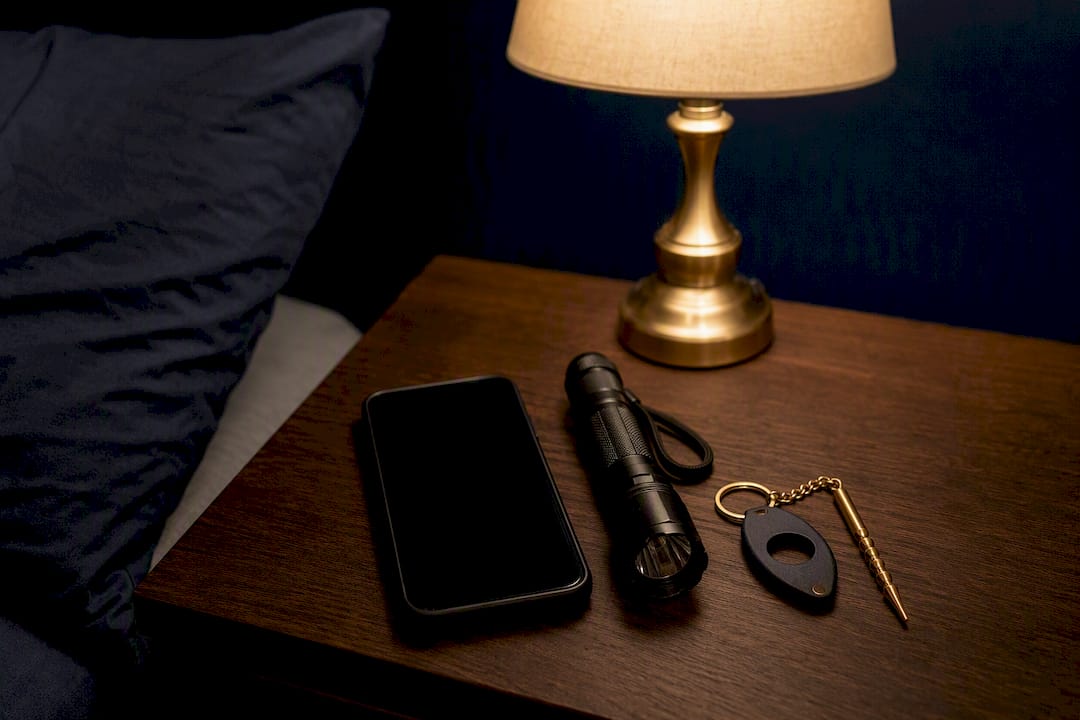
Pro Tip: Timestamp everything. A screenshot with a visible date and time carries far more weight with an advocate or attorney than a description from memory, even an accurate one.
Therapies and Coping Skills That Break the Reactive Cycle
Stopping the cycle takes two tracks: things you do in the moment, and things you work on over months.
In the moment, a handful of tools consistently help:
- Grounding techniques, like naming five things you can see and four you can hear, pull your nervous system out of threat mode.
- Paced breathing, extending the exhale longer than the inhale, signals safety to your body faster than trying to “think calmly.”
- Scheduled time-outs, agreed on in advance if possible, give you an exit before escalation peaks.
- A rehearsed safe exit, a specific door, a specific phrase, a specific place to go, removes decision-making from a moment when your brain isn’t built for decisions.
Longer term, several therapy pathways show real value for people healing from prolonged abuse and reactive responses. Trauma-focused therapies, including EMDR, work by reducing the emotional intensity attached to traumatic memories, which often lowers the reactivity itself over time. Cognitive Processing Therapy, developed originally for PTSD, helps people examine the beliefs trauma left behind, like “I’m the volatile one,” and replace them with more accurate ones. Group therapy and peer-support settings add something individual therapy can’t: hearing someone else describe the exact scenario you thought only you had lived through.
Rebuilding boundaries comes next, and it’s slower than most people expect. That means practicing saying no in low-stakes situations before you try it in high-stakes ones, learning to detach emotionally without shutting down entirely, and treating a setback as data rather than failure. Therapists who specialize in this work often combine stabilization techniques with rehearsed safe-exit scenarios, essentially practicing the plan until it’s automatic rather than something you have to think through under stress.

Pacing matters more than speed here. Reactivity took months or years to build; it doesn’t unwind in a single course of therapy sessions.
Expert Consensus on Recovery Priorities
Clinicians and advocates who work this territory daily tend to agree on the order of operations: safety first, nervous-system stabilization second, trauma therapy third. Skipping ahead to “healing” while still in an unsafe situation rarely holds.
- Safety planning and documentation come before any deep therapeutic work.
- Advocates consistently reject “mutual abuse” framing because it obscures who holds power and who initiated the harm.
- Hotlines and survivor-advocates serve as the front door to shelters, legal referrals, and safety plans, not a last resort.
- Reframing reactions as trauma responses, rather than personal failures, tends to be the turning point that makes boundary-setting possible.
Clinicians who work with reactive-abuse cases note that the shift from “I am the volatile one” to “my nervous system reacted to sustained threat” is often what finally lets a survivor act on their own behalf, according to clinical commentary published by GoodRx Well-Being.
Curated reading fits into this order as a supplement, not a substitute. A well-chosen book on trauma bonding or gaslighting can give language to a pattern you’ve felt but couldn’t name, which speeds up the work you do with an advocate or therapist rather than replacing it.
Where to Get Help Right Now
Reaching out doesn’t require having a plan yet. The National Domestic Violence Hotline offers 24/7 phone, chat, and text support and can connect you to local shelters and legal referrals. LoveIsRespect serves a similar role for younger relationships. Both can help you find trauma-informed therapists and telehealth options if in-person care isn’t accessible where you live.
A short starting list:
- Call or chat with the National Domestic Violence Hotline for immediate, confidential support.
- Ask your primary care provider or a local domestic violence agency for a referral to a trauma-informed therapist.
- Search telehealth directories if transportation or scheduling makes in-person therapy difficult.
To keep learning while you line up professional support, a few Smart Reads Hub pages go deeper on the mechanics behind reactive abuse:
- The cycle of toxic relationships, for understanding the pattern that produced the reaction in the first place.
- Emotional recovery after abuse, for what healing actually looks like month to month.
- Signs you are healing from a toxic relationship, for markers of real progress.
The Emotional Stages of Healing From Reactive Abuse
Healing from reactive abuse tends to move through recognizable stages, though rarely in a straight line. The first stage is usually disorientation: you know something is wrong, but you can’t yet separate the provocation from your reaction to it. This is where documentation and an advocate’s outside perspective help most, because your own read on events has been distorted by repetition.
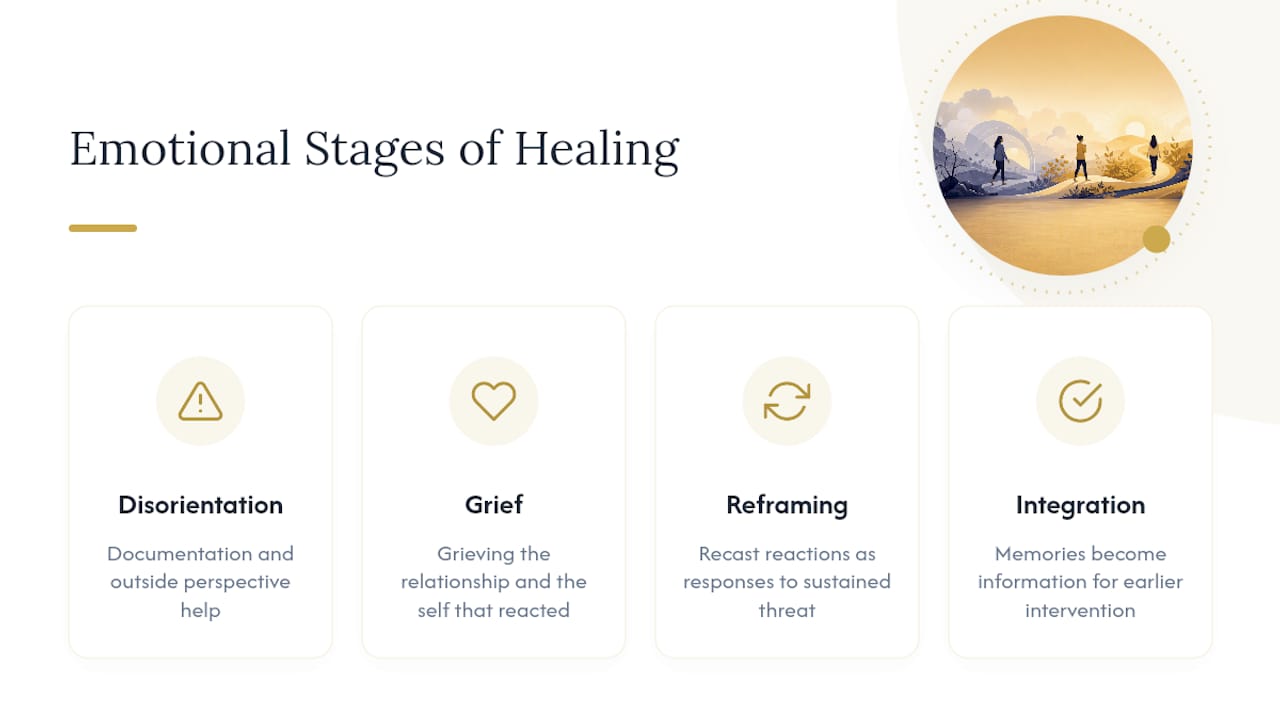
The second stage is grief, often unexpected in its intensity. You’re not just mourning the relationship or the version of the person you hoped for. You’re grieving the version of yourself that reacted in ways that still make you cringe.
Third comes reframing, the stage where “I am the volatile one” starts shifting toward “my body reacted to sustained threat.” This rarely happens all at once. It happens in fragments, usually triggered by therapy sessions, a book that names the pattern accurately, or a conversation with someone who has lived through something similar.
The final stage is integration, where the memory of your reactions stops carrying constant shame and starts functioning as information: this is what happens to me under prolonged pressure, and here’s how I intervene earlier next time. Integration doesn’t mean the memories disappear. It means they stop running your nervous system in the present.
Expect these stages to overlap and double back. A stressful week can drop you from integration straight back into grief, and that’s not regression. It’s how trauma recovery actually works.
Rebuilding Relationships and Setting Boundaries Afterward
Whether you stay in the relationship, end it, or are rebuilding trust with friends and family who witnessed the fallout, boundary work looks different than it did before the reactive cycle started.
If you’re staying in the relationship (some survivors do, often after the other person also enters treatment), boundaries need to be concrete and behavioral, not abstract. “I need respect” is not enforceable. “I will leave the room if voices get raised, and we resume the conversation after a cooling-off period” is. Any rebuilt relationship also needs a third party, usually a couples therapist trained in abuse dynamics, not a generalist, to keep the power imbalance from re-establishing itself under a calmer surface.
If you’ve left, rebuilding trust with people who saw your reactive moments and judged you for them takes patience. Some relationships repair once you explain the fuller context; others don’t, and that’s a loss worth acknowledging rather than minimizing.
New relationships benefit from boundaries set early and stated plainly rather than tested through conflict. Learning to detach emotionally without losing yourself is a skill separate from boundary-setting itself, and most survivors need both: the ability to say no, and the ability to not absorb someone else’s emotional state as your own responsibility.
Forgiving Yourself for the Moments You Weren’t Proud Of
Guilt over reactive moments is one of the most common barriers to full recovery, and it’s often disproportionate to what actually happened. Someone who slammed a door after weeks of being ignored can carry more shame about that door than the person who ignored them carries about the weeks that preceded it.
Self-compassion here isn’t about excusing harmful behavior. It’s about locating it accurately in context. A useful exercise: write down the reactive moment, then write down everything that happened in the days or weeks before it. Read both side by side. Most people find the reaction looks proportionate, even inevitable, once the full timeline is visible.
Self-forgiveness tends to follow a specific sequence rather than arriving all at once. First, naming the trauma response for what it was, a survival reflex, not a character trait. Second, separating the one moment from your identity as a whole. Third, making amends where it’s genuinely warranted (a broken object, a harsh word to someone uninvolved) without turning that amends process into ongoing self-punishment.
Therapists who work this territory often use structured self-compassion exercises, writing a letter to yourself from the perspective of someone who loves you, or practicing the same tone with yourself that you’d use with a friend describing an identical situation. It sounds small. It’s frequently the piece that unlocks everything else, because shame that goes unaddressed tends to quietly sabotage the boundary work that comes next.
Common Pitfalls That Pull You Back Into the Cycle
The most common relapse pattern isn’t dramatic. It’s gradual reengagement: answering one more text, agreeing to “just talk,” rationalizing a single incident as an outlier. Each small reentry resets the nervous system’s expectation that provocation is coming, which resets the reactive cycle right along with it.
A second pitfall is mistaking calm for resolution. A cooling-off period after a blowup often gets misread as proof the relationship has changed, when nothing about the underlying pattern actually shifted. Advocates recommend tracking behavior over months, not days, before trusting a apparent change.
A third pitfall shows up in new relationships: vigilance that never turns off. Some survivors, understandably, treat every raised voice or disagreement as the start of the old pattern, which can strain healthy relationships that don’t deserve that suspicion. This is where trauma-focused therapy earns its place, helping you recalibrate what’s actually dangerous versus what’s simply uncomfortable.
Isolation compounds all three. Recovery slows dramatically without an advocate, therapist, or peer-support group checking in regularly, because reactive-abuse dynamics rely on the survivor doubting their own read of events, and doubt grows unchecked in isolation. Staying connected to at least one outside perspective, whether that’s a hotline advocate, a therapist, or a support group, is one of the more reliable relapse-prevention tools available.
A Few Honest Words on Getting Here
If you recognize yourself in these pages, the shame you’re carrying makes sense, and it’s not the full story. Reactive abuse recovery is possible, and it usually starts smaller than people expect: one documented incident, one call to an advocate, one book that finally names what happened accurately. Smart Reads Hub built its resources around that exact moment of recognition, alongside therapy and advocacy, not instead of them.
— Robert
Curated Reading as a Companion to Recovery
A book alone won’t get you out of an unsafe situation, and it’s not meant to. What it can do is give you language for a pattern that’s felt confusing for months or years, which makes the conversations with your therapist or advocate move faster once you’re ready to have them.

Smart Reads Hub curates nonfiction and fiction titles specifically chosen for people untangling gaslighting, trauma bonding, and reactive dynamics, work that a general self-help shelf usually skims past because it’s more niche than “communication tips” or “love languages.” That specificity is the actual advantage: you’re not sifting through dozens of broad relationship books hoping one addresses your exact situation. The science-backed guide to how psychology books aid healing walks through why reading about trauma patterns measurably helps survivors reframe their experience, and it’s a solid starting point if you’re not sure where to begin. From there, browse the full curated book list for titles matched to gaslighting, trauma bonding, and reactive abuse specifically. Start with one book this week, alongside whatever professional support you’re already lining up.
Sources
- What is reactive abuse and can it be prevented? — The Gottman Institute
- Safety planning — Pennsylvania (example resource)
- Trauma and recovery — NCBI