
Apologizing to a narcissist is worth it only when you have a specific, limited goal, like closing out a conflict cleanly or protecting your own integrity, not when you’re hoping it will change how they treat you. If you do apologize, pair it with a clear boundary and follow through on it every time. Manage your expectations: even a well-built apology rarely earns real accountability back, and forgiveness from them is never guaranteed.
TL;DR:
- Apologizing to a narcissist is only effective for short-term de-escalation, not for genuine accountability or changing their treatment.
- A structured apology that explicitly names harm, takes responsibility, offers repair, and enforces boundaries has the best chance to be accepted.
- After an apology, expect denial, conditional acceptance, gestures replacing words, or escalation instead of true resolution.
- Boundaries must be specific and enforceable on your part, with consistency being more impactful than words alone.
- Genuine remorse shows through behavior changes, while manipulative responses remain performative and do not reflect true accountability.
Table of Contents
- Deciding Whether Apologizing to a Narcissist Makes Sense
- How to Apologize Effectively: A Five-Step Structure
- What Happens After You Apologize to a Narcissist
- Making an Apology Mean Something: Boundaries and Follow-Through
- Ready-to-Use Apology Scripts
- Author Perspective and Smart Reads Hub Resources
- The Emotional Cost of Apologizing and Getting Nothing Back
- Spotting Real Remorse Versus a Manipulation Tactic
- Why the Standard Apology Advice Misses the Point
- Where to Go Next for Deeper Support
- Sources
Deciding Whether Apologizing to a Narcissist Makes Sense
Before you write a single word of an apology, get honest about what you actually want from it. Most people apologizing to a narcissist are chasing one of three things: repairing the relationship, de-escalating a fight that’s spiraling, or simply relieving their own guilt. Only the second one tends to work reliably. De-escalation is a short-term, situational goal, and a calm, specific apology can genuinely lower the temperature in a room. Repair and guilt relief are riskier bets, because they depend on the other person meeting you halfway, and narcissistic patterns make that meeting point rare.
Here’s the real danger: an apology handed to someone who weaponizes vulnerability doesn’t defuse conflict, it arms it. Say “I’m sorry I raised my voice” and you may hear that line repeated back at you for months, stripped of context, as proof you’re the unstable one. That’s not paranoia. It’s a documented pattern in how narcissistic individuals process contrition, treating your admission as leverage rather than a shared moment of accountability, as clinical summaries on narcissistic personality disorder lay out.
Before defaulting to “I’m sorry,” consider these alternatives:
- Ask directly, “What kind of repair are you looking for?” and see if the answer is reasonable or a trap.
- Offer a concrete fix instead of an apology. “I’ll have the report to you by Friday” often lands better than any words of regret.
- Delay the apology until you’ve had time to think it through and aren’t reacting from guilt or fear.
- Skip it entirely if the relationship is unsafe or if past apologies have only fueled more control.
How to Apologize Effectively: A Five-Step Structure
Apology research consistently points to the same finding: structure beats sentiment. Full apologies that explicitly name responsibility get accepted far more often than partial, hedged, or conditional ones, according to Psychology Today’s review of common apology failures. Analyses of apology components going back to researchers like Lewicki and Lazare, discussed in The Atlantic, narrow it down further: acknowledgment of responsibility and a concrete offer of repair matter more than any other ingredient. Here’s a five-step version adapted for narcissistic dynamics specifically:
- Name the harm precisely. Say what happened and what it caused, not a vague gesture at “the situation.” “I canceled dinner last minute and you had already told your friends I’d be there” beats “I know things got messy.”
- Take responsibility without hedging. Cut every “if” and “but” from the sentence. “I’m sorry I was late” is an apology. “I’m sorry if I was late, but traffic was bad” is not.
- State remorse briefly, then offer repair. One sentence of regret, one sentence of action. Don’t pad it with self-flagellation, which narcissistic listeners often turn into ammunition later.
- Set the boundary you intend to enforce. Tell them what happens if the behavior that triggered this apology, or your own, repeats.
- Prepare before you deliver it. Rehearse the wording, pick a low-stakes moment, keep the whole thing under thirty seconds if you can, and plan what you’ll do afterward regardless of their reaction.
Pro Tip: Write your apology out and read it aloud twice before you say it to them. If it still sounds honest and complete without any “but,” you’re ready.
Clinicians who work with high-conflict interactions also recommend going in with a pre-planned agenda, according to Time, so you don’t get emotionally flooded and drift off your own script mid-conversation.
What Happens After You Apologize to a Narcissist
Expect one of five reactions, and expect them to show up fast. Denial and deflection are common: your specific, well-structured apology gets met with “I don’t even remember that” or “you’re making this a bigger deal than it was.” Conditional acceptance is another pattern, where the apology is acknowledged only if you also apologize for something else, often something unrelated. Reparative gestures, a gift, a favor, sudden affection, sometimes replace verbal accountability altogether. Recognizing this substitution matters, because Psychology Today’s analysis of narcissistic apologies notes these gestures often stand in for genuine admission of wrongdoing, and you have to decide for yourself whether the gesture actually meets your need for repair.
Watch for these red flags in particular:
- No behavioral change in the days or weeks following the apology, even after the initial gesture.
- Your words used against you later, especially in front of others.
- Escalation rather than resolution, where the original issue reopens as a bigger fight.
- New blame introduced, redirecting focus from the original harm to something you supposedly did wrong.
If the conversation drifts, redirect it simply: “I’ve said what I’m sorry for. What I need now is [specific repair].” Repeat it if you have to. Don’t chase their reaction.
Making an Apology Mean Something: Boundaries and Follow-Through
Words rarely move the needle with narcissistic patterns. Consistency does. HelpGuide’s clinical guidance is blunt about this: narcissists test limits and expect people to back down, so the boundary you enforce after an apology matters more than the apology itself.
A boundary only works if it’s specific and enforceable by you alone. “I won’t discuss finances after 9 PM” works because you control it. “You need to stop bringing up old arguments” doesn’t, because it depends entirely on their cooperation. Some workable examples:
- “If this comes up again in front of my family, I’m leaving the room.”
- “I’ll only communicate about this by text from now on.”
- “I’m not available for this conversation until we’re both calm.”
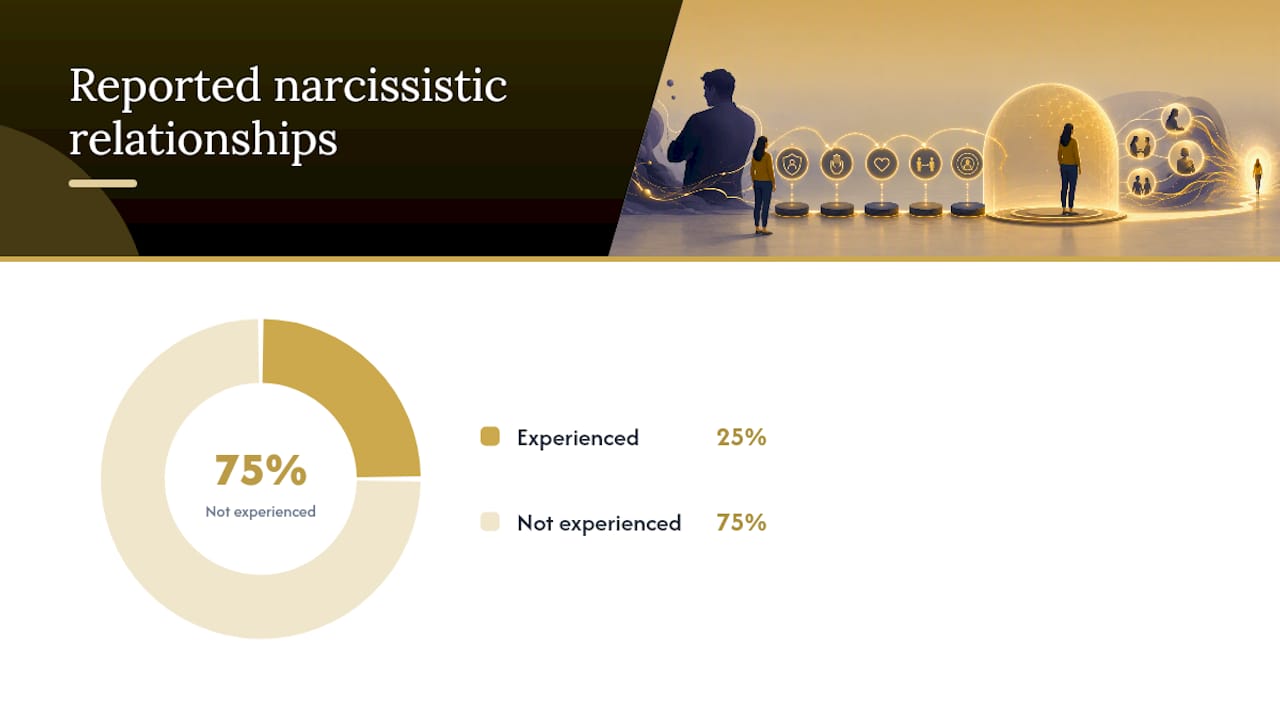
One in four American adults reports having been in a relationship with someone showing narcissistic traits significant enough to affect their well-being, per patterns discussed by Healthline, which is part of why therapists so often build entire treatment plans around boundary work rather than communication scripts alone. If the relationship involves any physical risk, escalating conflict, or financial control, loop in a therapist, a trusted friend, or a safety hotline, and start keeping written records of interactions. Documentation protects you later even when it feels unnecessary now. For a deeper walkthrough of enforcement tactics, Smartreadshub’s guide to boundaries with narcissists breaks down what consistent follow-through looks like day to day.
Ready-to-Use Apology Scripts
Keep it short, specific, and free of self-justification. Here are four you can adapt:
- Partner: “I raised my voice during dinner and embarrassed you in front of your sister. That was wrong. I’m not going to yell during disagreements again, and I’ll leave the room if I feel myself getting there.”
- Parent: “I canceled our visit without much notice. I know that mattered to you. I’ll confirm plans 48 hours ahead going forward, and I’m sticking to that.”
- Colleague: “I took credit for your idea in the meeting. That wasn’t fair to you. I’ll correct it with the team this week.”
- Friend: “I ignored your calls for two weeks without explaining why. I’m sorry that left you hanging. I’ll tell you directly next time I need space.”
Say these in person when the relationship allows a calm exchange; put them in writing when you need a record or when in-person conversation tends to spiral. Resist the urge to over-explain. A long backstory about why you did what you did dilutes the apology and gives a manipulative listener more material to work with.
Author Perspective and Smart Reads Hub Resources
This piece was written by Robert for Smartreadshub, drawing on clinical literature and apology research rather than personal anecdote. Smartreadshub focuses on well-researched, curated resources for people untangling manipulation, gaslighting, and narcissistic dynamics in their relationships. If this topic resonates, read further on why narcissists never take accountability and narcissistic communication patterns to build out your understanding. These articles are educational, not a substitute for therapy or clinical care.
The Emotional Cost of Apologizing and Getting Nothing Back
Apologizing to someone who won’t reciprocate accountability takes a real toll, and it’s worth naming plainly. Many people describe a specific kind of exhaustion afterward: they did the emotionally difficult work of naming harm and taking responsibility, only to watch it get minimized, mocked, or filed away for later use. That mismatch between effort and outcome breeds a particular kind of self-doubt, where you start questioning whether you were too harsh, too sensitive, or wrong to have expected anything different.
Some people respond by over-apologizing going forward, offering contrition preemptively to avoid conflict, which only reinforces the imbalance. Others swing the other way and stop apologizing at all, even in relationships where it would genuinely help, because the last attempt cost them so much. Neither extreme is a fix. The healthier move is separating the act of apologizing, which is about your own integrity and clarity, from the expectation of a matching response. You can be at peace with having said what needed saying even when the other person never meets you there. That distinction takes practice, and it often helps to process it with a therapist or trusted friend rather than carrying it alone, particularly if the same cycle keeps repeating.
Spotting Real Remorse Versus a Manipulation Tactic
Genuine remorse tends to show up as behavior, not performance. Someone who actually feels bad usually asks fewer questions about what you need and starts doing it, often before you’ve spelled it out completely. Manipulative responses, by contrast, tend to be loud in the moment and empty afterward: heavy emotional displays, dramatic promises, maybe even tears, followed by zero measurable change in the next interaction.
Timing is a useful tell. Watch what happens the very next time the original issue could repeat itself. If someone apologized for being dismissive and then genuinely listens the next time you raise a concern, that’s a real signal. If they apologized and then dismiss you again within days, the apology was situational, aimed at ending an uncomfortable moment rather than changing a pattern.
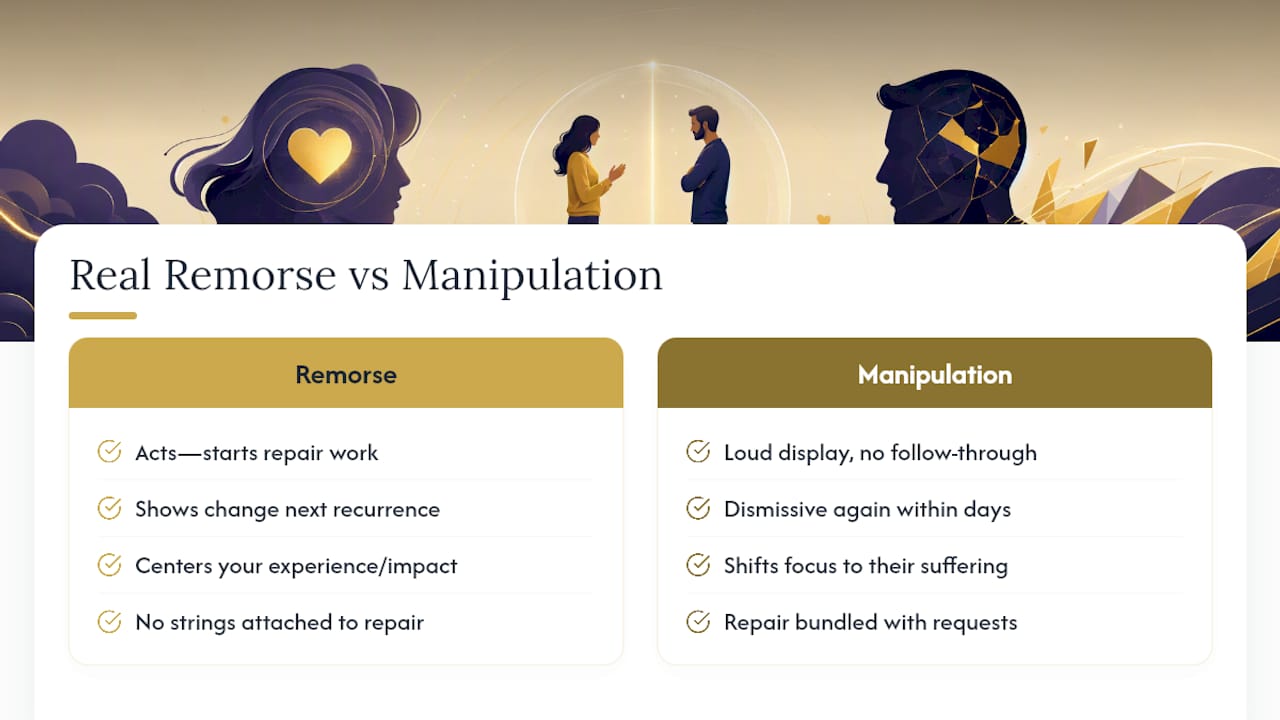
Pay attention to who the apology centers on, too. Authentic apologies focus on your experience and the impact of the harm. Manipulative ones often pivot quickly to the apologizer’s own suffering, “I feel terrible, I’ve been beating myself up,” redirecting comfort back onto them within seconds. And be wary of apologies that arrive bundled with a request, immediate forgiveness, physical affection, or dropping a boundary you’d just set. A repair offered with strings attached isn’t really repair. It’s a renegotiation dressed up as remorse.
Why the Standard Apology Advice Misses the Point
Most advice on apologizing treats it as a communication problem: find the right words, deliver them sincerely, and trust will follow. That framework falls apart with narcissistic dynamics because the failure point usually isn’t the wording. It’s the follow-through. I’d argue the boundary you enforce afterward carries more weight than anything in the apology itself, and most guides bury that point instead of leading with it.
The other place conventional wisdom goes wrong is treating forgiveness as the goal. It isn’t, and chasing it puts you at the mercy of someone else’s reaction. Your apology can be complete and honest regardless of whether they accept it, weaponize it, or ignore it entirely. That reframe alone changes how much power the interaction has over you.
If you take one thing from this, let it be this: rehearse the words, but rehearse the boundary enforcement even harder. The apology is a sentence. The follow-through is a pattern, and patterns are what actually shift a relationship, or confirm that it won’t.
— Robert
Where to Go Next for Deeper Support
Working through an apology, and everything that comes after it, is easier with the right materials in hand rather than guessing your way through it alone. This site curates book recommendations and practical guides specifically for people untangling narcissistic dynamics, gaslighting, and the emotional aftermath of relationships built on unequal accountability. Unlike a general self-help shelf, the recommendations here are selected around the specific patterns covered in this article, boundary enforcement, recognizing manipulation, and emotional recovery, so you’re not sifting through unrelated material.

If you want to understand why certain psychology books actually help with this kind of recovery work rather than just offering platitudes, start with Why Psychology Books Aid Healing: A Science-Backed Guide. It walks through what makes the right book genuinely useful after a relationship shaped by manipulation, and it’s a solid next step whether you’re preparing for a difficult conversation or processing one that already happened. For readers who’ve tried reducing contact and want structured aftercare, the partner guide on cord cutting to break a narcissistic bond offers a practical, action-oriented approach worth reading alongside it.
Sources
- 13 fake apologies used by narcissists | Psychology Today
- Narcissistic personality disorder (NCBI Bookshelf)
- Narcissistic personality disorder (HelpGuide)
- The art of the apology | The Atlantic