
Reading for as little as six minutes can reduce stress levels significantly, and for women recovering from psychological abuse, that is not a small thing. The benefits of reading for women go well beyond entertainment: consistent reading reduces acute stress, supports working memory, and rebuilds the emotional agency that manipulation erodes over time. Start here: find a private spot, set a timer for six minutes, and read a single short essay or poem. That is enough for today.
Table of Contents
- What does research actually show about reading and women’s health?
- How does reading actually help survivors heal?
- Which books should you read first for healing?
- How do you build a safe reading routine?
- When will you notice results, and how do you access books affordably?
- When is reading not enough?
- How this list was curated
- Key Takeaways
- What I want you to know before you close this tab
- Smartreadshub has a reading list built for exactly this
- Useful sources
What does research actually show about reading and women’s health?
The evidence is specific and worth knowing. A University of Sussex study found that reading for roughly six minutes reduced stress comparably to yoga or humor. That is a fast, private, and free intervention.
On the cognitive side, an 8-week reading intervention produced measurable improvements in both working memory and episodic memory. For survivors of gaslighting, who often describe foggy thinking and difficulty trusting their own recall, those gains matter.
A 2025 Frontiers in Sociology evaluation of a community reading program found increases in self-confidence, personal authority, freedom of action, and life satisfaction among women participants. These are precisely the dimensions that psychological abuse targets.
Additional evidence links regular reading to:
- Stress relief comparable to established relaxation techniques, achieved in minutes
- Improved sleep when reading replaces screen time before bed, supporting parasympathetic recovery
- Stronger empathy and emotional vocabulary, which helps survivors name what happened to them
- Self-esteem and body image gains tied to exposure to strong female characters in fiction
- Social connection through reading groups and shared literary communities
How does reading actually help survivors heal?
The mechanisms are concrete, not abstract.
Stress reduction. Reading shifts the nervous system toward a calmer state. Even a short passage can interrupt the hypervigilance loop that abuse keeps active.
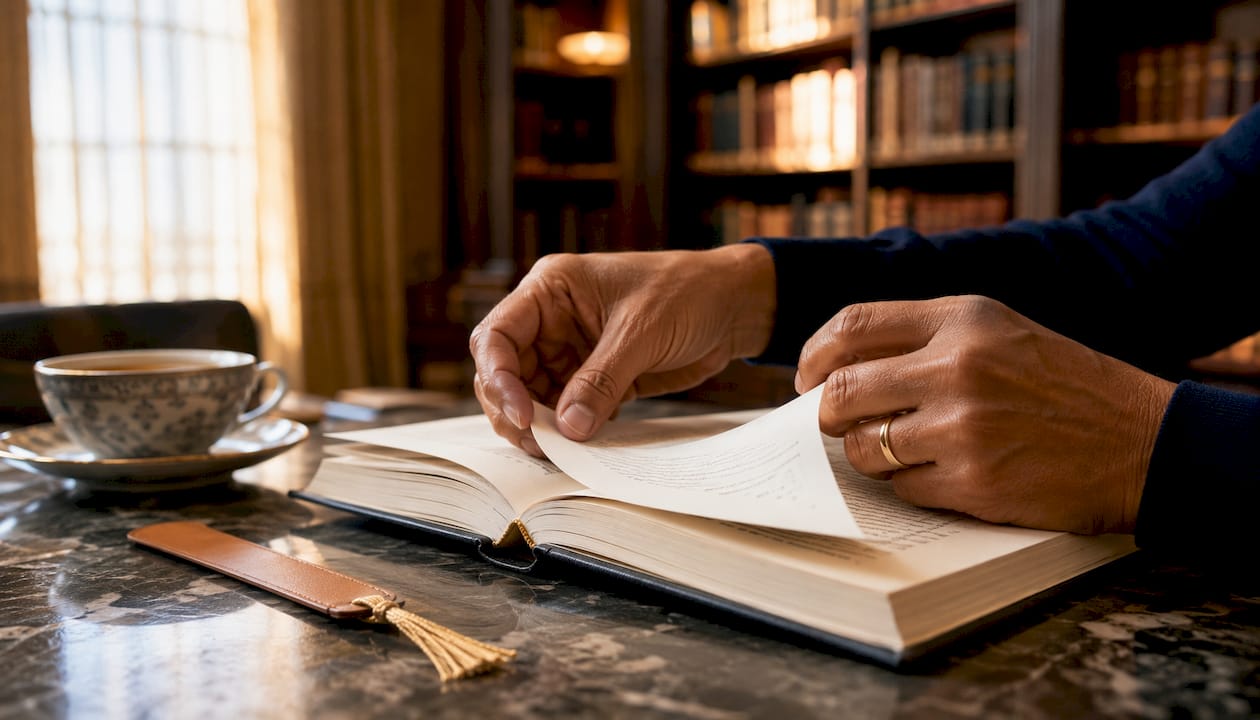
Cognitive strengthening. Sustained reading rebuilds attention and working memory, both of which gaslighting systematically degrades. Think of it as mental hygiene: the longer you practice, the cleaner the signal gets.
Perspective-taking. Fiction, in particular, lets you inhabit a character’s reasoning without personal risk. That practice sharpens your ability to spot distorted logic in real relationships.
Narrative validation. When a book names a pattern you lived through, the relief is physical. It confirms your perception was accurate. That confirmation is therapeutic.
Private rehearsal. Reading about boundary-setting lets you mentally rehearse responses before you need them in real life, at your own pace, with no consequences.
Reading can also function as a form of personal resistance and reclamation. In controlling relationships, it is often one of the few private activities that goes unchallenged, which makes it a quiet but real form of interior freedom.
Pro Tip: After a passage triggers a strong reaction, write one sentence in a private notebook: “This reminded me of when…” You do not need to finish the thought. That single line starts the pattern-recognition process safely.
Which books should you read first for healing?
The list below is organized by healing goal. Every title is widely available at U.S. libraries and major booksellers.
| Best for (healing stage/goal) | Format | Time commitment | How to use it |
|---|---|---|---|
| Understanding trauma responses | Trauma science | Long (read in chapters) | Read one chapter; journal one reaction |
| Naming complex PTSD patterns | Practical workbook | Long (use as reference) | Work one exercise per week with a therapist |
| Understanding abuser psychology | Nonfiction analysis | Medium | Read with a highlighter; note patterns you recognize |
| Disarming narcissistic tactics | Skills workbook | Medium | Practice one script per week |
| Reclaiming personal identity | Memoir/essay | Medium | Read freely; underline sentences that feel true |
| Building self-worth | Reflective nonfiction | Short to medium | Use the guided exercises at chapter ends |
| Emotional resilience through story | Historical fiction | Long | Read for pleasure; notice the protagonist’s choices |
| Immediate soothing | Short essays/poetry | Very short (10–20 min) | Read one piece; breathe; no journaling required |
Annotated picks:
-
“The Body Keeps the Score” by Bessel van der Kolk. Explains why trauma lives in the body, not just the mind. Read slowly; it can be intense. Best used alongside therapy. Trigger warning: detailed trauma descriptions.
-
“Complex PTSD: From Surviving to Thriving” by Pete Walker. Practical and compassionate. The chapter on the inner critic alone is worth the read. Works well as a self-paced workbook.
-
“Why Does He Do That?” by Lundy Bancroft. Demystifies abuser behavior without blaming the survivor. Many readers describe finishing it and finally understanding what happened to them.
-
“Disarming the Narcissist” by Wendy T. Behary. Gives concrete language for responding to narcissistic tactics. Useful whether you are still in the relationship or processing it afterward.
-
“Untamed” by Glennon Doyle. A memoir about unlearning conditioned smallness. Reads fast and hits hard. Good for moments when you need proof that a different life is possible.
-
“The Gifts of Imperfection” by Brené Brown. Research-backed and warm. The sections on shame and worthiness speak directly to what abuse does to self-perception.
-
“The Nightingale” by Kristin Hannah. Fiction. Two sisters surviving impossible circumstances. Models resilience without romanticizing suffering. Safe for most readers; strong female characters throughout.
For fiction that explores darker psychological terrain with literary depth, Nathaniel Connors’ Stories of a Condemned Soul offers a raw look at psychological suffering that some survivors find validating.
How do you build a safe reading routine?
Start smaller than feels necessary. Seriously.
- Choose a few minutes. Set a timer. Stop when it goes off, even mid-page. This builds the habit without pressure.
- Pick a private space. A locked bathroom, a parked car, a lunch break. Privacy matters more than comfort.
- Set a stop rule. If a passage triggers distress, close the book and breathe for 60 seconds. You are allowed to stop.
- Keep a private notebook nearby. Not for analysis. Just for one-line reactions.
- Scale gradually. After two weeks at 10 minutes, try 20. After a month, try a full chapter.
Journaling prompts to use while reading:
- “This character’s situation reminded me of…”
- “A boundary I wish I had set: …”
- “One thing I read today that felt true about my life: …”
- “A response I want to practice: …”
Sample weekly plan:
- Days 1–3: Six minutes of memoir or essay (low intensity)
- Days 4–5: One chapter of a workbook title
- Days 6–7: Fiction, purely for pleasure
Pro Tip: If reading aloud feels unsafe, use text-to-speech on your phone with earbuds. Most library apps, including Libby, have this built in. It keeps reading private and hands-free.
When will you notice results, and how do you access books affordably?
Timeline:
- Minutes: Stress reduction begins within a single short session, per the University of Sussex finding.
- Weeks: Cognitive improvements in memory appear after roughly eight weeks of consistent reading.
- Months: Agency, self-confidence, and life satisfaction gains build with sustained practice, as the 2025 Frontiers in Sociology data shows.
| Benefit | Evidence | Typical timeframe |
|---|---|---|
| Stress reduction | University of Sussex study | Within 6 minutes |
| Memory improvement | Frontiers in Psychology trial | weeks of consistent reading |
| Agency and self-confidence | Frontiers in Sociology | Months of consistent practice |
| Improved sleep | Woman’s World / multiple studies | Weeks of pre-sleep reading |
Free and low-cost access in the U.S.:
- Public library card: Free access to physical books, e-books via Libby/OverDrive, and audiobooks
- Interlibrary loan: Request titles your branch does not carry at no cost
- Libby app: Free with a library card; works on any smartphone
- Project Gutenberg: Free classic texts online
- Domestic violence shelters: Many maintain small lending libraries or can request titles for residents
When is reading not enough?
Reading is self-care, not a safety plan. Recognize these signs that you need more than a book:
- Physical violence has occurred or is escalating
- You are having thoughts of harming yourself or ending your life
- You feel unable to function day-to-day
- You are experiencing severe dissociation or memory gaps
- You are afraid to leave or afraid to stay
U.S. resources:
- National Domestic Violence Hotline: 1-800-799-7233 (TTY: 1-800-787-3224) or text START to 88788
- Crisis Text Line: Text HOME to 741741
- RAINN: 1-800-656-4673
Device safety: Use a private browser window when searching for help. Clear your history. Consider using a friend’s phone or a library computer if your device is monitored.
Reading works best alongside trauma-informed therapy, not instead of it. A therapist who specializes in narcissistic abuse or complex PTSD can help you process what books surface.
How this list was curated
Smartreadshub selected these titles and sources using the following criteria:
- Evidence base: Preference for titles by clinicians or researchers (van der Kolk, Walker, Bancroft, Behary, Brown) with documented trauma-informed frameworks
- U.S. availability: All titles are available at major U.S. retailers and most public libraries
- Format variety: Memoir, workbook, trauma science, and fiction, because different healing stages call for different formats
- Safety considerations: Trigger warnings noted; high-intensity titles flagged for use alongside professional support
- Research sources: University of Sussex stress-reduction data, Frontiers in Psychology memory findings, and Frontiers in Sociology 2025 agency data
Titles with prescriptive advice and no trauma focus were excluded. So were books that frame leaving an abusive relationship as straightforward, which it rarely is.
Key Takeaways
Reading reduces stress within minutes, builds cognitive resilience over weeks, and restores emotional agency over months, making it one of the most accessible recovery tools available to women healing from psychological abuse.
| Point | Details |
|---|---|
| Immediate stress relief | Six minutes of reading can reduce stress significantly, per University of Sussex research. |
| Cognitive recovery | An 8-week reading habit produces measurable gains in working and episodic memory. |
| Agency and self-confidence | Sustained reading programs improve personal authority and life satisfaction in women. |
| Start small and safe | Six minutes in a private space with one journaling prompt is a complete first session. |
| Smartreadshub curated lists | Smartreadshub offers annotated, trauma-informed reading lists for women recovering from abuse at emotional recovery resources. |
What I want you to know before you close this tab
Psychological abuse is designed to make you doubt your own mind. The confusion you feel is not weakness. It is the intended result of a sustained campaign against your perception of reality.
Reading will not undo that overnight. But it gives you something private, something that belongs only to you: time inside your own thoughts, on your own terms. That matters more than it sounds. Start with six minutes. Pick one title from the list above. Write one sentence afterward. That is not a small step. For many women, it is the first step back toward themselves.
Smartreadshub has a reading list built for exactly this
The books and research in this article are a starting point. Smartreadshub’s emotional recovery reading list goes deeper: annotated titles organized by healing stage, safety notes for high-intensity reads, and guidance on pairing books with therapy or a safety plan.
Reading is not a cure, and Smartreadshub does not frame it as one. What the site offers is a carefully filtered path through an overwhelming number of titles, so you spend your limited energy reading rather than searching. If you want a paced, private way to start, the best books for emotional recovery page is a good next stop.
Useful sources
- Frontiers in Psychology: Reading intervention and memory improvements
- Frontiers in Sociology (2025): Reading program impacts on women’s agency
- Woman’s World: Benefits of reading for women (stress and sleep data)
- KivoDaily: Women and reading, self-esteem and strong female characters
- Beyond Non-Binary: Reading as resistance and personal liberation
- TakeToNews: Reading, women’s health, and community empowerment
- Connected Woman Magazine: Why reading is a power move for women
- Smartreadshub: How books empower women readers
- Smartreadshub: Why women read more books
- Smartreadshub: Best books on women’s mental health