
Books for moving on are structured guides that combine therapeutic insight, personal narrative, and practical exercises to help readers heal emotionally and grow after a relationship ends. The best titles do more than offer comfort. They give you a framework for understanding what happened, why it hurt, and how to rebuild. Whether you left a toxic relationship, survived infidelity, or simply need a path forward, the right book can shorten the distance between pain and clarity. Smartreadshub curates exactly these kinds of resources for readers navigating the hardest emotional transitions.
What makes books for moving on actually work?

The most effective breakup recovery books share a clear structure. They do not just validate your pain. They move you through it with purpose. Breakup books work because they apply psychological frameworks to lived emotional experience, giving readers both understanding and direction.
Look for these features when choosing a title:
- Structured recovery programs. Books with daily exercises, worksheets, or phased plans outperform general advice. Structured 30-day programs with daily worksheet spreads across five recovery phases produce measurable progress because they replace vague intention with concrete daily action.
- Author credentials or lived experience. A licensed therapist like Lauren LaRusso, LPC, LMHC, or a clinician with direct client experience brings accountability to the advice. Personal memoirs from credible authors add emotional authenticity.
- Emotional processing and boundary-setting content. Books that address grief, self-worth, and boundary repair give you tools that last beyond the breakup.
- Specificity to your situation. Infidelity drives 60% of all divorces, which means a general breakup book may not address the specific trauma of betrayal. Seek titles written for your type of loss.
- Active healing orientation. The best books treat recovery as something you do, not something that happens to you over time.
Pro Tip: Before buying, read the table of contents and the first chapter. If the book opens with exercises rather than lengthy theory, it is built for active healing.
How to integrate recovery reading into your healing routine
Reading alone does not heal you. How you read matters as much as what you read. Passive consumption of even the best self-help books for healing produces little change. Active engagement with the material is what creates progress.
- Set a fixed reading window. Choose 20–30 minutes daily, ideally in the morning before the day’s distractions take over. Consistency builds momentum faster than long, irregular sessions.
- Complete every exercise before moving on. If a chapter includes a reflection prompt or worksheet, stop and do it. Skipping exercises to reach the end is the most common mistake readers make.
- Pair reading with structured journaling. Use a dedicated notebook for responses to book prompts. Keep it separate from free-form emotional journaling, which can slide into rumination.
- Assess your emotional readiness before each session. If you are in acute distress, a five-minute grounding practice before reading helps you absorb content rather than react to it.
- Track your progress at the end of each week. Write one sentence describing what shifted in your thinking. This creates a record of growth that is visible and motivating.
Pro Tip: If a book includes a companion workbook, buy it. Workbooks convert passive reading into active processing, which is where real change happens.
Combining reading with professional support accelerates results. Books on emotional recovery after breakups work best as one layer of a broader healing practice, not as a replacement for therapy or community.
What challenges come up when reading breakup books?
Reading about your own pain is not always comfortable. Knowing the common obstacles ahead of time lets you move through them rather than stop.
- Rumination risk. Free-form journaling during trauma can reinforce painful thought loops rather than break them. Objective daily tasks replace traditional journaling to reduce rumination and emotional exhaustion. Choose books that assign specific tasks rather than open-ended reflection.
- Emotional flooding. Some chapters will hit hard. Give yourself permission to close the book and return later. Forcing through intense content without processing it creates resistance, not growth.
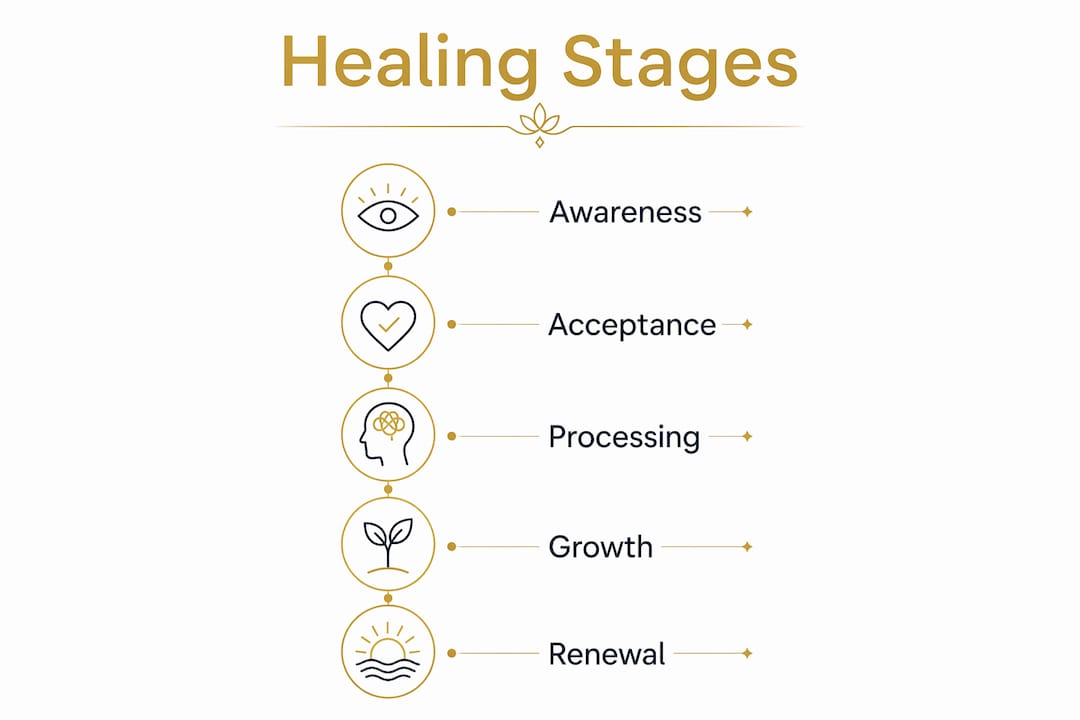
- Toxic positivity in the text. Avoid books that demand you feel better on a fixed schedule. Grief is a non-linear path, and authentic grieving catalyzes personal growth. A book that rushes you past pain is not helping you heal.
- Overidentification with the narrative. Memoirs and personal stories are powerful, but reading them as a mirror for your exact situation can distort your own experience. Use them for insight, not as a script.
- Skipping professional support. Books are tools, not therapists. When content triggers persistent distress, a licensed counselor provides what no book can.
“Healing requires the capacity to remain empowered even when grief is intense and non-linear. You do not have to choose between strength and vulnerability. You can hold both.” — Moving On Doesn’t Mean Letting Go by Gina Moffa
Healing after narcissistic abuse adds another layer of complexity. Readers leaving toxic or controlling relationships often need books that address power dynamics and behavioral patterns, not just emotional processing.
Which books are worth reading for breakup recovery?
The titles below represent distinct approaches to healing. Each one serves a different reader need.
| Book | Author | Best For |
|---|---|---|
| Moving On Doesn’t Mean Letting Go | Gina Moffa | Non-linear grief and self-compassion |
| Conscious Uncoupling | Katherine Woodward Thomas | Peaceful endings and personal transformation |
| Beyond Infidelity | Lauren LaRusso, LPC, LMHC | Betrayal trauma and rebuilding trust |
| Goodbye, I Loved You! | Sumaa Tekur | Active healing after toxic relationships |
Here is what makes each approach distinct:
- Gina Moffa’s work reframes grief as a personal rhythm rather than a problem to solve. Her central argument is that moving on is not about letting go but about integrating loss into a fuller sense of self. This is one of the best memoirs about moving on for readers who feel pressured to “get over it” quickly.
- Katherine Woodward Thomas’s Conscious Uncoupling uses a five-step method that turns the end of a relationship into a catalyst for lasting growth. Recovery focuses on reclaiming power and breaking patterns rather than emotional venting alone. This approach suits readers leaving long-term relationships where shared identity became entangled.
- Lauren LaRusso’s Beyond Infidelity addresses the specific trauma of betrayal. The betrayal crisis phase, as LaRusso frames it, can become an opportunity for lasting self-growth when you stabilize yourself and build a new supportive environment.
- Sumaa Tekur’s Goodbye, I Loved You! makes the case that passive time alone does not heal emotional injuries. Conscious, active healing with practical and soulful tools is what restores peace. This title works well for readers who feel stuck despite time passing.
For readers recovering from psychologically harmful relationships, Smartreadshub’s curated list of self-help books for healing goes deeper into titles that address gaslighting, manipulation, and narcissistic abuse specifically.
Key Takeaways
The most effective books for moving on combine structured recovery programs, non-linear grief frameworks, and active healing tools to produce real emotional growth after a breakup.
| Point | Details |
|---|---|
| Structure over sympathy | Choose books with daily exercises and phased plans, not just emotional validation. |
| Active reading produces results | Complete every exercise and track weekly progress to convert reading into real change. |
| Grief is not linear | Avoid books that impose fixed timelines; authentic grieving at your own pace drives growth. |
| Match the book to your situation | Betrayal, toxic relationships, and general breakups each benefit from different specialized titles. |
| Books work best alongside support | Pair reading with journaling, therapy, or community for the strongest healing outcomes. |
What I have learned from years of reading breakup recovery books
Reading breakup recovery books changed how I understand grief. The biggest shift was realizing that healing is not a passive process. You do not wait for time to fix things. You show up every day and do the work, even when the work is uncomfortable.
The books that moved me most were not the ones that made me feel understood. They were the ones that gave me something to do with the pain. Conscious Uncoupling taught me that the end of a relationship does not have to be a failure. It can be a deliberate act of growth. Moving On Doesn’t Mean Letting Go gave me permission to grieve without a deadline, which was the most freeing thing I had read in years.
What I tell anyone starting this process is this: pick one book, commit to it fully, and do every exercise. Do not collect titles as a way of feeling productive without doing the hard work. One book completed with full engagement will outperform five books skimmed for comfort. Combine your reading with understanding your relationship patterns and you will not just move on. You will move forward with clarity about who you are and what you need.
— Robert
Smartreadshub has the books your healing needs
Smartreadshub is built for readers who are serious about healing after painful or harmful relationships. The site curates titles that go beyond surface-level comfort, focusing on books with clinical grounding, structured recovery programs, and real therapeutic depth.
Whether you are recovering from betrayal, leaving a toxic dynamic, or simply ready to rebuild your sense of self, the full books collection at Smartreadshub gives you a starting point that is already filtered for quality and relevance. Every recommendation is chosen with your emotional experience in mind, not just general popularity. You will find titles covering grief, narcissistic abuse, boundary-setting, and personal growth, all in one place.
FAQ
What types of books help most with breakup recovery?
Books with structured recovery programs, daily exercises, and phased plans produce the strongest results. Titles tailored to your specific situation, such as betrayal or toxic relationships, outperform general advice books.
How long does it take for breakup books to help?
Healing is non-linear, so there is no fixed timeline. Readers who complete daily exercises consistently typically notice shifts in perspective within the first two to three weeks of active engagement.
Should I read memoirs or self-help books for healing?
Both serve different purposes. Memoirs build emotional resonance and reduce isolation, while structured self-help books for healing provide frameworks and exercises. The strongest approach combines both formats.
Can books replace therapy after a breakup?
Books are powerful tools but not substitutes for professional support. They work best as one layer of a broader healing practice that may include therapy, community, and structured self-reflection.
Are there specific books for leaving narcissistic relationships?
Yes. Books focused on reclaiming power, recognizing manipulation patterns, and rebuilding self-worth address the specific dynamics of toxic relationship recovery in ways that general breakup books do not.