
The strongest examples of female friendship stories span every genre and mood: My Brilliant Friend by Elena Ferrante for literary depth, The Color Purple by Alice Walker for emotional power, The Sisterhood of the Traveling Pants by Ann Brashares for YA warmth, The Joy Luck Club by Amy Tan for multigenerational resonance, and The Wartime Book Club by Kate Thompson for historical grit. Here is a quick shortlist to get you started:
- My Brilliant Friend — Elena Ferrante | Two girls from Naples grow up, grow apart, and stay bound for life. Best for: literary readers and book clubs.
- The Color Purple — Alice Walker | Epistolary novel tracing women who sustain each other through brutal circumstances. Best for: deep literary study.
- The Joy Luck Club — Amy Tan | Mothers and daughters navigate culture, memory, and loyalty across generations. Best for: intergenerational book clubs.
- The Sisterhood of the Traveling Pants — Ann Brashares | Four friends share a pair of jeans across a summer apart. Best for: YA readers and classroom discussion.
- The Wartime Book Club — Kate Thompson | Librarians in occupied Jersey use books as quiet resistance. Best for: history buffs and comfort reads.
- Little Fires Everywhere — Celeste Ng | Two women in suburban Ohio collide over motherhood, class, and identity. Best for: book-club debate.
- Best of Friends — Kamila Shamsie | A lifelong friendship fractures under political and moral pressure. Best for: readers who want something that challenges them.
Key Takeaways
Female-friendship stories matter because they treat platonic devotion as a primary life force, not a subplot, and the best of them, from Ferrante to Walker to Tan, use that bond to explore identity, survival, and what women make possible for each other.
| Point | Details |
|---|---|
| Start with the canon | My Brilliant Friend and The Color Purple are the two most cited literary benchmarks for female-friendship fiction. |
| Match the title to the occasion | Book clubs need moral ambiguity; comfort reads need warmth; classrooms need established discussion frameworks. |
| Representation matters | The most emotionally universal stories are often the most culturally specific; prioritize authors writing from inside their own community. |
| Short formats count | Graphic memoirs and linked story collections deliver the same emotional depth as novels in a fraction of the reading time. |
| Smartreadshub curates by theme | The Smartreadshub books page organizes female-friendship titles by mood and purpose, making it easier to find the right read for your situation. |
Table of Contents
- Contemporary and literary novels that center female friendship
- Historical fiction where friendship shapes survival and identity
- YA and middle-grade stories that celebrate growing-up friendships
- Classics, multigenerational, and ensemble works built on female bonds
- Short stories, novellas, graphic memoirs, and nonfiction about female bonds
- Why female-friendship stories resonate: recurring themes and what to look for
- How to choose the right female-friendship story for your mood or group
- What the best of these stories taught me about choosing them
- Smartreadshub has the curated reading list you need next
- Sources
Contemporary and literary novels that center female friendship
Literary fiction has produced some of the most searching, uncomfortable, and ultimately rewarding portrayals of women’s friendships in print. These titles work well for book clubs precisely because they resist easy resolution.
| Title | Author | Genre tag | Why it fits | Best for |
|---|---|---|---|---|
| My Brilliant Friend | Elena Ferrante | Literary fiction | Tracks two women from childhood through adulthood; friendship is the central relationship, not a backdrop | Literary readers, book clubs |
| Best of Friends | Kamila Shamsie | Contemporary literary | A lifelong friendship tested by a single moral decision; explores how politics fractures intimacy | Intense reads, discussion groups |
| The Interestings | Meg Wolitzer | Contemporary literary | Six friends from a summer arts camp measure their adult lives against early promise | Book clubs, deep study |
| Little Fires Everywhere | Celeste Ng | Contemporary fiction | Two women with opposing worldviews clash and mirror each other across a single year | Book-club debate, page-turners |
| Big Little Lies | Liane Moriarty | Domestic thriller | Three women whose friendship becomes a survival mechanism against domestic violence | Page-turners, comfort reads |
| Bloomsbury Girls | Natalie Jenner | Contemporary historical | Three women working in a London bookshop in 1950 navigate ambition and solidarity | Comfort reads, book lovers |
| The Secret Book Society | Madeline Martin | Historical fiction | A group of women use a secret reading society to resist wartime restrictions | Book clubs, history buffs |
My Brilliant Friend is frequently cited as the canonical literary example of friendship evolving across a lifetime. Ferrante refuses to sentimentalize the bond between Elena and Lila; it is competitive, consuming, and sometimes cruel, which is exactly why it feels true.
Contemporary picks in this category also reflect a meaningful shift in representation. Shamsie’s novel centers two British-Pakistani women, and Ng’s work foregrounds race and class in suburban America. Readers looking for books by women authors who write from inside their own cultural experience will find strong options across this list.
Historical fiction where friendship shapes survival and identity
War, occupation, and social upheaval have a way of clarifying what a friendship is actually made of. These historical novels use that pressure deliberately.
-
The Wartime Book Club — Kate Thompson | Set in German-occupied Jersey during World War II, two librarians use books to sustain community morale and quiet resistance. The friendship between Grace and Clara is the engine of every decision they make. Best for: history buffs, comfort reads, book-club discussion.
-
The Phoenix Crown — Kate Quinn & Janie Chang | Two women, one an opera singer and one a seamstress, survive the 1906 San Francisco earthquake together. The novel is co-written, which gives the dual friendship narrative an unusual structural authenticity. Best for: fans of ensemble stories, historical drama.
-
The Flight Girls — Noelle Salazar | Women pilots training during World War II form bonds forged under physical danger and institutional resistance. The friendship here is also a form of professional solidarity. Best for: history buffs, readers who like action alongside emotion.
-
Dear Mrs. Bird — A. J. Pearce | Set in London during the Blitz, Emmy navigates a friendship with her best friend Bunty while volunteering at a women’s magazine. The warmth between them is the novel’s emotional anchor. Best for: comfort reads, fans of cozy historical fiction.
-
The Secret Book Society — Madeline Martin | Women in occupied France gather secretly to read banned books, and their shared literary devotion becomes the friendship’s foundation. Best for: book clubs, readers interested in resistance history.
-
Bloomsbury Girls — Natalie Jenner | Three women at a London bookshop in 1950 support each other’s ambitions in a world that expects them to stay small. Best for: comfort reads, book lovers, fans of quiet historical fiction.
Pro Tip: When reading historical friendship novels, pay attention to what the friendship allows each character to do that she could not do alone. That’s usually where the author’s real argument lives.
YA and middle-grade stories that celebrate growing-up friendships
Coming-of-age friendship stories do something adult literary fiction rarely manages: they capture the specific terror of needing someone and not yet knowing how to say it. These titles work for younger readers, classroom discussions, and anyone who wants to revisit that feeling.
-
The Sisterhood of the Traveling Pants — Ann Brashares | YA. Four best friends spend their first summer apart, connected by a pair of jeans that fits all of them. The novel takes female friendship as seriously as any adult literary novel does. Best for: summer reading, classroom discussion, mentor pairing with younger readers.
-
Little Fires Everywhere — Celeste Ng | YA-adjacent / adult crossover. Teens Pearl and Izzy form an unlikely bond that mirrors and complicates their mothers’ conflict. Best for: high school classrooms, coming-of-age discussion.
-
The Interestings — Meg Wolitzer | YA-to-adult crossover. Begins at a summer arts camp for teenagers and follows the friendships into middle age. Best for: older YA readers, book clubs that span age groups.
Youth friendship stories tend to cluster around three recurring tensions: identity formation (who am I when my friend sees me differently than I see myself?), first betrayals (the moment a friendship reveals its limits), and found family (choosing people who understand you better than your relatives do). The Sisterhood of the Traveling Pants handles all three with more emotional precision than its premise suggests.
Classics, multigenerational, and ensemble works built on female bonds
These are the titles readers return to. Some have been in print for decades; all of them have shaped how American readers understand what female friendship can mean.
-
The Joy Luck Club — Amy Tan | Four Chinese-American mothers and their daughters navigate memory, sacrifice, and cultural translation across generations. The friendships between the mothers, forged in China before immigration, carry as much weight as the mother-daughter relationships. Adapted into a 1993 film. Best for: intergenerational book clubs, deep literary study.
-
The Color Purple — Alice Walker | Celie’s letters to God and to her sister Nettie trace a journey from isolation to a community of women who sustain her. The friendship between Celie and Shug Avery is one of the most complex and transformative bonds in American fiction. Adapted into a 1985 film and a Broadway musical. Best for: deep literary study, readers interested in race, gender, and survival.
-
Fried Green Tomatoes at the Whistle Stop Cafe — Fannie Flagg | The friendship between Idgie and Ruth in Depression-era Alabama is the novel’s heart, told in flashback by an elderly woman to a younger one. The novel also contains one of American fiction’s most quietly radical LGBTQ+ friendship portrayals. Adapted into a 1991 film. Best for: comfort reads, intergenerational book clubs.
-
The Sisterhood of the Traveling Pants — Ann Brashares | Already mentioned in the YA section, but worth noting here for its ensemble structure: four distinct characters, four distinct friendships, one shared object. Adapted into a 2005 film. Best for: all ages.
-
Big Little Lies — Liane Moriarty | Three women in a coastal Australian town whose friendship becomes a survival mechanism. Adapted into an HBO series. Best for: page-turners, book clubs.
The American Writers Museum’s “Common Threads” exhibition identifies recurring motifs across decades of female-friendship writing: loyalty tested by circumstance, the tension between individual ambition and collective care, and the way women’s bonds are often rendered invisible by the cultures around them. These canonical works are where those motifs first crystallized.
Short stories, novellas, graphic memoirs, and nonfiction about female bonds
Not every reader has the bandwidth for a 400-page novel. These shorter formats can be just as powerful, sometimes more so, because they force the author to find the friendship’s essential moment.
-
The Joy Luck Club — Amy Tan | Format: linked short stories. Each chapter functions as a standalone piece; readers can dip in and out. Best for: commute reading, group share.
-
“Friendship” — Katherine Mansfield | Format: short story. A brief, precise portrait of two women whose friendship has calcified into performance. Best for: weekend reading, writing workshops.
-
Persepolis — Marjane Satrapi | Format: graphic memoir. Satrapi’s friendships during and after the Iranian Revolution are woven through her coming-of-age story. The visual format makes the emotional stakes immediate. Best for: weekend reading, classroom use, gifting.
-
When Breath Becomes Air — Paul Kalanithi | Format: memoir. Not a female-friendship story, but the afterword by his wife Lucy, and the friendships she describes sustaining her through grief, make it relevant here. Best for: readers processing loss.
-
Educated — Tara Westover | Format: memoir. Westover’s friendships at Cambridge, particularly with women who help her name what happened to her, are a quiet but crucial thread. Best for: readers interested in how friendship enables self-recognition.
-
Fun Home — Alison Bechdel | Format: graphic memoir. Bechdel’s intellectual friendships and her relationship with her college friends shape her understanding of her own identity. Best for: LGBTQ+ readers, graphic-memoir fans, weekend reading.
Shorter formats work for friendship storytelling because a single shared moment, one afternoon, one letter, one argument, can carry the full weight of a relationship. The emotional memoir genre is particularly strong here: memoir writers often locate the friendship’s meaning in a single scene rather than across years.
Why female-friendship stories resonate: recurring themes and what to look for
Female-friendship stories resonate because they do something most mainstream fiction has historically refused to do: they treat platonic devotion as a life-altering force equal to romantic love.
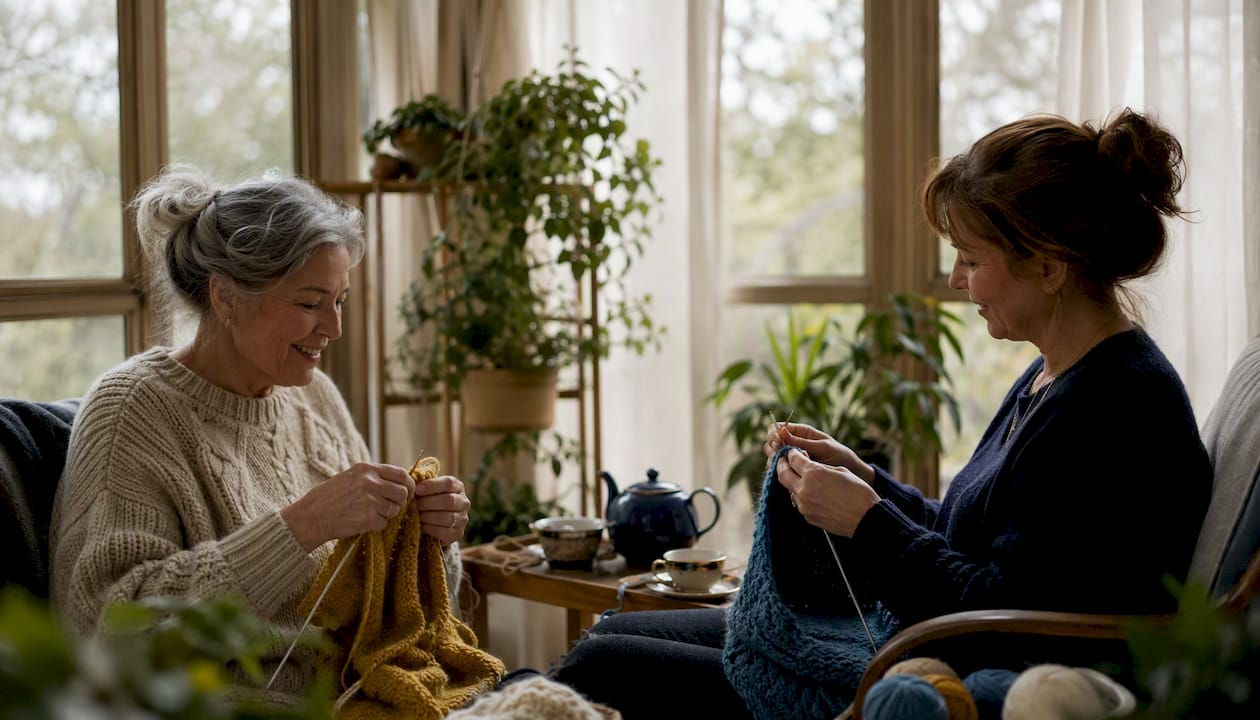
The American Writers Museum’s exhibition on female friendship traces this as a cultural thread across decades of writing, identifying loyalty, shared intellectual life, and mutual survival as the motifs that appear again and again. What the best of these stories understand is that friendship is not a backdrop to a woman’s “real” story. It is the story.
Real-world trends reinforce this. Friends are increasingly making structural life decisions together, buying homes, planning eldercare, and building lives that center the friendship rather than subordinating it to a romantic partnership. Fiction has been tracking this reality for decades; readers are only now catching up to it in their own lives.
Shared intellectual or creative pursuits anchor many of the most enduring fictional friendships, a pattern that mirrors real life. Profiles of lifelong friends consistently show that mutual creative validation, early manuscript sharing, collaborative work, becomes a ritualized trust behavior that holds friendships together across distance and time.
The emotional stakes are also genuinely high. A viral story about two best friends of 50 years navigating a cancer diagnosis together drew millions of views and generated community fundraising, demonstrating that public appetite for long-term female bonds is not a niche literary interest. It is a widespread human need that fiction has always known how to meet.
Pro Tip: When a friendship story includes a toxic or competitive dynamic, read it as a portrait of the relationship’s full complexity rather than a cautionary tale. Ferrante’s Elena and Lila are not a model to avoid; they are a model to understand.
One important note on representation: the most culturally specific friendship stories, Tan’s Chinese-American mothers, Walker’s Black Southern women, Satrapi’s Iranian girlhood, are also the most universal in their emotional reach. Seek out literary fiction that centers friendships from inside the culture it depicts rather than observing from outside.
How to choose the right female-friendship story for your mood or group
The right pick depends almost entirely on what you need from the reading experience right now.
- For book-club discussion: Choose a title with moral ambiguity or an unresolved central conflict. Little Fires Everywhere, Best of Friends, and The Interestings all generate strong disagreement, which is what a good book-club session needs.
- For a comfort read: Reach for warmth over tension. Dear Mrs. Bird, Bloomsbury Girls, and Fried Green Tomatoes at the Whistle Stop Cafe are all emotionally safe without being shallow.
- For a quick commitment: Short-story collections and graphic memoirs give you the emotional payoff without the 400-page investment. The Joy Luck Club read as linked stories, or Persepolis, both work here.
- For classroom use: The Sisterhood of the Traveling Pants (middle school and up) and The Color Purple (high school and up) have the most established classroom frameworks and discussion guides available.
- For deep literary study: Start with My Brilliant Friend and follow the Neapolitan quartet through all four volumes. Then read The Interestings alongside it for a contrasting American take on the same long-arc friendship structure.
- For historical immersion: The Wartime Book Club, The Flight Girls, and The Phoenix Crown all embed friendship in specific, well-researched historical moments that reward readers who want context alongside character.
- For representation: Seek authors who write from inside the culture depicted. Tan, Walker, Shamsie, and Satrapi all do this. The Smartreadshub books page includes curated lists organized by cultural perspective and theme.
One principle worth keeping: when a story depicts a friendship between women of different racial, cultural, or class backgrounds, look for whether the author gives both women interiority, not just the one who resembles the presumed reader.
What the best of these stories taught me about choosing them
The titles that stay with me longest are the ones that refuse to make friendship easy. Ferrante’s Naples novels, Walker’s The Color Purple, Wolitzer’s The Interestings: none of them let the friendship off the hook. They show women who need each other in ways that are sometimes inconvenient, sometimes damaging, and always real.
My three personal picks, if you are starting from scratch: My Brilliant Friend because it is the most honest portrait of female ambition and envy I have read; The Joy Luck Club because it understands that friendship between women often passes through the mother-daughter relationship; and Fried Green Tomatoes at the Whistle Stop Cafe because it is the rare novel that is both a comfort read and a quietly radical one.
What I look for in any female-friendship story is whether the friendship changes what is possible for both women, not just one. That is the test. The titles on this list pass it. The Smartreadshub guide to book recommendations for women applies the same standard to its broader curated lists.
Smartreadshub has the curated reading list you need next
If this article gave you a starting point, the Smartreadshub books page takes you further. The site curates fiction and nonfiction specifically for readers who want books that do real emotional work, whether that means processing a difficult relationship, finding validation in a character’s experience, or simply reading something that treats women’s inner lives with the seriousness they deserve.

The books page is organized by theme and mood, so you can find a female-friendship novel, a memoir about recovery, or a psychology-backed read on how books support emotional healing without scrolling through an undifferentiated list. Browse the curated shelves and pick your next read today.
Sources
- My Brilliant Friend — Elena Ferrante
- Buying a house with my best friend — Business Insider
- 7 books about women who put friendship at the center of their lives — Electric Literature
- Best Friends of 50 Years Navigating Cancer Show Millions the Power of Female Friendship — TODAY
- Unlikely roommates become lifelong friends — The Boston Globe
- Common Threads: Stories of Female Friendship — American Writers Museum