
A reading habit is the automatic, repeated behavior of engaging with written material, defined by three measurable dimensions: how often you read, how much you read, and what you choose to read. Researchers describe it as more than behavioral frequency, encompassing automaticity, identity expression, and the organized repetition that makes reading feel natural rather than forced. When reading becomes habitual, your brain initiates it with minimal conscious effort, the same way you reach for coffee in the morning without deciding to.
The core components of a reading habit include:
For anyone recovering from a toxic or abusive relationship, that last point carries real weight. The books you reach for, and the consistency with which you reach for them, say something about the person you are becoming.
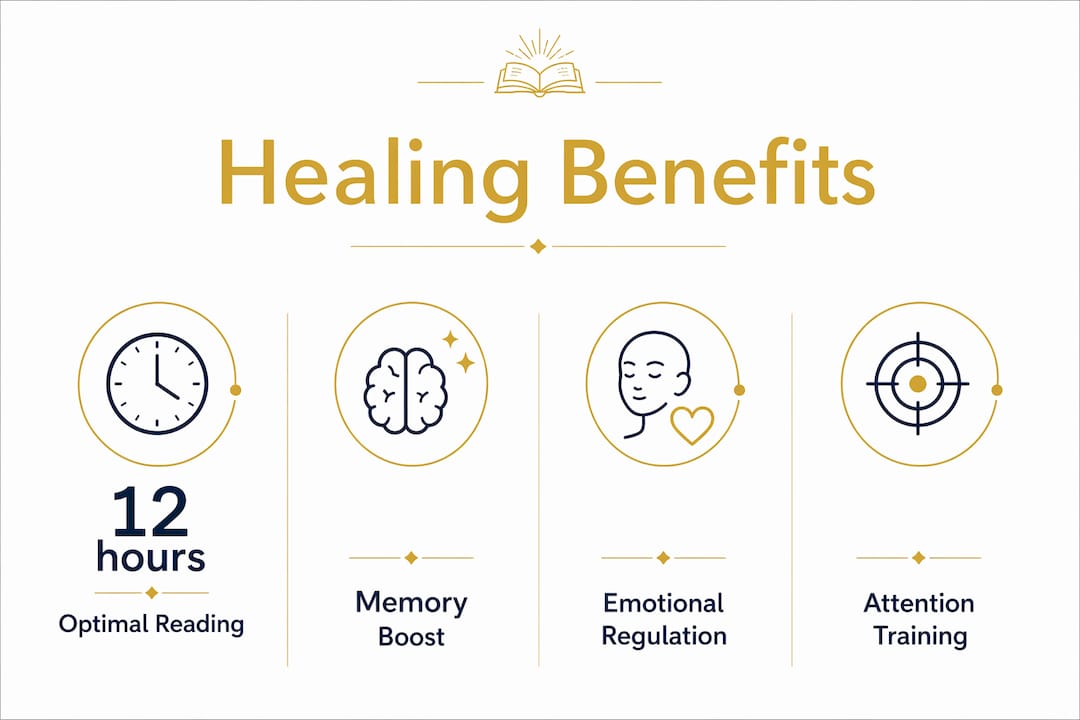
Reading actively trains the brain functions most damaged by toxic relationships: attention, memory recall, emotional analysis, and the ability to reason clearly about what happened to you. A study of more than 10,000 young adolescents found that reading for pleasure is linked to improved brain structure, stronger verbal memory, and fewer signs of stress and depression. Those are not abstract benefits. They are exactly the capacities that gaslighting and chronic manipulation erode.
Falk Huettig, senior investigator at the Max Planck Institute for Psycholinguistics, frames reading as one of the most powerful cognitive enhancers available, with documented effects on memory, attention, language processing, and reasoning. His research shows that avid readers continue to refine and automate higher-level cognitive functions long after they first learn to decode text. For survivors of abuse, that means reading does not just distract you. It rebuilds the mental architecture that manipulation worked to dismantle.
The specific benefits most relevant to emotional recovery include:
The optimal reading amount for cognitive and mental health benefits is around 12 hours weekly. Beyond that threshold, gains level off, partly because excessive sedentary time trades away other enriching activities.
Not all reading delivers the same benefit. Superficial digital content does not provide the neural engagement that complex narrative texts do. Scrolling through social media or skimming entertainment sites may feel like reading, but research consistently shows it yields lower cognitive development and less mental clarity than sustained engagement with books.
Huettig puts it plainly: reaching advanced levels of literacy and emotional insight requires regular engagement with sophisticated texts, paired with the development of critical thinking skills. Simplified content, by contrast, can actually dilute the richness of written expression over time.
For healing specifically, three categories of material stand out:
Print tends to outperform screens for serious reading. Readers treat analog print as a more appropriate medium for deep engagement and apply more cognitive effort accordingly, a pattern Huettig’s research documents directly.
Pro Tip: Designate a specific chair, time of day, and even a particular lamp for reading. That physical setup becomes an environmental cue your brain associates with focused engagement, making it easier to drop into the habit without relying on motivation.
Habit formation requires satisfying repetition in a stable environment. Chaotic surroundings disrupt the cues that trigger automatic behavior, which is why reading in the same place at the same time accelerates the process of making it feel effortless. This matters especially during recovery, when your environment may already feel unpredictable.
The early stages of building any habit involve real mental effort, and reading is no exception. Experts emphasize avoiding self-criticism during this period. If you miss a day or find your attention wandering, that is part of the process, not evidence that you are failing. The behavior becomes automatic through repetition, not through perfect execution.
Common challenges and practical responses:
Reading challenges can also help. Structured goals give the habit external scaffolding while you are still building internal momentum. Smartreadshub’s guide on why reading challenges help focus walks through how to use them without turning reading into another source of pressure.
Pro Tip: Start with books rated one level below what feels challenging. As reading comprehension becomes more automatic, gradually increase the complexity of your selections. The goal is engagement, not endurance.
Reading is also a skill that compounds. As decoding becomes automatic, your attention shifts from parsing sentences to inhabiting the narrative world, and that is when reading becomes genuinely pleasurable rather than effortful. Getting to that point is worth the early friction. For readers who struggled in school or found books inaccessible, the ELA skills guide from David TC Tutoring Services offers concrete strategies for building reading confidence from the ground up.
Smartreadshub was built specifically for people navigating the aftermath of toxic and abusive relationships. The site focuses on gaslighting, narcissistic abuse, and manipulation tactics, and its book recommendations are chosen to address those experiences directly, not generically.
What sets Smartreadshub apart from a general book list:

If you are ready to let reading do some of the heavy lifting in your recovery, Smartreadshub’s curated book recommendations for women are a strong starting point. The site also offers a dedicated guide on psychology books for healing for readers who want the science alongside the story.
A reading habit built around complex, purposeful material is one of the most effective tools available for cognitive and emotional recovery from toxic relationships.
| Point | Details |
|---|---|
| Reading habit defined | A behavioral pattern covering frequency, amount, and material type, with automaticity as its defining feature. |
| Optimal weekly reading | Around 12 hours weekly is linked to improved brain structure and mental well-being. |
| Material quality matters | Complex literary and psychological texts deliver cognitive gains that superficial digital content does not. |
| Stable environment is key | Consistent time and place accelerate habit automation; chaotic settings disrupt it. |
| Self-criticism slows progress | Avoiding self-judgment during early habit formation is essential, per habit formation research. |