
Reading challenges are structured, goal-driven reading programs that directly strengthen focus by forcing the brain to exercise working memory, sustain voluntary attention, and process complex information over time. Attention researcher Gloria Mark has documented how fragmented digital habits erode concentration, making deliberate practices like reading challenges more valuable than ever. Platforms like Goodreads host millions of readers in annual reading challenges, turning a solitary habit into a measurable, socially reinforced discipline. The cognitive science is clear: reading books bolsters focus by requiring the brain to connect new narrative information with previously stored details, a process that directly trains sustained attention.
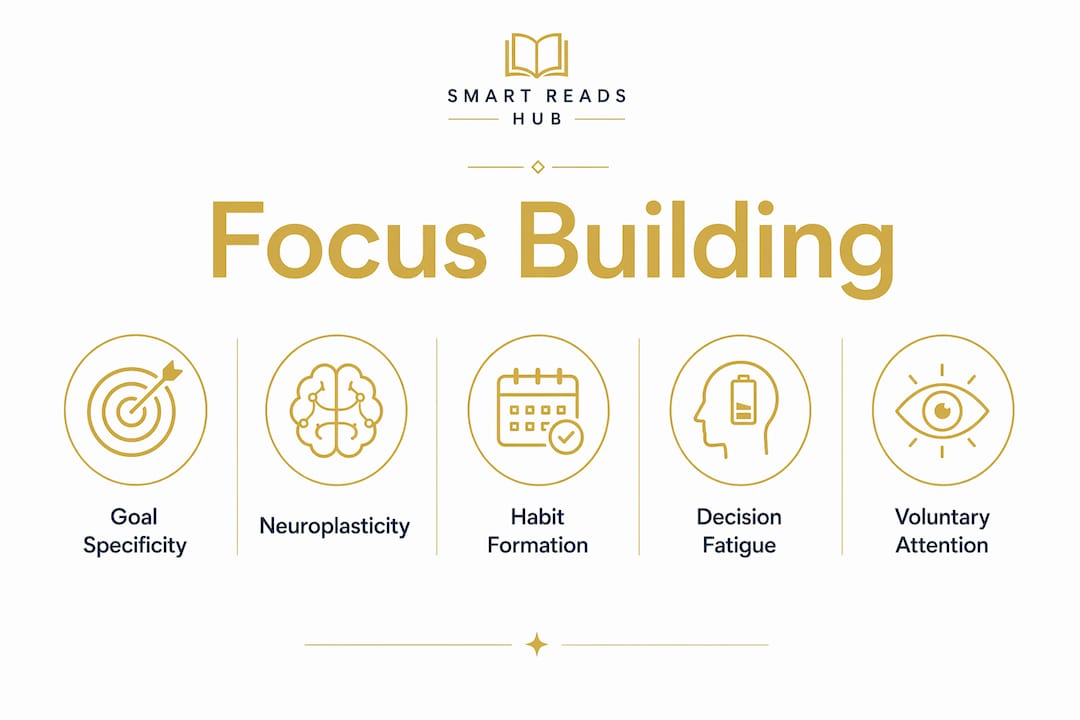
Reading challenges improve concentration because they convert passive reading into an intentional, goal-oriented practice. A vague intention to “read more” activates little cognitive commitment. A specific goal like “read 24 books in 2026” triggers the brain’s motivation systems in a fundamentally different way.
Setting specific reading goals creates feedback loops that reward progress and sustain effort. Each book completed signals achievement, which reinforces the habit and makes the next session easier to start. This is not motivational theory. It is how the brain’s reward circuitry responds to measurable progress.
The structure of a reading challenge also removes a hidden focus killer: decision fatigue. When you already know what you are reading next, you spend zero mental energy choosing. That preserved energy goes directly into concentration during the reading session itself.
Reading is one of the most cognitively demanding activities a person can do voluntarily. It requires working memory, pattern recognition, inference, and sustained voluntary attention operating simultaneously. That combination makes it a powerful focus trainer.
Working memory is the brain’s ability to hold and manipulate information in real time. When you read a novel, you track characters, timelines, and plot threads across hundreds of pages. A 2020 Stanford study found that reduced focusing ability directly correlates with lower information recall. That finding means focus and comprehension are not separate skills. They are the same skill measured differently.
“Attention is the substrate for intelligence, not just productivity. Reading challenges strengthen the voluntary attention muscle critical to higher-order thinking.” — Sterling, Why Deep Reading Is the #1 Productivity Skill in 2026
Sustained voluntary attention is the ability to choose to focus on one thing despite competing distractions. Most digital activities, including social media scrolling, require almost no voluntary attention. Reading a complex text requires it constantly. That repeated demand is what builds the muscle.
Neuroplasticity research supports this further. Experts recommend that 20% of your reading consist of “heavy lifting” texts, such as classics or dense nonfiction, to push the brain into new cognitive territory. Difficulty is not a sign you are doing it wrong. It is the signal that neuroplasticity is occurring.
Pro Tip: If a passage feels genuinely hard to follow, do not skip it. That friction is your attention system being trained. Push through two more pages before stopping.
Reading challenges are not the only way to build concentration, but they offer a specific combination of benefits that other methods do not replicate.
Meditation trains attention by asking you to hold focus on a single point, typically the breath. It is effective, but it requires a separate practice session and offers no external content reward. Reading challenges train attention through engaging content, which makes the practice self-sustaining for most people.
Social media and television are the most common alternatives for leisure time, but they are cognitively passive. They deliver stimulation without requiring the brain to construct meaning. Reading challenges act as cognitive infrastructure training for attention, building tolerance for complexity that passive media actively erodes.
The table below compares four common focus-building activities across three dimensions.
| Activity | Cognitive engagement | Habit formation ease | Measurable progress |
|---|---|---|---|
| Reading challenges | High | Moderate | Yes, books and pages tracked |
| Meditation | High | Difficult | Limited without apps |
| Social media use | Low | Very easy | No meaningful metric |
| Television watching | Low to moderate | Very easy | No meaningful metric |
Reading challenges win on measurability. You can track exactly how many books you have read, which genres you have covered, and how your pace has improved. That data creates accountability that meditation and passive entertainment cannot match.
Knowing that reading challenges build focus is useful. Knowing how to maximize that benefit is what separates readers who see real gains from those who stall after two books.
Environmental design comes first. Brain experts advise placing devices in separate rooms during reading sessions. Even a phone sitting face-down on a table draws cognitive resources. Remove it entirely. A quiet, dedicated reading space signals to your brain that concentration is the expected mode.
Active reading techniques compound the benefit. Passive reading lets your eyes move across words while your mind drifts. Active synthesis through annotation transforms decoding into genuine engagement. Highlight key passages. Write one-sentence summaries at the end of each chapter. These micro-tasks force your attention to stay present.
Here are four practical strategies to apply immediately:
Pro Tip: Keep a reading journal alongside your challenge. One sentence per session about what surprised you. This habit alone doubles retention and keeps motivation high across a long challenge.
The right reading challenge is specific enough to motivate you and flexible enough to sustain you across months. Vague challenges fail. Overly rigid ones burn people out.
Start with a curated platform. Goodreads hosts an annual reading challenge where you set a book target and track progress publicly. Libraries use reading challenge prompts to reduce decision fatigue and keep readers engaged. Starting with a curated list means you spend energy reading, not choosing. You can also explore reading challenge platforms that organize goals and recommendations by theme or difficulty.
Apply the 70/20/10 reading mix. Allocate 70% of your reading to enjoyable, accessible books in genres you already like. Reserve 20% for moderately challenging texts that stretch your vocabulary or introduce new ideas. Dedicate 10% to genuinely difficult material, such as philosophy, dense history, or literary fiction. This ratio keeps motivation high while still delivering neuroplasticity gains.
Set specific, measurable targets. “Read more books” is not a goal. “Read 18 books by December 31, averaging 1.5 per month” is a goal. Specific targets activate the brain’s goal-pursuit systems in ways that vague intentions do not.
Build in social accountability. Join a book club, an online reading group, or simply share your challenge publicly on Goodreads. Reading challenges provide accountability and goal orientation that solo reading rarely generates. Knowing someone else will ask what you thought of chapter 12 keeps you reading chapter 12.
Adjust as you go. If you are consistently finishing books in half the expected time, increase your target or shift toward harder texts. If you are falling behind, reduce the target without guilt. The goal is sustained practice, not a perfect score. Explore books for mental clarity to find titles that match your current challenge level.
Reading challenges build focus by converting reading into a structured, goal-driven practice that trains working memory, sustains voluntary attention, and rewards measurable progress over time.
| Point | Details |
|---|---|
| Goal specificity drives focus | Specific targets like “24 books in 2026” activate motivation systems better than vague intentions. |
| Working memory is the mechanism | Reading requires holding and connecting information across pages, directly training sustained attention. |
| Environment determines outcome | Removing devices from the reading space is the single most effective non-obvious focus strategy. |
| Active reading multiplies gains | Annotation and chapter summaries transform passive decoding into deep cognitive engagement. |
| Challenge design matters | A 70/20/10 mix of accessible, moderate, and difficult texts sustains motivation while building neuroplasticity. |
I spent years believing focus was a fixed trait. Either you had it or you did not. Reading challenges proved that wrong in a way that no productivity article ever did.
The first time I committed to a 20-book annual challenge, the early weeks were genuinely uncomfortable. My attention kept pulling toward my phone. Passages I would have found absorbing a decade earlier felt slow. That discomfort was not a personal failing. It was my attention system, weakened by years of fragmented digital habits, being asked to do real work again.
What surprised me most was how quickly the discomfort faded. By week six, 45-minute reading sessions felt short. By month three, I noticed the same sustained focus carrying over into work tasks that used to feel impossible to start. The challenge had not just made me a better reader. It had rebuilt my capacity to concentrate on anything.
The insight I keep returning to is this: reading challenges work because they make the practice non-negotiable. You have a goal, a deadline, and often a community watching. That structure does what willpower alone cannot. It removes the daily decision about whether to read and replaces it with a simple question: how many pages today?
If you are someone whose concentration has suffered from years of screen-heavy habits, a reading challenge is not a soft solution. It is one of the most direct cognitive rehabilitation tools available, and it costs nothing but time.
— Robert
Smartreadshub curates book lists and discovery tools designed for readers who want more than entertainment from their reading practice.
Whether you are starting your first reading challenge or refining one that has stalled, Smartreadshub offers guides on structuring goals, selecting titles by difficulty and genre, and finding community accountability. The self-discovery books section is a strong starting point for readers who want their challenge to build both focus and self-awareness. For readers looking for the right platform to organize and track their challenge, the top reading challenge platforms guide compares the best tools available in 2026.
Reading challenges add structure, measurable goals, and accountability that casual reading lacks. These elements activate the brain’s motivation systems and make sustained attention a daily practice rather than an occasional event.
Most readers report noticeable concentration gains within four to six weeks of consistent daily reading sessions of 25 minutes or more. The gains accelerate when active reading techniques like annotation and summarizing are used alongside the challenge.
Yes. Reading is one of the most direct ways to rebuild a shortened attention span because it requires voluntary, sustained focus that passive media does not. Starting with shorter sessions and accessible books, then gradually increasing difficulty, is the most effective approach.
A mix of genres and difficulty levels produces the best results. Accessible fiction builds reading fluency and habit. Moderately challenging nonfiction stretches vocabulary and inference. Dense texts like philosophy or literary classics push neuroplasticity. The 70/20/10 model balances all three.
Screen reading can count, but it carries a higher distraction risk than print. Research on device presence during reading shows that even nearby phones reduce cognitive performance. If reading digitally, use a dedicated e-reader rather than a phone or tablet with notifications enabled.