A winter book is defined by its power to wrap you in the season’s stillness, whether through snowbound settings, introspective pacing, or the quiet ache of cold-weather storytelling. Katherine May’s Wintering and Val McDermid’s Winter both prove that the best seasonal reads do more than reflect the weather outside. They reframe it. Winter becomes something worth sitting with rather than enduring. The titles on this list span atmospheric fiction, restorative nonfiction, and beloved holiday classics, giving you a reading list built for the months when slowing down feels not just acceptable but necessary.
1. The best winter books: what makes them work
A winter book earns that label when the season itself shapes the story’s mood, not just its backdrop. The cold becomes a narrative force. Isolation amplifies emotion. Pacing slows to match the rhythm of short days and long evenings.
Cozy winter reads create what Danish culture calls hygge: an insulated bubble of warmth against the harshness outside. That sensation comes from vivid sensory details. Think crackling fires, hot drinks, and the particular silence of a snowfall. Books that deliver these details consistently earn a permanent place on winter reading lists.
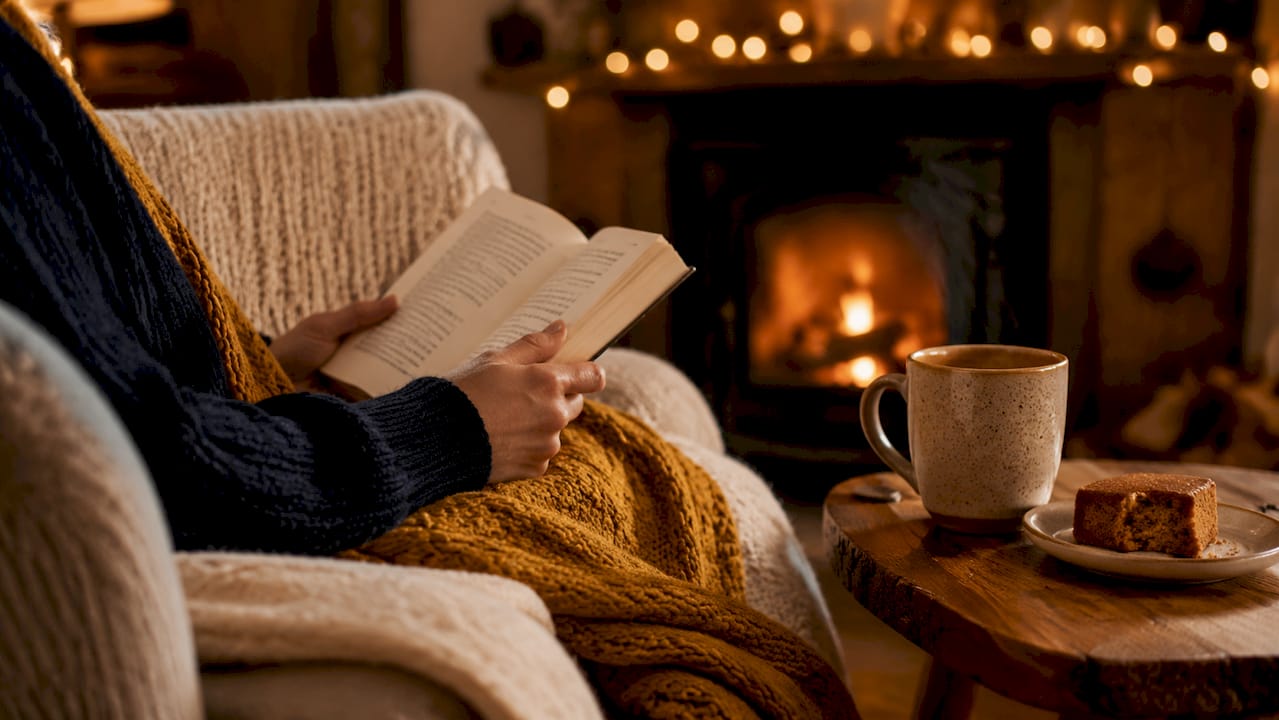
The best examples also share a pacing quality that sets them apart from summer page-turners. Winter reading aligns with fallow periods of rest, encouraging emotional absorption rather than rapid plot progression. You are not racing through chapters. You are living inside them.
2. Wintering by Katherine May: the defining nonfiction read
Wintering by Katherine May is a 304-page meditation blending memoir, nature writing, and mythology into one of the most resonant books about seasonal retreat ever published. May argues that difficult life periods, like illness, grief, or burnout, follow the same cyclical logic as winter itself. They are not failures. They are seasons.
What makes this book exceptional is its refusal to rush toward resolution. May visits frost fairs, swims in cold water, and studies how animals hibernate, drawing each observation back to the human need for withdrawal and recovery. The result reads less like a self-help book and more like a conversation with someone who has genuinely thought through what rest means.
For anyone building a winter reading list, Wintering belongs at the top. It does not just describe the season. It teaches you how to inhabit it.
3. Winter by Val McDermid: creative nonfiction with personal warmth
Val McDermid’s Winter mixes personal memory with creative nonfiction to make a case for the cold season as something genuinely beautiful. McDermid argues that winter books help readers reframe the season as intrinsic beauty and stillness rather than bleakness. That reframing is the book’s central gift.
McDermid draws on Scottish tradition, family ritual, and the particular pleasures of winter food and light to build her portrait of the season. The writing is warm without being sentimental. She finds meaning in frost on windows and the smell of woodsmoke without overstating either.
This title works especially well as a holiday book recommendation because it celebrates the festive and the quiet in equal measure. It is short enough to read in a single winter afternoon and rich enough to stay with you through the season.
4. The Snow Child by Eowyn Ivey: fairy tale magic in Alaska
The Snow Child by Eowyn Ivey is set in 1920s Alaska, where a childless couple builds a snow girl who appears to come to life. The novel draws directly from Russian fairy tale tradition while grounding every page in the brutal, gorgeous reality of an Alaskan winter. The cold here is not decorative. It is the engine of the entire story.
Ivey’s prose captures the physical sensation of extreme cold with precision. You feel the weight of snowfall, the danger of frozen rivers, and the strange tenderness of a landscape that can kill you. That tension between beauty and threat is what makes this one of the best winter novels of the past two decades.
Pro Tip: If you are choosing a winter book club pick, The Snow Child generates rich discussion around themes of longing, parenthood, and the line between myth and reality. Pair it with a nonfiction title like Wintering for a thematically layered session.
5. Dark Matter by Michelle Paver: Arctic horror that gets under your skin
Michelle Paver’s Dark Matter follows a 1930s expedition to the High Arctic, where one man is left alone through the polar night. The novel is structured as a journal, which makes the creeping dread feel immediate and personal. Paver researched the setting with documentary precision, and that specificity is what separates this from generic ghost stories.
The Arctic winter in this book functions as atmospheric winter fiction at its most effective. Extreme weather amplifies the appreciation for warmth and safety while reading, and Paver exploits that contrast brilliantly. The more hostile the environment on the page, the more secure you feel under your blanket.
Dark Matter is short, under 250 pages, and reads in one or two sittings. For readers who want fiction books for winter that deliver genuine unease without gore, this is the title to reach for first.
6. Winters in the World by Eleanor Parker: Anglo-Saxon winter culture
Eleanor Parker’s Winters in the World connects modern readers to the Anglo-Saxon experience of winter through poetry, folklore, and the rituals surrounding the transition from darkness to light. Parker examines how medieval English communities marked midwinter festivals, understood the shortening of days, and built cultural meaning around the cold season.
This is nonfiction for readers who want depth alongside comfort. Parker writes accessibly, but she does not simplify. You come away with a genuine sense of how winter shaped language, belief, and community for people a thousand years ago.
For anyone interested in winter-themed books that go beyond the personal and into the historical, this title fills a gap that few others address.
7. Cozy winter mysteries: when cold settings become characters
Winter mysteries use isolated, snowbound settings to force emotional confrontations that warmer, more open environments would dissolve. Louise Penny’s A Fatal Grace, set in the Quebec village of Three Pines during a brutal winter, is the clearest example of this technique. The snowed-in village acts as a character that traps both suspects and investigators, making every interaction carry extra weight.
The best cozy mysteries in this category share a structural quality: the cold environment slows the investigation’s pace to match the season’s rhythm. Procedural intrigue sits alongside atmospheric world-building, and the result feels more like inhabiting a place than solving a puzzle.
| Title | Setting | Tone |
|---|---|---|
| A Fatal Grace by Louise Penny | Quebec village, deep winter | Cozy, character-driven |
| Dark Matter by Michelle Paver | High Arctic, polar night | Eerie, psychological |
| The Snow Child by Eowyn Ivey | 1920s Alaska | Lyrical, mythic |
Pro Tip: For winter book club picks in the mystery genre, choose titles where the setting does real narrative work. If the story could happen in July without losing anything, it is not a true winter mystery.
8. Holiday classics and children’s winter stories for all ages
Holiday book recommendations for families tend to cluster around a handful of titles that have earned their place through repeated reading rather than marketing. Louisa May Alcott’s Little Women remains the gold standard for winter reading across generations. Its opening chapters, set during a New England winter with the March sisters gathered around a fire, define the seasonal reading ritual that families return to year after year.
For children’s winter stories, the strongest picks share a quality of warmth that is earned rather than assumed. Titles like The Polar Express by Chris Van Allsburg and Owl at Home by Arnold Lobel work because they treat winter as a world of genuine wonder rather than mere backdrop.
- Little Women by Louisa May Alcott: multigenerational, domestic, and deeply comforting
- The Polar Express by Chris Van Allsburg: visual and emotional magic for younger readers
- Owl at Home by Arnold Lobel: gentle, funny, and perfectly paced for early readers
- The Long Winter by Laura Ingalls Wilder: survival, community, and the weight of a Dakota winter
Including seasonal literature in holiday reading routines builds a sense of ritual that children carry into adulthood. The nostalgia and comfort embedded in these titles is not accidental. It is the product of stories that take the season seriously.
Key takeaways
The most effective winter books treat the cold season as an emotional environment, not just a setting, using pacing, sensory detail, and isolation to create genuine atmospheric depth.
| Point | Details |
|---|---|
| Define your winter read by mood | Choose books where the season shapes the story’s emotional core, not just its backdrop. |
| Start with Wintering for nonfiction | Katherine May’s memoir is the clearest guide to understanding winter as a restorative cycle. |
| Use cold settings as a reading signal | Snowbound isolation in mysteries and thrillers amplifies tension and character introspection. |
| Build a family ritual with classics | Titles like Little Women and The Polar Express create seasonal reading traditions that last. |
| Match pacing to the season | Slow, absorbing prose fits winter better than plot-driven thrillers. Prioritize emotional depth. |
Why the right winter book changes how you experience the season
I have spent years recommending books to readers in difficult emotional periods, and winter is when the right title matters most. The season strips away distraction. You are left with yourself, your thoughts, and whatever is on the page.
What I have noticed is that readers often reach for the wrong kind of book in winter. They grab fast-paced thrillers because they feel like they should be entertained, then wonder why the reading feels hollow. Book clubs prefer winter reads that allow emotional absorption over constant suspense, and that preference is not laziness. It is an accurate reading of what the season asks for.
The books that stay with people through winter are the ones that match its pace. Wintering works because May does not rush her own recovery or her prose. The Snow Child works because Ivey lets the Alaskan landscape breathe. The science behind why sad or melancholy books comfort us is real, and winter is the season when that comfort is most available to you.
My honest recommendation: resist the urge to fill winter with noise. Pick one book from this list that matches where you are emotionally, not just what sounds impressive. Read it slowly. Let it do its work.
— Robert
Books that support healing and reflection this winter
Winter is the season most naturally aligned with self-examination, and the right book can turn that inward turn into genuine growth.

Smartreadshub curates reading guides specifically for readers working through emotional complexity, whether that means processing a difficult relationship, rebuilding self-trust, or simply understanding your own patterns better. The site’s guide on psychology books for healing explains the science behind why certain books accelerate emotional recovery, making it a natural companion to any winter reading list built around reflection. If you are drawn to books that do more than entertain, Smartreadshub’s resources offer a structured path from reading to genuine understanding.
FAQ
What is a winter book?
A winter book is any title that uses the cold season’s atmosphere, pacing, or themes to create an immersive reading experience. This includes fiction set in winter landscapes, nonfiction exploring seasonal psychology, and holiday classics.
What are the best winter novels for adults?
The Snow Child by Eowyn Ivey, Dark Matter by Michelle Paver, and A Fatal Grace by Louise Penny rank among the strongest atmospheric fiction books for winter, each using cold settings as a core narrative element.
Is Wintering by Katherine May worth reading?
Wintering is a top bestseller in 2026 and one of the most recommended nonfiction titles for winter reading. It reframes difficult life periods as necessary cycles rather than failures.
What makes a good winter book club pick?
The best winter book club picks use setting to drive emotional depth and generate discussion beyond plot. Titles like The Snow Child and A Fatal Grace work well because they raise questions about longing, community, and the weight of environment on human behavior.
Are there good children’s winter stories beyond The Polar Express?
Owl at Home by Arnold Lobel and The Long Winter by Laura Ingalls Wilder both offer rich winter reading for children at different ages, with Wilder’s title providing a more demanding and historically grounded experience for older readers.