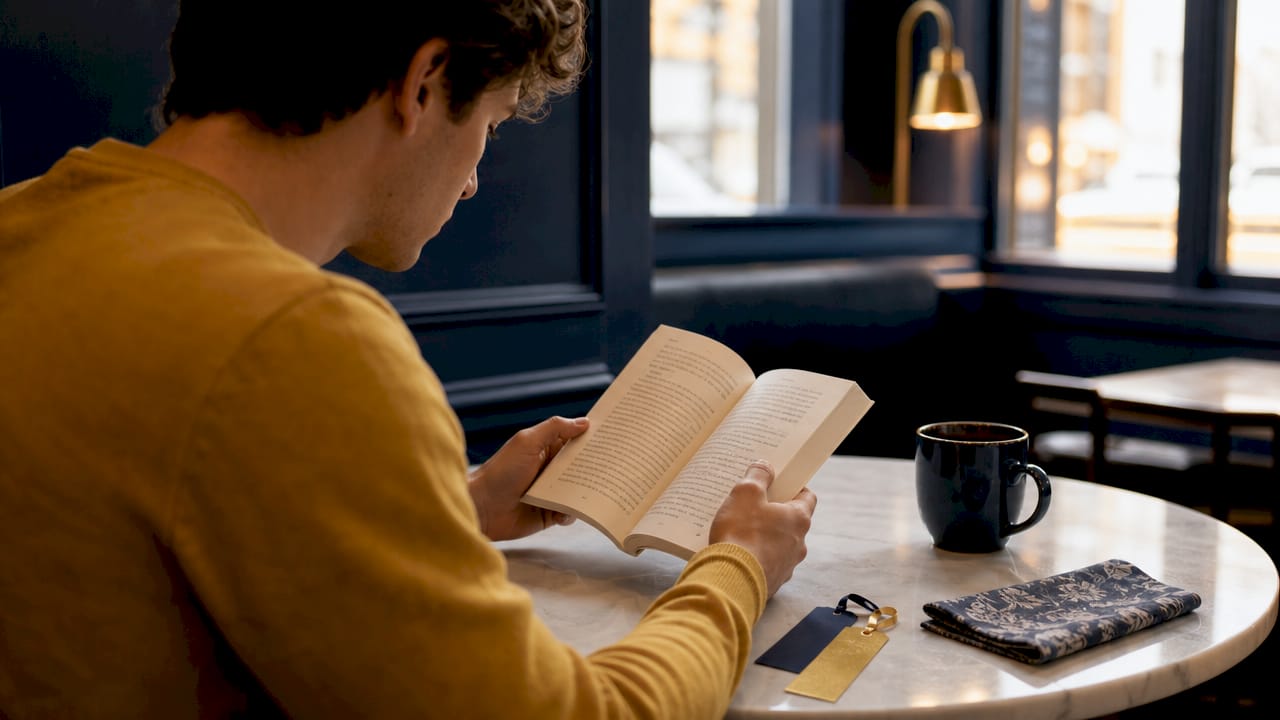
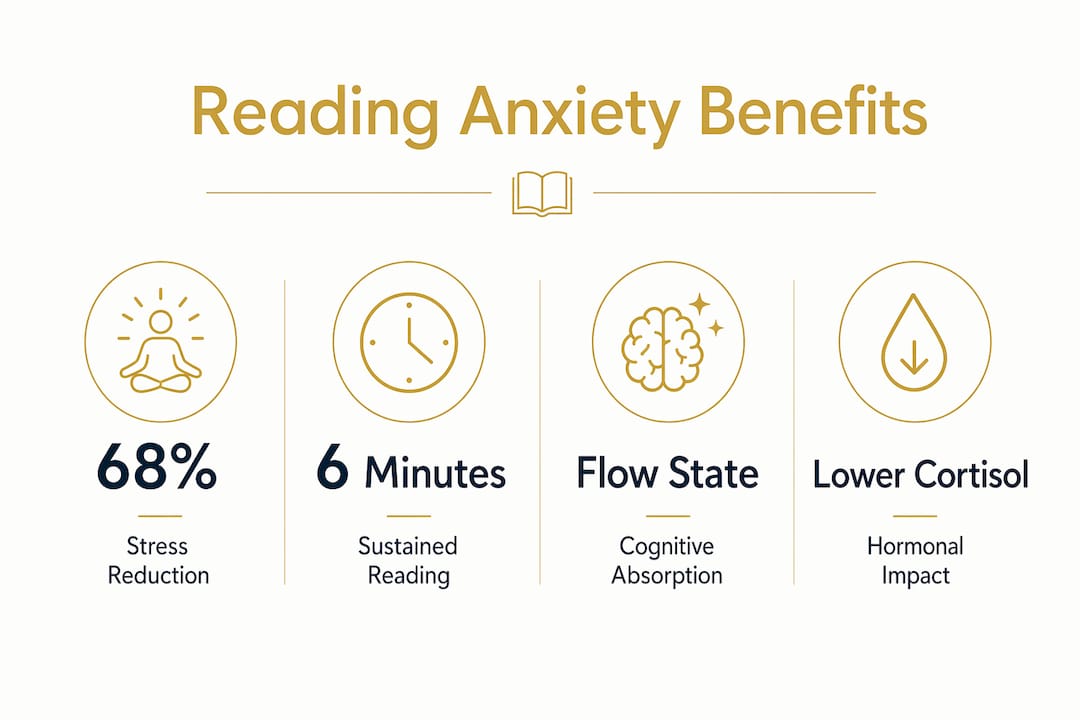
Reading books reduces anxiety by triggering a measurable physiological shift from the stress response to a restful, restorative state. A landmark study by the University of Sussex and Mind Lab International found that just six minutes of reading cuts stress levels by 68%, outperforming music, walking, and video games as relaxation methods. The Anxiety and Depression Association of America (ADAA) and Psych Central both recognize literature and mental health as deeply connected, with clinician-authored self-help books offering structured, evidence-based tools for anxiety management. Understanding how books reduce anxiety gives you a practical, low-cost strategy you can use today.
The core mechanism behind reading’s calming power is a shift in your autonomic nervous system. When you are anxious, your sympathetic nervous system dominates, flooding your body with cortisol and adrenaline. Focused reading activates the parasympathetic nervous system, the rest-and-digest state, which measurably lowers heart rate, respiratory rate, and muscle tension. This is not a subtle effect. It is a documented physiological reset.
Reading also induces what psychologists call a flow state, a condition of total absorption where your attention narrows to the page and away from anxious thoughts. This flow state functions like a meditative reset, redirecting neural resources away from the default mode network, which is the brain circuit most associated with rumination and worry. The result is a quieter mind and a calmer body, simultaneously.
Cortisol reduction is another measurable benefit. Sustained, focused reading suppresses the hypothalamic-pituitary-adrenal axis response, which is the hormonal chain that keeps anxiety running. This is why reading before bed consistently outperforms scrolling social media as a sleep preparation strategy. Screens stimulate; books settle.
Pro Tip: If you find your mind wandering during the first few pages, that is normal. The flow state typically develops after five to ten minutes of uninterrupted reading. Commit to those first minutes before judging whether a book is working.
| Physiological effect | What it means for anxiety |
|---|---|
| Heart rate decrease | Directly counters the physical sensation of panic |
| Muscle tension reduction | Releases the physical holding pattern of chronic stress |
| Cortisol suppression | Interrupts the hormonal loop that sustains anxious states |
| Parasympathetic activation | Shifts your body from alert to recovery mode |
Not all reading material produces the same anxiety-reducing effect. The type of book you choose matters as much as the act of reading itself.
Fiction offers imaginative escape. When you are fully inside a novel’s world, your brain temporarily suspends self-referential processing, the mental habit of replaying your own worries. Literary fiction in particular, from authors like Toni Morrison or Kazuo Ishiguro, builds empathy and emotional regulation skills that carry over into real life. This is why the benefits of reading for anxiety include both immediate relief and longer-term emotional resilience.
Clinician-authored self-help books work differently. Rather than distraction, they provide cognitive tools. The ADAA’s curated reading list features titles built around cognitive behavioral therapy (CBT) principles, which are the same frameworks used in clinical anxiety treatment. Evidence-based self-help books with CBT strategies produce stronger long-term outcomes than distraction reading alone, particularly for generalized anxiety disorder and social anxiety.
Targeted content produces the greatest measurable reduction. A 2026 study published in Frontiers in Psychology found that reading material addressing a person’s specific stressors reduced anxiety by 5.03 to 6.17 points on the State-Trait Anxiety Inventory (STAI) scale. Generic relaxation content produced significantly smaller gains. This finding means that choosing a book about your actual concern, whether that is relationship stress, work pressure, or grief, outperforms picking up whatever is popular.
Audiobooks deserve a specific note. They reduce anxiety effectively when narrated by a human voice conveying empathy and warmth. However, AI-synthesized narration yields weaker emotional regulation benefits. If you use audiobooks for stress relief, choose human-narrated editions.
Rereading familiar books is a strategy most people underestimate. Returning to a beloved novel removes the uncertainty of an unknown plot, giving your nervous system a reliably safe space to rest. This is not avoidance. It is deliberate nervous system regulation, and it works.
Key reading types and their primary benefits:
Knowing that reading helps is one thing. Building a practice that consistently delivers relief is another. The research points to several specific habits that separate occasional readers from people who genuinely use books as an anxiety management tool.
Match the book to your current state. Experts recommend adapting reading complexity to your anxiety level. During acute anxiety, a dense philosophical text will frustrate rather than calm you. Start with lighter, absorbing fiction or a familiar reread. As your nervous system settles, you can move toward more demanding material.
Commit to at least six minutes daily. The 68% stress reduction finding is tied to a minimum of six uninterrupted minutes. This is a low bar, and it is achievable even on the most difficult days. Six minutes before a stressful meeting, six minutes after a hard conversation, six minutes before sleep. The consistency of the habit matters more than the duration of any single session.
Here is a practical reading routine for anxiety relief:
Pro Tip: Keep a dedicated “anxiety shelf” of two or three books you already know work for you. When anxiety spikes, you want zero friction between you and relief. Reaching for a known quantity beats browsing for something new.
For readers dealing with relationship-based anxiety specifically, books for mental clarity can help you cut through the mental noise that often accompanies stressful interpersonal dynamics.
Reading’s 68% stress reduction is not just impressive in isolation. It outperforms every other common relaxation method tested in the University of Sussex study. Music reduced stress by 61%, a cup of tea by 54%, and walking by 42%. Reading wins because it combines two mechanisms that most other methods address separately: physiological calming and cognitive absorption.
Walking calms the body but leaves the mind free to ruminate. Music soothes the nervous system but rarely interrupts anxious thought loops. Reading does both simultaneously. Your body relaxes while your mind is fully occupied with narrative, argument, or information. This dual action is why reading calms anxiety more effectively than passive relaxation.
Mindfulness meditation is the closest competitor. Both practices activate the parasympathetic nervous system and reduce default mode network activity. The difference is that meditation requires training and tolerance for sitting with discomfort, which many anxious people find difficult at first. Reading provides the same neurological benefits through engagement rather than stillness, making it more accessible as an entry point.
Screen time, by contrast, is the direct opposite of reading’s effect. Social media and news feeds activate the sympathetic nervous system through unpredictability, social comparison, and negative information. Replacing 20 minutes of screen time with reading is one of the highest-return behavioral swaps available for anxiety management.
Reading is also portable, private, and free through public libraries. Unlike therapy, gym memberships, or meditation apps, a book requires no subscription, no appointment, and no equipment. For people managing anxiety on a limited budget, this accessibility makes reading one of the most democratic stress relief tools available.
Reading reduces anxiety through a dual mechanism: physiological nervous system calming and cognitive absorption that interrupts rumination, with targeted reading producing the strongest measurable relief.
| Point | Details |
|---|---|
| Six minutes is enough | Just six minutes of focused reading reduces stress by 68%, making daily practice achievable. |
| Match content to your stressor | Targeted reading addressing your specific anxiety produces 5 to 6 points greater STAI reduction than generic content. |
| Flow state is the mechanism | Total absorption in a book interrupts the rumination loop and resets the nervous system simultaneously. |
| Human narration matters | Audiobooks narrated by empathetic human voices outperform AI-synthesized narration for emotional regulation. |
| Rereading is a strategy | Returning to familiar books removes uncertainty and gives the nervous system a safe, predictable space to recover. |
I have spent years working with content about mental health and self-help literature, and the pattern I see most often is this: people treat reading as a nice-to-have rather than a genuine intervention. They reach for apps, supplements, or breathing exercises first, and books last. That ordering is backwards.
The research on how reading calms anxiety is not soft or preliminary. A 68% stress reduction in six minutes is a clinical-grade result. The problem is that reading feels too ordinary to be taken seriously as a tool. It does not come in a bottle or require a download. That ordinariness is actually its strength.
What I have found personally is that the hardest part is not reading itself. It is choosing the right book for the right moment. I have made the mistake of forcing myself through dense nonfiction during high-anxiety periods and wondering why it was not helping. The answer was always the same: the book was wrong for that mental state, not the practice itself. Lighter fiction first, then deeper material as the nervous system settles.
I also want to be direct about one thing: reading is a complement to therapy, not a replacement. If you are managing clinical anxiety, psychology books aid healing most effectively when used alongside professional support, not instead of it. The two work in the same direction. Books give you language, frameworks, and a sense of being understood. Therapy gives you a relationship and accountability. Both matter.
— Robert
If you are ready to use reading as a deliberate anxiety management strategy, Smartreadshub has done the curation work for you.
Smartreadshub’s curated book collection brings together evidence-based titles covering anxiety, emotional recovery, and mental well-being, organized by the specific challenges readers face. Whether you are dealing with relationship stress, emotional pain, or the aftermath of a difficult experience, the collection includes targeted reads that research shows produce the greatest relief. You will also find guides on books for emotional recovery and self-discovery resources built around the same principles covered in this article. Building a personal anxiety library starts with one well-chosen book.
Six minutes of focused reading is enough to reduce stress by 68%, according to the University of Sussex and Mind Lab International study. The key is uninterrupted absorption, not total reading time.
Targeted reading material that addresses your specific stressor produces the strongest results, reducing anxiety by 5 to 6 points on the STAI scale. Fiction works well for immediate escape, while clinician-authored self-help books from sources like the ADAA provide structured long-term tools.
Audiobooks reduce anxiety effectively when narrated by a human voice with empathy and warmth. AI-synthesized narration produces weaker emotional regulation benefits, so choosing human-narrated editions matters for stress relief outcomes.
Yes. Rereading familiar books removes narrative uncertainty, which gives the nervous system a predictable, safe environment to recover. This is a deliberate regulation strategy, not avoidance.
Books are a proven complement to therapy, not a replacement. Evidence-based self-help titles built on CBT principles reinforce therapeutic work and provide tools between sessions, but clinical anxiety benefits most from professional support alongside reading.