
Beauty norms are socially constructed tools of control, not objective truths, and literature is one of the most powerful forces exposing that fact. Why books challenge beauty norms matters because fiction and nonfiction alike give readers the vocabulary, history, and psychological frameworks to see these standards for what they are. From scholarly critiques of neoliberal beauty culture to personal narratives reclaiming the word “ugly,” books function as both diagnosis and treatment. Smartreadshub curates exactly this kind of literature for readers who want more than passive awareness. They want real tools for change.
Why books challenge beauty norms: the historical roots
Beauty standards did not emerge from nature. Modern beauty ideals were shaped by oppressive systems, including the white female slave trade, to enforce passivity, subservience, and hypersexualization in women. That history is not ancient trivia. It is the foundation of the standards many readers still internalize today.
Literature exposes this foundation by naming it directly. Contemporary literary discourse reveals beauty as a tool for self-surveillance and social order, not a neutral aesthetic preference. When a book traces the slenderness ideal back to class control or links passivity to patriarchal capitalism, it strips the norm of its false authority. That stripping is the first act of resistance.

Scholars who study female body image and beauty politics confirm that books provide essential vocabulary to identify everyday gendered oppression embedded in beauty standards. That vocabulary matters because you cannot challenge what you cannot name. Readers who finish a book with new language for what they have experienced are already thinking differently.
Key historical claims that literature has documented and challenged include:
- Slenderness as a class and racial marker, not a health standard
- Passivity coded as femininity to limit women’s social power
- Hypersexualization used to control and commodify women’s bodies
- Beauty rituals framed as personal choice while serving systemic ends
“Beauty norms are socio-political constructs used historically to maintain social hierarchies. Texts reveal beauty as a tool for self-surveillance and enforcing social order, making literature the clearest mirror we have for seeing these systems at work.”
Books that surface this history do not just educate. They delegitimize the norms by showing readers exactly where they came from and who benefited.
How modern literature reframes beauty as resistance
The shift from critique to resistance is where contemporary literature becomes genuinely powerful. Narratives that rehumanize bodies foster agency and resilience against beauty myths. That shift moves readers from self-hatred toward self-possession, which is a fundamentally different psychological state.
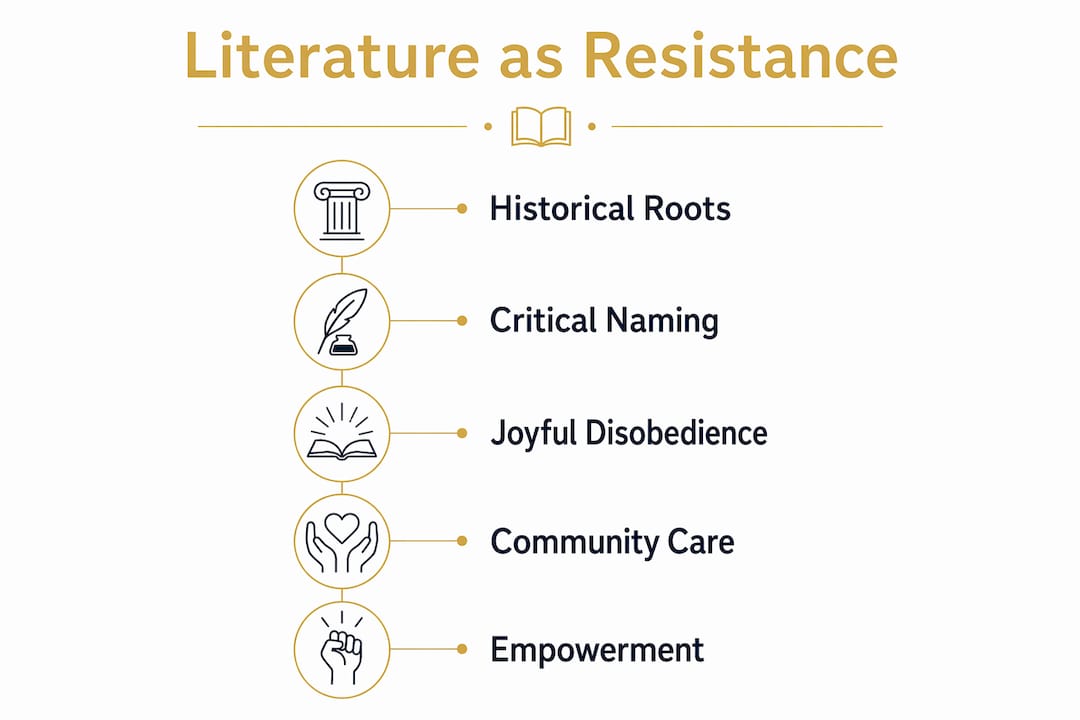
Emma Dabiri’s work calls for “joyful disobedience,” a radical reimagination of beauty that embraces unruly, disobedient bodies as an act of resistance to patriarchal capitalism. That framing matters because it replaces shame with defiance. Readers are not asked to simply accept their bodies. They are invited to treat their bodies as political territory worth defending.
Other books go further by functioning as practical manuals. Books that blend behavioral science with personal stories help readers stop chasing impossible standards through humor and scientific exercises. These are not self-help platitudes. They are cognitive tools designed to interrupt conditioned responses to appearance.
Readers who want to use literature as active resistance can follow this sequence:
- Start with history. Read one book that traces the origin of a specific beauty norm you have internalized. Understanding the source weakens its grip.
- Move to critique. Choose a text that analyzes how beauty standards function as social control, not personal failure.
- Engage with body activism narratives. Read stories where characters reclaim their bodies through community, not compliance.
- Practice the exercises. Books like The Problem with Pretty include cognitive rewiring tools that help readers identify and unlearn conditioned beauty biases.
- Discuss what you read. Resistance grows faster in community than in isolation.
Pro Tip: When reading body activism literature, keep a journal of every norm the author names that you had previously accepted as natural. That list becomes your personal map of internalized standards to examine.
The science-backed guide on how books empower women readers at Smartreadshub expands on this sequence with specific titles and psychological frameworks for each stage.
Does representation alone change beauty standards?
Representation is necessary but not sufficient. Simply increasing diverse bodies in books without changing the underlying narrative framework leaves beauty norms trapped in neoliberal competition rather than fostering authentic empowerment. A book that features a fat protagonist who learns to love herself through better skincare is still operating inside the same consumerist logic it appears to challenge.
The distinction scholars draw is between individual consumption and communal care. Neoliberal beauty culture tells readers that self-improvement is a personal project. Books that genuinely disrupt this logic shift the focus to relationships, community, and collective resistance. Asian American young adult novels have demonstrated this shift clearly, showing how supportive relational frameworks resist beauty myths far more effectively than individual self-acceptance narratives.
| Narrative approach | What it centers | Effect on beauty norms |
|---|---|---|
| Diverse representation only | Individual body acceptance | Leaves neoliberal competition intact |
| Communal care framework | Relationships and collective support | Disrupts the competitive logic of beauty culture |
| Historical critique | Systemic origins of norms | Delegitimizes standards at the root |
| Cognitive behavioral tools | Personal bias identification | Builds practical resistance skills |
The table above shows why the most effective literature against beauty norms combines all four approaches. Representation without critique is inclusion inside a broken system. Critique without tools leaves readers informed but stuck. Tools without community create isolated self-improvement projects that mirror the very culture they oppose.
Readers looking for books that move beyond surface representation will find that the best titles in this space treat beauty as a political question, not a personal one.
How to apply these lessons from books in real life
Reading about beauty resistance is the beginning, not the end. The goal is to carry what books teach into daily perception and social behavior.
Practical steps drawn from the literature include:
- Name the norm before you react to it. When you feel inadequate about your appearance, ask which specific standard is producing that feeling and where it came from.
- Practice joyful disobedience in small acts. Wear what you want, skip rituals that feel punishing, and notice the social pressure that follows. That pressure is data about the norm’s power.
- Reclaim language carefully. Reclaiming terms like “ugly” can be a radical self-empowerment act, but it carries real risks of self-loathing. Approach this with emotional resilience and ideally with community support.
- Build a reading community. Resistance grows faster when readers discuss these books together. A group conversation about a body activism text creates shared vocabulary and mutual accountability.
- Connect beauty critique to broader social analysis. Beauty norms intersect with race, class, and gender. Books that make these connections visible help readers see their personal experience as part of a larger pattern.
Pro Tip: Before finishing any book on beauty and body image, write down one norm the author challenged that you still believe. Sit with the discomfort of that gap. That is where the real work begins.
The psychological complexity of this work is real. Successful authors navigate the tension between honest self-description and internalized stigma with emotional care and nuance. Readers should expect the same complexity in themselves. The impostor syndrome guide at Smartreadshub offers a useful parallel framework for readers working through internalized social expectations of any kind.
Key Takeaways
Books challenge beauty norms most effectively when they combine historical critique, communal care frameworks, and cognitive tools that readers can apply beyond the page.
| Point | Details |
|---|---|
| Beauty norms are constructed | Literature traces their origins to systems of oppression, not nature or aesthetics. |
| Representation needs critique | Diverse bodies in books only create change when paired with systemic narrative shifts. |
| Cognitive tools matter | The best body activism books include exercises that help readers unlearn conditioned biases. |
| Community amplifies resistance | Reading and discussing these books in groups builds shared vocabulary and mutual support. |
| Reclaiming language is complex | Terms like “ugly” can empower, but require emotional resilience and careful handling. |
What I have learned from reading these books closely
Robert here. I have spent years reading literature that critiques beauty standards, and the thing most readers miss is this: the books that changed how I think were not the ones that made me feel good. They were the ones that made me uncomfortable with something I had accepted without question.
The historical argument is the hardest to sit with. When you read that slenderness was constructed as a class marker, not a health ideal, your first instinct is to resist it. That resistance is the norm defending itself. The books that do this work best give you enough evidence that the resistance eventually collapses.
What I find underappreciated is the communal care argument. Most readers focus on the self-love message and miss the structural critique underneath it. The most powerful texts are not telling you to love yourself more. They are telling you that the entire framework of individual beauty achievement is the problem. That is a much harder message to receive, and a much more useful one.
My honest recommendation: do not read these books alone. The ideas are too easy to absorb intellectually and too hard to apply personally without someone to talk to. Find one other reader. Work through a book together. The conversation will do more than the reading alone ever could.
— Robert
Books that help you heal and see yourself clearly
Smartreadshub has built a curated library for readers who want literature that does more than describe a problem.

The women’s mental health reading guide at Smartreadshub brings together titles that address beauty pressure, body image, and self-worth through psychology-backed frameworks. These are books selected because they work, not because they are popular. Readers who want to go deeper on the healing side of this work will also find the psychology books for healing guide useful. It explains exactly how literature supports recovery from internalized social norms and builds the mental clarity to resist them going forward.
FAQ
Why do books challenge beauty norms more effectively than social media?
Books provide extended historical context and cognitive exercises that social media cannot. Literary discourse exposes the socio-political roots of beauty standards in ways that short-form content rarely reaches.
What does “body activism” mean in literature?
Body activism in literature refers to narratives that rehumanize bodies and foster agency against beauty myths, moving readers from self-criticism toward resistance and collective empowerment.
Is diverse representation in books enough to change beauty standards?
Representation alone is not enough. Experts emphasize that narrative frameworks must shift from individual self-improvement to communal care to produce real change in how beauty is defined and valued.
Can reclaiming words like “ugly” be harmful?
It can be. Literary insiders caution that reclaiming such terms requires emotional resilience because the process carries real risks of reinforcing self-loathing without proper support.
How do I start reading books that challenge beauty norms?
Begin with one book that traces the historical origin of a beauty standard you have internalized, then move to texts that offer communal care frameworks and practical cognitive tools for unlearning conditioned biases.