
Humor books are a clinically supported tool for emotional healing, triggering measurable biological changes that reduce stress and elevate mood. The role of humor books in healing goes far beyond entertainment. Laughter induced by genuinely funny writing reduces cortisol levels by up to 36.7% in a single session, according to LaughMD clinical research. That means a chapter of the right book can shift your body chemistry in minutes. Smartreadshub curates humor books specifically for readers working through breakups, grief, and emotional exhaustion, making the science of laughter accessible and personal.
What physiological effects does laughter from humor books have on healing?
Laughter is a biological event, not just a mood. When you laugh at a passage in a book, your brain activates reward circuitry that releases dopamine and endorphins. Those chemicals improve pain tolerance and lift motivation in ways that antidepressants attempt to replicate pharmacologically.

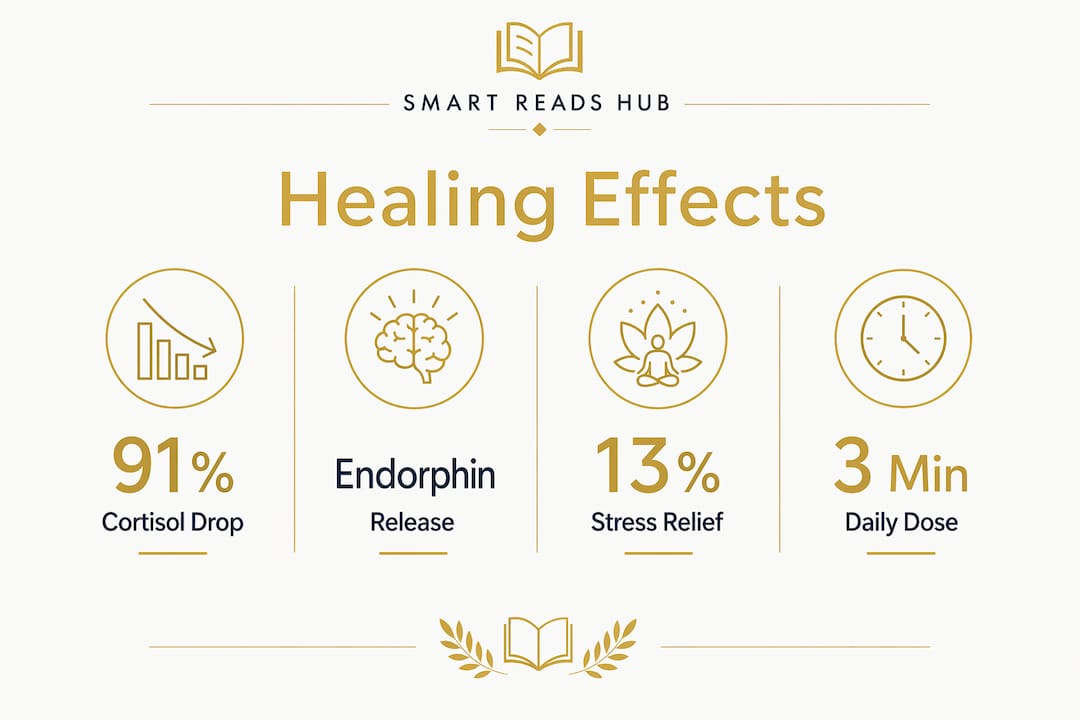
The cortisol reduction effect is the most clinically documented benefit. A single laughter session can deliver up to 91% pain relief in certain patients, according to LaughMD. That figure reflects extreme cases, but even modest cortisol drops matter when you are cycling through the anxiety of a breakup or processing grief.
Not all laughter produces the same results. Spontaneous laughter triggered by genuinely funny content produces more reliable cortisol reduction than forced laughter exercises. A systematic review reports approximately 32% cortisol reduction from spontaneous laughter. That is why a book that actually makes you laugh out loud outperforms a laughter yoga class where you are performing amusement.
The stress relief compounds quickly. A structured humor break of just 3 minutes reduced healthcare provider stress by 13% in Chapman University clinical trials. Three minutes. That is one funny anecdote, one absurd scene, one perfectly timed punchline in a memoir.
| Physiological effect | Mechanism | Clinical finding |
|---|---|---|
| Cortisol reduction | Stress hormone suppression | Up to 36.7% drop per session |
| Endorphin release | Brain reward activation | Improved pain scores and motivation |
| Spontaneous laughter benefit | Genuine amusement response | ~32% cortisol reduction |
| Rapid stress relief | Short humor exposure | 13% stress drop in 3 minutes |
Pro Tip: Read humor books in the morning before checking your phone. Cortisol peaks naturally within the first hour of waking, so that is the window where a funny chapter delivers the biggest biological payoff.
How do humor books support emotional resilience during trauma and distress?
Humor is a structured psychological intervention, not just a distraction. Research from King’s College London and the Canadian Oncology Nursing Journal shows that therapeutic humor enhances coping skills, improves mood, and reduces anxiety even in palliative care settings. If humor works in those conditions, it works after a breakup.
The key insight is that humor and sadness are not opposites. Allen Klein’s The Courage to Laugh makes the case that one can be sad and humorous simultaneously. Humor provides dignity and permission to laugh through grief and chronic illness. That reframe matters because many readers feel guilty laughing when they are in pain, as if amusement means they are not taking their suffering seriously.
Humor books also address the specific emotional damage that breakups and toxic relationships leave behind. Jenny Lawson’s work describes humor books as a balm for self-doubt and anxiety when your brain is not working properly. That is not a metaphor. It describes the cognitive fog and rumination that follow emotional trauma, and humor cuts through it in ways that self-help platitudes cannot.
The emotional benefits of healing through laughter in book form include:
- Mood improvement through endorphin release and the cognitive shift that absurdist humor creates
- Reduced self-doubt by normalizing the messiness of emotional recovery
- Decreased isolation because humor creates a sense of shared human experience
- Permission to grieve with lightness, which reduces the shame many readers carry
- Resilience building through repeated exposure to reframed perspectives on pain
Philosophical humor books like Toon Tellegen’s The Cricket’s Healing demonstrate that humor acts as both a subversive and healing practice, with bestselling titles in this category selling over 1 million copies worldwide. That reach reflects genuine demand. Readers are not buying these books for laughs alone. They are buying them because the books help them survive.
Pro Tip: After a difficult chapter in your life, pair a humor book with a post-breakup recovery guide to address both the emotional and the physiological dimensions of healing at the same time.
What distinguishes therapeutic humor books from casual humorous reading?
Therapeutic humor is a defined clinical concept. Practitioners use structured laughter to intentionally trigger cortisol reduction and endorphin release, which separates it from reading a comedy novel for fun. The distinction matters because not every funny book heals, and not every healing book is funny in the conventional sense.
The most effective therapeutic humor books blend humor with raw honesty about pain. They avoid superficial cheerfulness. Jenny Lawson’s writing, for example, does not pretend that depression is manageable with a positive attitude. It sits inside the mess and finds the absurd angle. That honesty is what creates authentic connection and makes the laughter feel earned rather than forced.
Timing and integration also separate therapeutic use from casual reading. Professionals emphasize that misuse of humor can worsen distress if it appears dismissive of genuine emotional pain. A humor book read at the wrong moment, or chosen without regard for the reader’s emotional state, can feel invalidating. Personalization is the variable that determines whether a book heals or irritates.
| Feature | Therapeutic humor books | Casual humor reading |
|---|---|---|
| Primary intent | Emotional regulation and resilience | Entertainment and amusement |
| Tone | Vulnerable, honest, and comedic | Primarily comedic |
| Reader selection | Matched to emotional state and need | Chosen by preference or mood |
| Cortisol impact | Maximized through genuine resonance | Variable and unpredictable |
| Integration | Part of a healing routine or practice | Standalone leisure activity |
The personalization factor is critical. Spontaneous laughter requires content that genuinely resonates with the reader. A humor book that matches your specific emotional experience, whether that is a bad divorce, a narcissistic ex, or chronic anxiety, will produce stronger biological responses than a generic comedy collection. That is why curated recommendations outperform random selections from a bestseller list.
How can you effectively use humor books in your healing routine?
Healing through laughter works best as a practice, not a one-time event. The biology requires repetition. Cortisol reduction from a single session fades, but consistent exposure to humor builds emotional resilience over time. Structure matters more than intensity.
A practical approach to integrating funny books for wellness into your recovery:
- Identify your emotional state first. Choose books that meet you where you are. If you are in acute grief, a book that acknowledges pain before finding the comedy will land better than pure absurdist humor.
- Set a daily reading window. Even 15 minutes of humor reading in the morning or before sleep creates a consistent cortisol-lowering habit. Consistency amplifies the biological effect.
- Journal after reading. Write one sentence about what made you laugh and why. This practice connects the humor to your specific emotional experience and deepens the resilience benefit.
- Combine with social support. Share a funny passage with a friend. Laughter shared socially compounds the mood benefit and reduces isolation, which is one of the most damaging effects of breakups.
- Pace yourself with heavy material. If a book addresses trauma directly through humor, read it in short sessions. Humor books that blend vulnerability and comedy can surface emotions you are not ready to process in large doses.
- Rotate genres. Alternate between memoir-style humor, philosophical fables, and essay collections. Different formats trigger different cognitive responses and prevent the emotional numbness that comes from consuming one type of content repeatedly.
Humor books that curate moments of joy without ignoring pain are the most effective tools for sustained resilience. The goal is not to feel better immediately. The goal is to build a relationship with your own capacity for lightness, even when life is genuinely hard. Readers who treat humor books as a psychology-backed healing tool rather than escapism get measurably more from the experience.
Key Takeaways
Humor books reduce cortisol, release endorphins, and build emotional resilience, making them one of the most accessible and scientifically supported tools for healing after a breakup or emotional trauma.
| Point | Details |
|---|---|
| Cortisol reduction is real | A single laughter session can reduce cortisol by up to 36.7%, with measurable pain relief in clinical settings. |
| Spontaneous laughter heals best | Genuinely funny, personalized content produces stronger biological responses than forced laughter exercises. |
| Humor and grief coexist | Readers can be sad and humorous simultaneously; humor provides dignity without dismissing pain. |
| Therapeutic books differ from casual reads | The most effective humor books blend raw honesty with comedy, matched to the reader’s emotional state. |
| Consistency builds resilience | Daily humor reading, even 15 minutes, compounds cortisol-lowering effects and strengthens emotional recovery over time. |
What I have learned from recommending humor books to people in pain
People resist humor books when they are hurting. That resistance is the most important thing to understand about this topic. Readers in the middle of a breakup or recovering from a toxic relationship often feel that laughing means they are not taking their pain seriously. That belief is wrong, and it costs people a genuinely effective healing tool.
The books that work are not the ones that tell you everything will be fine. They are the ones that sit in the wreckage with you and find the absurd angle. Jenny Lawson does this. Toon Tellegen does this in a completely different register. The common thread is honesty. The humor earns its place because the pain is acknowledged first.
There is also a cultural barrier worth naming. Many readers, especially those raised in environments where emotional expression was discouraged, feel that humor during grief is disrespectful. The research from Allen Klein and the clinical data from LaughMD both push back on that directly. Laughter is not a betrayal of your suffering. It is a biological response that your body uses to survive it.
My honest observation after years of watching readers work through emotional recovery after abuse and heartbreak is this: the readers who heal fastest are not the ones who cry the most or journal the most. They are the ones who find a way to laugh at something, even briefly, every single day. Humor books make that possible on the days when nothing else does.
Be patient with yourself. Your humor style is personal. What makes one reader laugh out loud will leave another cold. Finding the right book takes experimentation, and that is fine. The search itself is part of the process.
— Robert
Healing humor books, curated for you at Smartreadshub
Smartreadshub brings together curated book selections specifically for readers working through emotional pain, including a dedicated section of humor books that blend comedy with genuine healing value.

The books catalog at Smartreadshub covers humor titles alongside psychology-backed recovery reads, all selected for readers navigating breakups, toxic relationships, and emotional exhaustion. Community reviews help you find the right book for your specific emotional state, not just the most popular title on a bestseller list. If you are ready to start, the books on letting go collection is a strong first stop for readers who want humor and healing in the same read.
FAQ
Can humor books actually reduce physical stress?
Yes. Clinical research shows a single laughter session can reduce cortisol levels by up to 36.7% and provide significant pain relief. Spontaneous laughter from genuinely funny content produces the most reliable results.
How do humor books differ from laughter therapy?
Laughter therapy is a structured clinical intervention led by practitioners. Humor books deliver similar biological benefits through spontaneous amusement, making them a self-directed, accessible alternative that readers can use at home.
Is it okay to use humor books while grieving a breakup?
Humor and grief are not mutually exclusive. Research supports the idea that readers can be sad and humorous simultaneously, and that laughter provides dignity and emotional relief without dismissing genuine pain.
How long does it take for humor books to help with healing?
Even a 3-minute humor exposure reduces stress measurably. Sustained benefits build with consistent daily reading over weeks, as repeated cortisol reduction and endorphin release strengthen emotional resilience over time.
What makes a humor book therapeutic rather than just entertaining?
Therapeutic humor books blend honest acknowledgment of pain with comedy, matched to the reader’s emotional state. Books that dismiss or bypass pain in favor of pure amusement produce weaker healing effects than those that sit inside the difficulty and find the absurd angle.