
Healing-journey and recovery-focused books play a specific, evidence-backed role for women working through gaslighting, narcissistic abuse, or manipulation: they validate experience, model recovery behaviors, and reduce the isolation that psychological abuse almost always creates. The key word is staged. Read at the right moment, with structured reflection, these books can help you recognize manipulation patterns and rehearse boundaries in a low-stakes environment before you need them in real life. Read too early, or without any processing support, they can overwhelm rather than help.
Two outcomes readers consistently report:
The safety caveat matters. Experts caution that reading alone is often insufficient. Structured processing with a therapist or support group is what translates narrative insight into real behavioral change.
Staged, processed reading is the most reliable way to turn healing-journey books into genuine recovery tools, not just validation.
| Point | Details |
|---|---|
| Stage before you start | Match your book to your current recovery stage: recognition, processing, or integration. |
| Always pair with processing | Reading alone is often insufficient; journal prompts and therapist discussion translate insight into change. |
| Use the stop rule | If you feel activated for more than ten minutes after reading, that title is not right for this moment. |
| Community reading amplifies benefits | Trauma-informed group formats rebuild social trust that abuse destroys, beyond what solo reading offers. |
| Smartreadshub guides the sequence | Smartreadshub’s curated guide includes stage tags, trigger warnings, and processing prompts for each recommended title. |
The mechanism that makes healing-journey fiction useful is something researchers call fictiveness: the psychological distance a story creates between you and the material. Because the events are happening to a character, not to you, your nervous system can tolerate exploring dangerous relational dynamics without direct re-exposure to your own trauma. Theoretical and practitioner literature frames this as fiction’s core therapeutic mechanism, allowing survivors to rehearse and reflect on difficult dynamics safely.
That distance also activates empathy and perspective-taking. When you watch a character slowly realize she has been gaslit, you are practicing the same cognitive shift you need in your own life, but with enough separation to stay regulated.
The research behind this is more specific than most articles acknowledge. A randomized controlled trial comparing trauma-focused literature, non-trauma literature, and a control group found that trauma-focused reading produced the largest PTSD symptom reductions over eight weeks. Two factors partially explained why: reading self-efficacy (confidence that reading can help you) and emotional empathy. Readers who believed the process would work, and who engaged emotionally with characters, got more out of it.
Social support moderates these effects too. A BMC Psychology study found that social support and reading confidence together reduce the risk of bibliotherapy causing harm, which is why community reading formats tend to outperform solo reading for women in early recovery.
Bibliotherapy also shows clinically meaningful effects for mild-to-moderate depression and anxiety across multiple systematic reviews, and can build autonomy and problem-solving when properly staged. The limits are real: evidence is strongest for mild-to-moderate symptoms, and selection must match your current stage.
Women most likely to benefit from healing-journey books are those with some stabilization already in place: basic physical safety, a few hours of sleep most nights, and the ability to feel a difficult emotion without immediately shutting down or spiraling. You do not need to be fully recovered. Middle-to-late early recovery is often the right window.
Self-check before starting:
If you answered yes to the crisis or suicidal ideation questions, reading is not the right first step. Psychology Today’s clinical guidance for narcissistic abuse survivors is clear: prioritize physical safety and professional support before self-directed therapeutic activities.
Red flags to pause reading immediately: racing heart that won’t slow, dissociation, intrusive memories that last hours, or a strong urge to contact your abuser after reading.
For format: if your emotion regulation is still fragile, start with nonfiction that names dynamics plainly rather than fiction that recreates them dramatically. Emotional fiction is powerful precisely because it pulls you in, which means it can also pull you under if the timing is wrong.
Pro Tip: Set a “stop rule” before you open any book: if you feel activated for more than ten minutes after putting it down, that title is not right for this moment. Return to it in four to six weeks.
Always pair reading with a structured processing routine. The four-step frame below keeps reading therapeutic rather than retraumatizing.
Pro Tip: Therapist-led bibliotherapy produces better insight-to-behavior translation than solo reading. If you have a therapist, share your reading list and ask them to assign one reflection prompt per session.
For grounding exercises if you get activated mid-read: the 5-4-3-2-1 sensory technique, box breathing (four counts in, hold, out, hold), or a brief body scan all work well and take under three minutes.
Choose your starting point by stage, not by what sounds most interesting. Recognition stage means you are still naming what happened. Processing stage means you know what happened and are working through the emotional weight. Integration stage means you are rebuilding identity and practicing new patterns.
Recognition stage (low trigger intensity)
The Gaslight Effect by Robin Stern. A clinician-written nonfiction guide that names gaslighting patterns with precision. Best for: women who still doubt whether what happened was real. Trigger risk: low. Processing support: solo journaling works well here. Practical takeaway: Stern’s “gaslight tango” framework helps you identify your own responses that keep the dynamic alive.
Why Does He Do That? by Lundy Bancroft. Probably the most cited book in domestic abuse recovery circles, and for good reason. Bancroft explains abuser thinking in plain language that cuts through the confusion gaslighting creates. Trigger risk: low-to-moderate. Processing support: support group discussion is particularly useful here. Practical takeaway: the “types of abusers” framework helps you stop asking “why” and start asking “what do I do.”
Processing stage (moderate trigger intensity)
Psychopath Free by Jackson MacKenzie. Written for survivors of relationships with people who show narcissistic or psychopathic traits. Direct, validating, and occasionally blunt. Trigger risk: moderate. Processing support: therapist homework recommended. Practical takeaway: the “idealize-devalue-discard” cycle, named clearly, often produces the first real moment of pattern recognition for many readers.
Whole Again by Jackson MacKenzie. The follow-up to Psychopath Free, focused on identity rebuilding after the relationship ends. Best for: middle-to-late recovery, when you are ready to ask who you are outside the relationship. Trigger risk: low-to-moderate. Processing support: journaling with the book recommendations from Smartreadshub works well alongside this title.
Integration stage (higher emotional depth)
The Smartreadshub guide How Books Explain Toxic Relationships and Help You Heal maps each of these titles to specific manipulation dynamics and includes stage tags, trigger warnings, and processing prompts. It is the most practical starting point if you are unsure which stage applies to you.
| Best for | Format | Trigger risk | Processing support | Practical takeaway |
|---|---|---|---|---|
| Recognition / naming | Nonfiction self-help | Low | Solo journaling | Names patterns; breaks self-doubt |
| Pattern understanding | Nonfiction / analysis | Low-moderate | Support group | Explains abuser logic; reduces “why” spiral |
| Emotional processing | Self-help / narrative | Moderate | Therapist homework | Cycle recognition; validates experience |
| Identity rebuilding | Self-help / reflective | Low-moderate | Journaling + peer | Reclaims self outside the relationship |
| Trauma context | Nonfiction / science | Moderate-high | Therapist-led | Explains body responses; builds self-compassion |
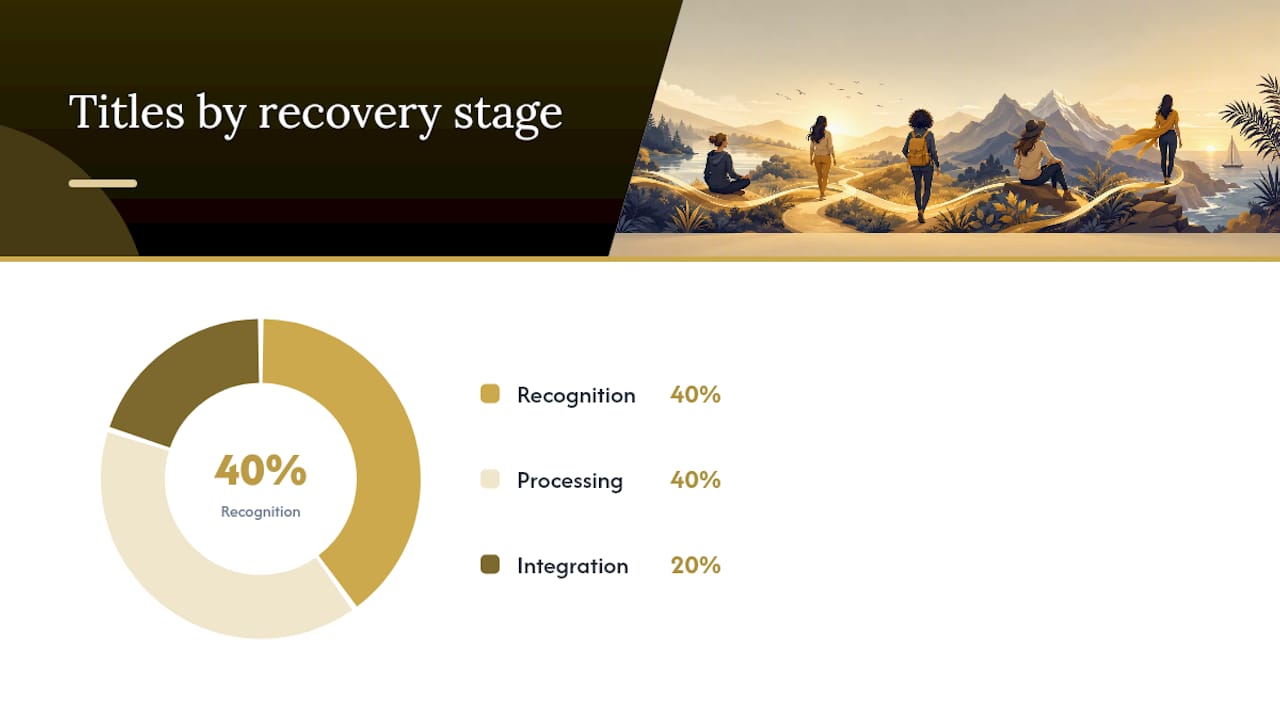
Three quick criteria for choosing your first title: Does it match your current stage? Does the trigger level feel manageable today? Do you have at least one person to talk to after reading?
Low-cost access options:
Safe sharing in book clubs or buddy reads:
Accessibility considerations: Look for titles available in large print, audio, or translated editions. If English is not your first language, prioritize books available in your language. Cultural representation matters: a book written for a specific cultural context may not map cleanly onto your experience, and that gap can undermine the validation the book is meant to provide.
Most articles about recovery reading hand you a list and send you on your way. That approach misses the most important variable: when you read matters as much as what you read. A book that would have been overwhelming at week two of leaving a relationship can be exactly right at month six. The same title that validates one reader’s experience can retraumatize another who is not yet stabilized.
The second thing most advice gets wrong is treating reading as a passive activity. The research is consistent: reading paired with structured processing produces better outcomes than reading alone. The journal prompt, the therapist conversation, the support group discussion — these are not optional add-ons. They are where the actual therapeutic work happens. The book opens the door; the processing is what you do once you walk through it.
There is also an underappreciated role for community. Women who read and discuss together in structured, trauma-informed settings do not just learn faster. They rebuild the social trust that abuse systematically destroys. That is a different kind of healing than anything a solo reading session can offer.
Recovery reading works best when someone has already done the staging work for you. Smartreadshub’s guide, How Books Explain Toxic Relationships and Help You Heal, is built specifically for women navigating gaslighting, narcissistic abuse, and manipulation. Every title in the guide carries a stage tag, a trigger-risk rating, and a set of processing prompts you can use solo or bring to a therapist.
The guide also maps books to specific manipulation dynamics, so if you are dealing with blame-shifting and defensiveness, you can find titles that address that pattern directly rather than searching through generic recovery lists. Start with the free guide, identify your stage, and pick one title. That is the whole first step.
This article is general information, not a substitute for advice from a qualified doctor. Consult a qualified healthcare professional about your own circumstances before acting on anything here.