
Books to rebuild confidence are structured self-help programs that use psychological frameworks, paced exercises, and trauma-informed tools to restore self-worth after relational damage. Unlike generic motivation titles, the most effective ones address the root causes of lost confidence: shame narratives, nervous system dysregulation, and attachment wounds. Titles like Be Confident by Jo Emerson, Reconstructing You by Dr. Amara Osei, and Conscious Uncoupling by Katherine Woodward Thomas each offer a distinct, evidence-grounded path back to yourself. This article breaks down what makes these books work and how to use them without burning out.
The best books for rebuilding self-worth do more than deliver inspiration. They deliver structure. Psychologically informed self-help with guided exercises achieves measurably better outcomes than generic advice with no framework. That finding from the WHO matters because it tells you exactly what to look for on the shelf.
Books with clear timelines, such as 30-day or 100-day programs, give you measurable checkpoints. Be Confident by Jo Emerson uses ten chapters with journaling prompts, affirmations, and case studies spread across a 100-day program. That pacing prevents the common trap of reading fast, feeling inspired briefly, and then reverting to old patterns within a week.
Confidence lost through relational trauma does not respond to willpower or positive thinking alone. Shame-based narratives and nervous system dysregulation are the core barriers that need direct addressing for long-term change. Books that incorporate neuroscience, attachment theory, or somatic awareness work at a deeper level than those relying purely on affirmations.
Self-Directed Complex PTSD Exercises for Women by Debbie Missud, LMHC, offers 50+ trauma-informed exercises drawn from somatic practices, EMDR, and narrative therapy. That range matters because different people respond to different modalities.
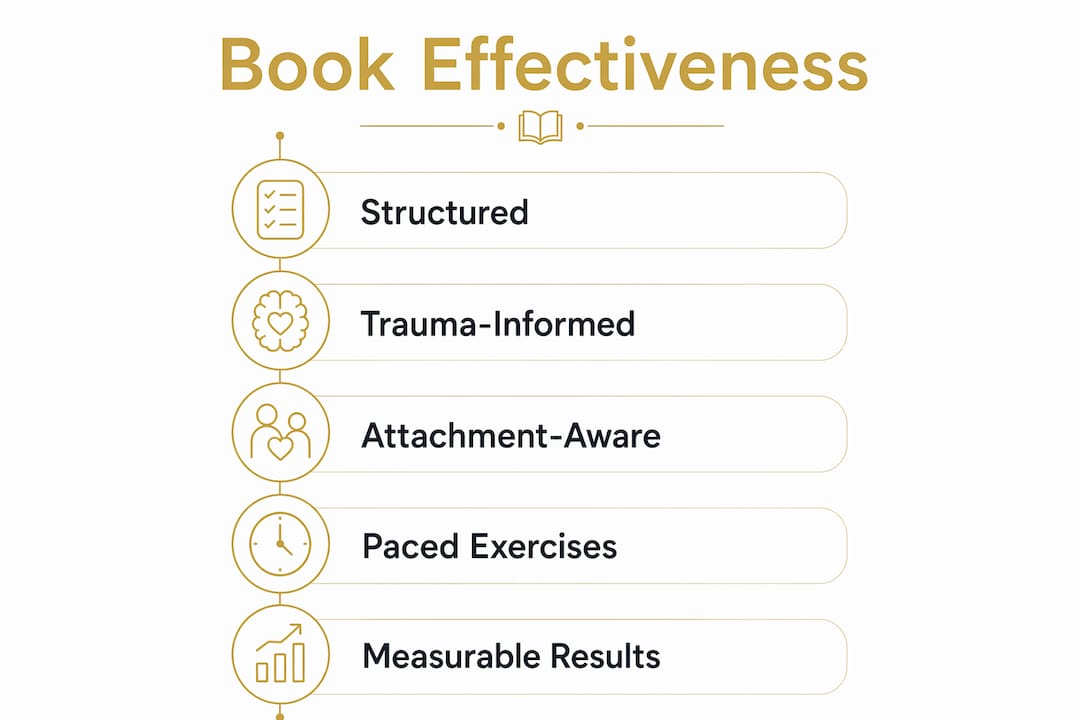
Here is what to look for when evaluating any self-help book for confidence:
Pro Tip: Before buying, flip to chapter three of any self-help book. If it still has not introduced a concrete exercise by that point, the book is likely more inspirational than transformational.
The books below are specifically built for people recovering from relational wounds, not just general self-doubt. Each takes a different angle, so the right choice depends on where you are in your healing process.
| Book | Author | Approach | Timeline |
|---|---|---|---|
| Rebuilding the Heart | Abhishek Kumar | Gentle post-breakup healing and self-love | 30 days |
| Conscious Uncoupling | Katherine Woodward Thomas | Five-step healthy separation blueprint | Self-paced |
| Reconstructing You | Dr. Amara Osei | Neuroscience and attachment-based shame work | Self-paced |
| Be Confident | Jo Emerson | Broad self-doubt and self-esteem program | 100 days |
| The Anxious Attachment Recovery Workbook | Jessica Da Silva, LMFT | Attachment-focused relational confidence | Self-paced |
Rebuilding the Heart is a 30-day guide designed for people who feel stuck after a breakup. Its gentle pacing makes it ideal for the early weeks of recovery, when emotional flooding is still frequent. Each day builds on the last, so progress feels real rather than abstract.
Katherine Woodward Thomas built Conscious Uncoupling around five sequential steps: finding emotional freedom, reclaiming personal power, breaking old patterns, becoming a love alchemist, and creating a happy future. The framework reframes the end of a relationship not as failure but as a doorway. That shift in meaning is where confidence begins to return.
Reconstructing You by Dr. Amara Osei targets the psychological layer most books skip. It uses neuroscience and attachment theory to dismantle the shame narratives that form after toxic or controlling relationships. The exercises go beyond affirmations and work directly on how you interpret closeness, conflict, and your own worth. For anyone who has been gaslit or manipulated, this is one of the most targeted books on rebuilding identity available.
Attachment-focused workbooks provide deeper healing for relational confidence by helping reshape how you interpret closeness and conflict. The Anxious Attachment Recovery Workbook by Jessica Da Silva, LMFT, is built for people whose confidence collapses specifically in relationship contexts. Understanding your attachment style is often the missing piece when self-esteem feels solid alone but crumbles around others.
Reading about confidence and actually building it are two different activities. The gap between them is where most people stall. Follow these steps to get real results from your reading.
Pro Tip: Create a physical reading space that signals safety to your nervous system. A consistent chair, a warm drink, and no phone nearby tells your brain this is a healing ritual, not a task.
Most people who abandon self-help books do not fail because the books are bad. They fail because of predictable, avoidable patterns.
“Healing is not linear. The goal is not to feel better every single day. The goal is to feel more like yourself over time.”
The science of healing after relational trauma consistently shows that self-compassion, not self-discipline, is the engine of lasting change. Treat emotional setbacks as part of the process, not evidence that the process is failing.
The most effective books to rebuild confidence combine structured pacing, trauma-informed exercises, and attachment-aware frameworks to produce lasting change rather than temporary motivation.
| Point | Details |
|---|---|
| Structure drives results | Choose books with clear timelines (30 or 100 days) and chapter-by-chapter exercises. |
| Shame must be addressed directly | Books using neuroscience and attachment theory outperform those relying on affirmations alone. |
| Written exercises are non-negotiable | Journaling and written prompts rewire the brain in ways passive reading cannot. |
| One book at a time | Focusing on a single program prevents overwhelm and builds measurable momentum. |
| Professional support amplifies results | Self-help books work best as a complement to therapy or peer support, not a replacement. |
The readers I see most often at Smartreadshub share a specific pattern. They come in after a relationship that slowly dismantled their sense of self. They are not looking for motivation. They are looking for proof that they still exist as a whole person.
Generic self-help books fail these readers almost every time. The problem is not the writing. The problem is that most confidence books are written for people who have a solid foundation and just need a push. Relational trauma does not leave you with a solid foundation. It leaves you questioning whether you ever had one.
What actually works is structure combined with nervous system awareness. I have seen readers transform their self-image using Conscious Uncoupling not because it is the most sophisticated book ever written, but because its five-step sequence gives the brain a clear path when everything feels chaotic. The same is true for Rebuilding the Heart. Thirty days feels manageable when nothing else does.
The uncomfortable truth is that most people read the first three chapters of a confidence book and stop. Not because they lack commitment, but because the book never gave them a reason to keep going. Pacing protocols solve that. They turn a book into a program, and a program into a practice.
My honest advice: resist the urge to collect books. Pick one that matches your specific wound, whether that is shame, identity loss, or attachment anxiety, and finish it. The confidence you are looking for is on the other side of the exercises you keep skipping.
— Robert
Smartreadshub curates book recommendations specifically for people recovering from psychologically harmful relationships, including gaslighting, narcissistic abuse, and manipulation. Every title in the collection is selected for its evidence-based approach and practical exercises, not just its popularity.

If you are ready to move from reading about confidence to actually rebuilding it, start with the best books for emotional recovery curated for breakup and trauma recovery. For a broader look at how psychology-backed reading supports healing, the science behind psychology books explains why structured reading works at a neurological level. Smartreadshub makes finding the right book faster, so you spend less time searching and more time healing.
Rebuilding the Heart by Abhishek Kumar, Conscious Uncoupling by Katherine Woodward Thomas, and Reconstructing You by Dr. Amara Osei are among the most targeted options. Each addresses a different layer of post-breakup confidence loss, from emotional healing to shame and identity.
Structured programs like Rebuilding the Heart run 30 days, while Be Confident spans 100 days. Consistent daily engagement with exercises produces noticeable shifts within the program timeline, though deeper identity work takes longer.
Books are a supplement, not a substitute. Expert guidance confirms that self-help works best alongside professional or peer support, especially when confidence loss stems from relational trauma or abuse.
Look for structured timelines, written exercises, and explicit attention to shame or attachment patterns. Books grounded in neuroscience or trauma-informed frameworks produce deeper results than those focused only on positive thinking.
One well-chosen book completed fully outperforms five books read partially. Choose based on your specific challenge, whether that is post-breakup grief, shame, or anxious attachment, and follow the program as designed before moving to the next title.