
Books about new beginnings are defined as literature, fiction, memoir, and self-help works that guide readers through major life transitions by offering emotional validation, practical frameworks, and inspiring stories of change. Whether you are rebuilding after a breakup, pivoting careers, or simply feeling stuck, the right book can act as a companion that makes the uncertainty feel less isolating. Behavioral change expert Steve Kamb has helped over 100,000 readers navigate transformation since 2009, and his core insight is simple: compassion toward yourself matters more than willpower. Artist and author Alessandra Olanow frames transformation as a cyclical five-movement process of Question, Doubt, Ground, Open, and Renewal. That model alone reframes how you read, and what you look for in a book.
What makes books about new beginnings truly effective?
The best books on fresh starts share one quality above all others: they treat failure as a pause, not an endpoint. That single shift separates books that leave you energized from ones that leave you feeling judged. Readers in transition need companionship, not a lecture.
Effective transformation literature tends to do several things well:
- Validates the mess. Fiction like The Road to Tender Hearts shows that grief and dysfunction are part of the process, not signs you are doing it wrong. Seeing your chaos reflected in a character’s story reduces shame.
- Avoids prescriptive answers. Olanow’s Begin Again, and Again, and Again offers permission to live with “not knowing” rather than a rigid roadmap. That approach mirrors how real change actually works.
- Offers relatable second chances. Novels for new beginnings, such as Cece Downing’s Start Over Summer, deliver narratives on forgiveness and growth that feel earned rather than tidy.
- Normalizes non-linear progress. The best self-help books for renewal acknowledge that you will move forward, slide back, and move forward again. That honesty keeps readers from quitting when they hit a rough patch.
Understanding what emotional fiction does for readers in transition helps you choose books that actually fit your moment. A book that challenges you too hard too soon can backfire. One that meets you where you are builds real momentum.
Pro Tip: Before picking a book, ask yourself one question: do I need to feel understood right now, or do I need a practical plan? Fiction tends to answer the first need; structured self-help answers the second. Matching the format to your emotional state makes a measurable difference.
How do you select the right book for your specific transition?
Not every inspiring story of change fits every situation. A memoir about career reinvention may feel tone-deaf right after a breakup. Matching the book to your specific transition type is the most practical step you can take.
Start by identifying your primary need. Readers in transition typically fall into one of three emotional states:
- Healing mode. You need validation and comfort before strategy. Reach for literary fiction, memoirs, or meditative works that normalize pain.
- Redefining mode. You are ready to question who you are and what you want. Self-discovery nonfiction and narrative memoirs work well here.
- Rebuilding mode. You want practical steps and motivation. Structured self-help books for renewal with clear frameworks fit this stage.
The table below matches common transition types with book categories and reader goals.
| Transition type | Best book category | Primary reader goal |
|---|---|---|
| Breakup or divorce | Literary fiction, healing memoirs | Emotional validation and reduced isolation |
| Career change | Narrative nonfiction, self-help | Redefining identity and building confidence |
| Grief or loss | Meditative works, poetry collections | Processing pain at a gentle pace |
| General life reset | Cyclical transformation guides | Accepting uncertainty and finding direction |
| Relationship recovery | Curated self-help, psychology-informed reads | Setting boundaries and rebuilding self-worth |
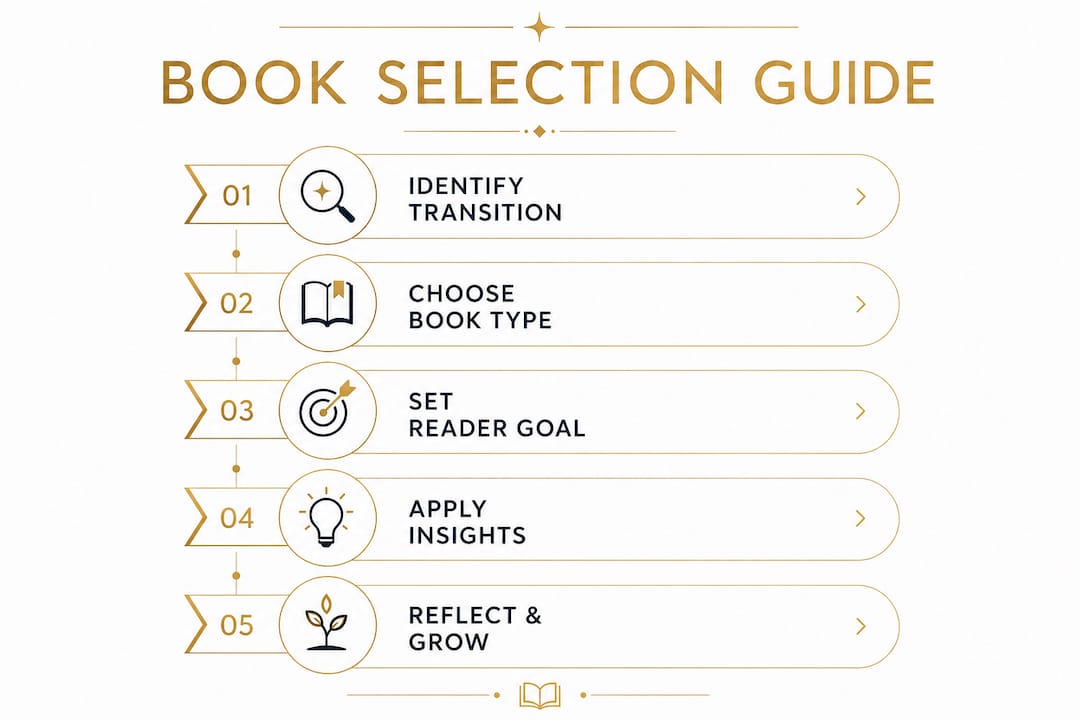
For curated picks organized by emotional need, Smartreadshub’s guide to books after heartbreak offers a strong starting point. Trusted author recommendations and organized reading lists save you from choosing blindly at a moment when decision fatigue is already high.
Pro Tip: When browsing recommendations, check the author’s stated intention. A book written to comfort reads very differently from one written to challenge. Both have value, but only one is right for where you are today.

How to use these books as real transformational tools
Reading alone does not create change. How you engage with a book determines whether it shifts your thinking or just passes the time. The following approach turns literature about starting over into a genuine practice.
-
Set realistic expectations first. Transformation is not linear. Olanow’s five-movement model confirms that doubt and uncertainty are built into the process, not signs of failure. Expect to revisit the same feelings more than once.
-
Read with a journal nearby. After each chapter or section, write one sentence about what resonated and one question it raised. This simple habit moves insight from the page into your actual life.
-
Practice failing compassionately. Steve Kamb’s philosophy centers on abandoning tough-love strategies that create guilt and burnout. When a chapter challenges you and you resist it, that resistance is worth writing down, not judging.
-
Make one small change per week. Kamb’s research consistently shows that sustainable small steps outperform dramatic overhauls. Let each book suggest one experiment, not a full life redesign.
-
Pace your reading intentionally. Dense self-help books deserve slower reading than fiction. Give yourself permission to stop mid-book if the content feels too heavy. Returning later with fresh eyes often unlocks more value.
-
Share what you read. Discussing a book with one trusted person, even briefly, deepens retention and reduces the isolation that often accompanies major transitions. A book club, a therapist, or a close friend all work.
The role of self-discovery books in personal growth is well documented. The key is treating reading as active practice rather than passive consumption.
What are the most common mistakes readers make with these books?
The biggest mistake is treating a book about starting over as a quick fix. Readers who expect a single title to resolve a breakup or career crisis in two weeks set themselves up for disappointment. That disappointment then feeds the very self-blame the book was meant to reduce.
“Treading water heroically” is not failure. It is the most underrated form of progress. Staying afloat during a hard season, without sinking, without giving up, is exactly what sustainable transformation looks like. The goal is not to sprint. It is to keep moving.
Three other pitfalls show up repeatedly among readers navigating life transitions:
- Chasing linear progress. Real change cycles through the five movements Olanow describes. Expecting a straight line from pain to renewal creates frustration when doubt returns.
- Reading too many books at once. Stacking five transformation titles simultaneously dilutes focus. One book, read with intention, delivers more than five books skimmed for highlights.
- Skipping the hard chapters. The sections that make you uncomfortable are usually the ones most relevant to your situation. Sitting with discomfort, rather than skipping ahead, is where growth actually happens.
Steve Kamb identifies the “doom loop” as the cycle where failure triggers self-blame, which triggers avoidance, which triggers more failure. Books that validate imperfect progress interrupt that loop by replacing judgment with curiosity. Choosing books that lead with compassion is not just a preference. It is a strategy.
For readers recovering from relationships that involved manipulation or emotional harm, Smartreadshub’s resources on letting go and healing address the specific emotional terrain that general transformation books sometimes miss.
Key Takeaways
The most effective books about new beginnings combine emotional validation with practical frameworks, and readers who engage with them actively, through reflection and small consistent action, see the most lasting change.
| Point | Details |
|---|---|
| Match book to emotional state | Choose fiction for comfort and self-help for structure, depending on where you are in your transition. |
| Expect cyclical progress | Transformation moves through stages of doubt and renewal, not in a straight line. |
| Engage actively, not passively | Journaling and reflection after each chapter converts reading into real personal growth. |
| Avoid the doom loop | Self-blame after setbacks stalls progress; books that normalize failure keep momentum alive. |
| Start with one book | Reading one title with full attention outperforms skimming several at once. |
Why empathetic transformation literature still matters most
I have read hundreds of books on change, growth, and starting over. The ones that stay with me are never the ones with the most steps or the most confident promises. They are the ones that made me feel less alone at a moment when I was convinced I was the only person who had ever felt that lost.
What I have noticed, both in my own reading and in watching others navigate hard seasons, is that people in transition do not primarily need answers. They need to feel seen. A book that says “this is messy, and that is normal” does more in the first chapter than a prescriptive guide does in three hundred pages. That is not a knock on practical books. It is a reminder that emotional permission has to come before strategy.
The cyclical model Olanow presents resonates because it matches lived experience. You do not move from grief to renewal in a straight line. You circle back. You doubt again. You find ground, then lose it, then find it again. A book that acknowledges that rhythm gives you a framework for the whole arc of change, not just the hopeful parts.
My honest advice: start with a book that meets you in the feeling, not the fixing. Once you feel understood, the practical books land differently. The self-discovery reading that changes your life is almost always the one you read at exactly the right moment, with exactly the right level of openness.
— Robert
Curated reading resources for your next chapter
Smartreadshub specializes in exactly this kind of reading, books that address emotional recovery, personal growth, and the specific challenges that come with harmful or difficult relationships.

The site’s curated lists cover books on fresh starts organized by transition type, including dedicated sections for readers rebuilding after breakups, career pivots, and relationship recovery. Smartreadshub’s guide to book recommendations for women highlights titles by women authors writing on self-discovery, identity, and healing. For readers who want a broader starting point, the self-discovery books guide organizes picks by emotional need and reading goal, so you spend less time searching and more time reading what actually helps.
FAQ
What are the best books on new beginnings for someone after a breakup?
The best books combine emotional validation with practical insight. Fiction like The Road to Tender Hearts and structured guides like Steve Kamb’s How To Try Again both address the specific pain of starting over after a relationship ends.
Is fiction or nonfiction better for navigating life transitions?
Fiction works best when you need to feel understood; nonfiction works best when you are ready for a framework. Most readers benefit from both, read in sequence rather than simultaneously.
How do I avoid feeling worse after reading transformation books?
Choose books that treat failure with compassion rather than urgency. Kamb’s research shows that guilt-driven approaches create burnout, while books that normalize imperfect progress sustain motivation over time.
How many books should I read during a major life transition?
One book, read with full attention and active reflection, delivers more value than several books read quickly. Pace matters more than volume when you are processing real change.
What is the cyclical transformation model and why does it matter?
Alessandra Olanow’s model identifies five movements in transformation: Question, Doubt, Ground, Open, and Renewal. It matters because it normalizes the experience of sliding backward, which reduces self-blame and keeps readers engaged with their own growth.