
Choosing books for grief means selecting texts that meet you where you are emotionally, not where you think you should be. The most effective grief literature works because it offers companionship and language for feelings that otherwise resist words. Contemporary grief research confirms that traditional five-stage models are insufficient and can even be harmful, with resilience-based, personalized approaches now leading the field. Resources like Good Grief have sold over 3 million copies across five decades, proving that the right book at the right moment carries real weight. The goal is never to fix grief. The goal is to feel less alone inside it.
How to choose books for grief based on your healing stage
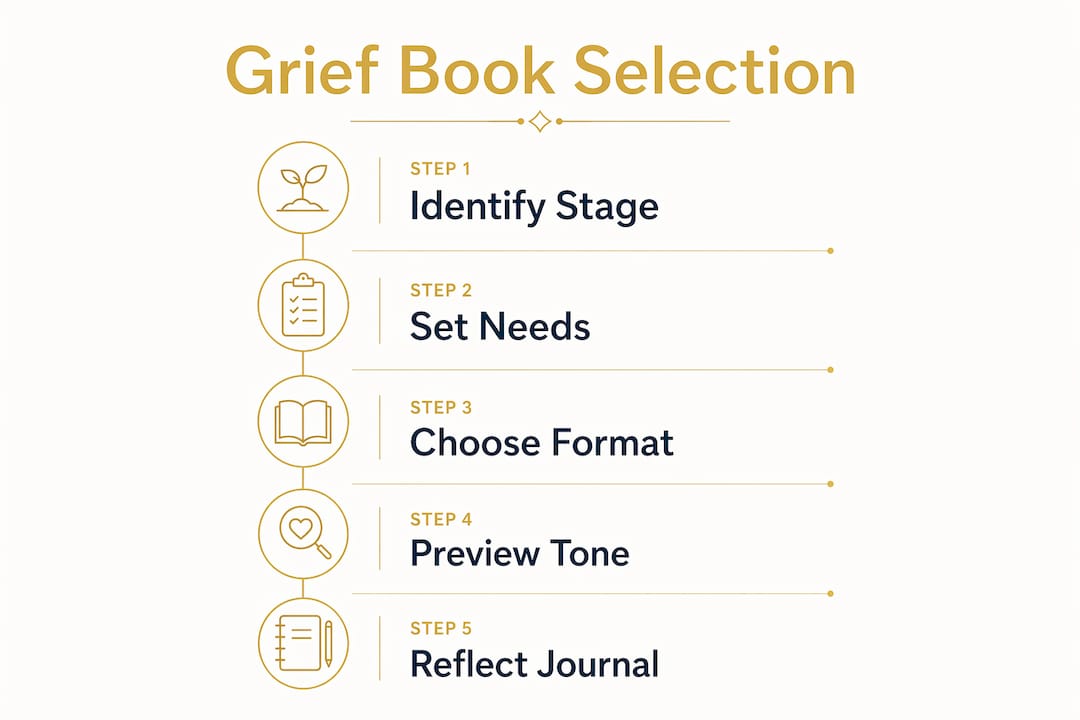
The single most important factor in selecting grief support books is your current emotional stage. A book that feels like a lifeline at six months post-loss may feel unbearable at six days. Matching book content to your healing stage is the clearest way to get real benefit from grief literature.
Early grief calls for books that validate raw, chaotic emotions without demanding anything from you. You need a witness, not a teacher. Gentle memoirs and short essay collections work well here because they ask nothing more than that you read and feel recognized.

Middle-phase grief shifts the need. You have survived the initial shock, and you are ready for books that offer practical coping methods. This is when workbook-style texts and books with structured exercises start to feel useful rather than overwhelming. You want tools, not just comfort.
Later in the healing process, meaning-making becomes the central need. Books that explore identity reconstruction, legacy, and post-loss growth fit this stage. Works drawing on resilience frameworks, like those informed by Dr. Lucy Hone’s research, help readers move beyond surviving into rebuilding.
Signs that a book does not fit your current stage include:
- Feeling numb or emotionally shut down after reading
- Persistent resistance to picking the book back up
- A sense of guilt or pressure to feel things you do not feel
- Emotional overwhelm that lingers hours after reading
- Feeling judged or misunderstood by the author’s voice
Pro Tip: Keep a simple journal note after each reading session. If you consistently feel worse rather than held, the book is not wrong. It is just not right for now.
Grief is individual and non-linear. Honest self-assessment of your emotional bandwidth before choosing any book protects you from unnecessary distress and keeps reading a source of support rather than strain.
What formats and features make grief books easier to use?
Book format matters as much as content when you are grieving. Concentration fragments during acute loss. Long, dense chapters that demand sustained focus can feel impossible, even for people who normally read with ease.
Memoirs offer companionship through shared experience. Reading someone else’s honest account of loss reduces the isolation that grief creates. The best grief memoirs do not resolve neatly. They sit with uncertainty, and that honesty is exactly what makes them useful.
Workbook-style books serve a different purpose. Interactive grief books allow readers to engage actively, which restores a sense of agency that loss often strips away. Exercises, prompts, and rituals give you something to do with the feelings rather than just observe them.
The most accessible formats for early and middle grief include:
- Daily meditation collections — short, self-contained entries you can read in under five minutes
- Essay collections — topic-organized pieces that let you skip to what resonates today
- Workbooks with prompts — structured exercises that channel emotion into reflection
- Short-chapter memoirs — narrative books with natural stopping points that respect limited concentration
- Letters or epistolary formats — intimate, conversational writing that feels like a direct conversation
Flexible, non-linear book structures are easier to engage with than dense narratives when you are grieving. This is not a weakness. It is a practical response to how grief affects the brain.
Humor and a candid voice also matter more than most grief book guides acknowledge. A writer who can be honest about the absurdity of loss alongside its devastation creates space for readers to breathe. Avoid books with a tone that feels clinical, preachy, or relentlessly heavy, especially early on.
Pro Tip: Read the first chapter or introduction before committing to any book. This preview technique tells you within minutes whether the author’s voice and intensity level are a match for where you are right now.
How do you balance emotional needs when picking grief books?
Grief literature serves three distinct emotional needs: validation, practical support, and meaning. The best reading plan for healing draws from all three, but not all at once.
Validation-focused books normalize feelings without pushing for quick resolution. They say: what you feel is real, and you are not broken for feeling it. These books are the foundation. Without them, practical advice lands on ground that is not ready to receive it. The primary purpose of grief reading is companionship and providing language for isolating experiences, not immediate psychological cure.
Practical books teach coping skills, anxiety management, and how to navigate relationships that shift after loss. They work best once you feel emotionally seen. Reaching for a practical book before you feel validated often produces frustration rather than relief.
Meaning-oriented works explore who you are after loss. They address identity changes, legacy, and what researchers call post-traumatic growth. These books are for the longer arc of healing, not the first weeks.
A few principles that guide healthy grief reading:
- No single book covers every need. Build a small personal library that evolves with you.
- Community-curated lists, like The Farewell Library with over 70 contributors, reflect diverse losses and needs far better than any single recommendation.
- Revisiting a book months later often reveals insights that were invisible the first time.
- Books on emotional recovery after loss can complement grief literature by addressing the relational dimensions of healing.
The science behind why books help emotional pain confirms that reading activates empathy circuits and reduces the neurological signature of loneliness. That is not a small thing when you are grieving.
Common mistakes to avoid when choosing grief support books
The most common mistake grievers make with books is forcing themselves to finish something that is not working. Abandoning a book that does not fit is not failure. It is good judgment.
Avoid reaching for clinical or deeply psychological texts before you are emotionally ready. Books that analyze grief from a research distance can feel cold and alienating when you are in acute pain. Save those for later, when you have the bandwidth to engage with them critically.
- Do not choose a book because someone else found it helpful. Their stage and loss type may be entirely different from yours.
- Do not assume a bestselling grief book is automatically the right fit. Popularity reflects broad appeal, not personal match.
- Do not push through a book that consistently triggers intense distress. Some books may inadvertently activate trauma responses. If that happens, set it down and seek support from a counselor or therapist.
- Keep a wishlist of recommended titles. As your readiness grows, you will have a curated list waiting rather than having to search from scratch.
“Grief reading is not a curriculum with a fixed syllabus. It is a conversation between you and the page, and you get to decide when to speak and when to step away. The right book will feel like it was written for exactly where you are. If it does not feel that way, keep looking.”
Matching book content to your healing stage optimizes support and reduces the risk of harm. That principle alone saves a lot of painful reading experiences.
Key Takeaways
Choosing the right grief book means matching its format, tone, and content to your current healing stage and emotional capacity.
| Point | Details |
|---|---|
| Match books to your stage | Early grief needs validation; middle grief needs coping tools; later grief needs meaning-making. |
| Use the preview technique | Read the first chapter before committing to assess tone and emotional intensity. |
| Prioritize flexible formats | Essay collections, daily meditations, and short-chapter memoirs suit fragmented concentration. |
| Build a personal reading list | No single book covers all needs; a small evolving library serves you better over time. |
| Trust your instincts | If a book consistently feels wrong, set it aside without guilt and return when ready. |
What I have learned about grief books after years of reading them
Most grief book guides focus on titles. I think the more useful question is timing. The same book can feel like a lifeline or an assault depending on when you read it. I have watched readers return to a memoir they abandoned in the first month of loss and find it transformative at the one-year mark. The book did not change. They did.
The other thing conventional grief reading advice gets wrong is the pressure to finish. There is an implicit message that completing a book means you did the work. That is not how grief functions. Reading three pages and sitting with them for a week can do more than racing through a chapter to feel productive.
Resilience-based frameworks, like those Dr. Lucy Hone developed after her own devastating loss, shifted my understanding of what grief books are actually for. They are not maps to a destination. They are companions for a road with no fixed end. That reframe changes how you choose what to read and how you measure whether it helped.
Journaling alongside your reading deepens everything. Even a single sentence after a session, noting what landed and what did not, builds self-knowledge that makes your next book choice sharper. Grief reading is an active practice, not passive consumption.
— Robert
Grief reading resources at Smartreadshub
Smartreadshub curates book recommendations specifically for readers navigating emotional pain, loss, and recovery. The focus is on books that offer real insight rather than generic comfort.

If you are looking for a starting point, the role of book recommendations for women is a strong entry point for finding reads matched to your emotional experience. Smartreadshub also covers the science behind self-discovery reading for readers ready to move from surviving loss into rebuilding identity. Every recommendation on the site is chosen with your emotional bandwidth in mind, not just critical acclaim.
FAQ
What is the best type of grief book for early loss?
Gentle memoirs and short essay collections work best in early grief because they validate raw emotions without demanding active engagement. Avoid dense clinical texts until you feel emotionally stabilized.
How do I know if a grief book is right for me?
Use the preview technique: read the first chapter and notice whether the author’s tone feels supportive or distancing. If you feel seen within the first few pages, the book is likely a good fit.
Should I force myself to finish a grief book I started?
No. Setting aside a book that does not resonate is sound judgment, not failure. Grief reading is personal and non-linear, and no single book serves every reader at every stage.
How many grief books should I read at once?
One book at a time works best for most readers in acute grief. Fragmented concentration makes it hard to track multiple narratives, and a single well-chosen book offers more than several half-read ones.
Can grief books replace therapy or counseling?
Grief books provide companionship and language for loss, but they do not replace professional support. If reading consistently triggers intense distress, a grief counselor or therapist is the appropriate next step.