
Romance novels are defined as a primary tool for emotional recovery because they deliver predictable hope, safe emotional processing, and modeled healthy communication in a single reading session. Research confirms that fiction reduces stress by up to 60% with as little as six minutes of daily reading. That number matters because it means picking up a romance novel is not a guilty pleasure. It is a measurable act of self-care. Psychologists now recognize this through the practice of bibliotherapy, which uses literature as a structured path toward healing. Understanding why romance novels help recovery starts with the science behind what these stories actually do to your brain and nervous system.
Why romance novels help recovery: the HEA structure and your nervous system
The “happily ever after” ending, known in the genre as HEA, is not just a satisfying trope. It is a psychological tool. HEA narratives provide catharsis and emotional safety for trauma survivors by offering predictable narrative closure that helps stabilize the nervous system. When your real life feels chaotic and unresolved, a story that guarantees resolution gives your brain something it desperately needs: proof that pain ends.
After a breakup or emotional trauma, your nervous system stays on high alert. It scans for threats, replays painful memories, and struggles to imagine a future that feels safe. The romance arc, with its tension, conflict, and guaranteed resolution, walks your nervous system through a complete emotional cycle. You feel the fear, the longing, and the relief. Then you close the book having experienced all three.
“The HEA trope delivers more than escapism. It gives trauma survivors a vital narrative tool to stabilize emotional responses and rehearse trust.” This is why readers return to the genre again and again during the hardest seasons of their lives.
Bibliotherapy practitioners describe this process as “aesthetic distance.” You experience intense emotions through a character’s story rather than your own raw wound. The pain is real enough to process, but filtered enough to feel safe. That distance is what makes romance fiction uniquely suited to healing through fiction rather than avoidance.
Pro Tip: If a book’s conflict feels too close to your own situation, start with a lighter subgenre like historical romance or romantic comedy. The emotional distance is built into the setting itself, which makes the processing gentler.
How romance novels work as emotional rehearsal spaces
Romance novels function as psychological labs where readers rehearse emotional responses in complete safety. Literature engages mirror neurons that allow readers to process emotional pain from a safe distance, interrupting the avoidance patterns common in PTSD and trauma recovery. Mirror neurons fire when you observe an action or emotion, whether in real life or in a story. That means reading about a character setting a boundary or expressing vulnerability activates the same neural pathways as doing it yourself.

This is where romance novels outperform most self-help books. A self-help book tells you to communicate your needs clearly. A romance novel shows you two characters doing exactly that, stumbling, repairing, and succeeding. Romance novels model healthy communication and teach vulnerability, negotiation, and boundary-setting in ways readers absorb without even realizing it.
Here is what that emotional rehearsal actually builds:
- Emotional vocabulary. Characters in romance novels name their feelings with precision. Readers absorb that language and begin using it in their own lives.
- Conflict resolution skills. Watching characters navigate misunderstandings and repair trust teaches readers what healthy conflict actually looks like.
- Boundary recognition. Romance protagonists frequently model saying no, walking away, and demanding respect. Readers practice recognizing those moments as strength, not selfishness.
- Vulnerability tolerance. Repeated exposure to characters choosing to be vulnerable, and surviving it, reduces the fear of vulnerability in real life.
Bibliotherapy practitioners note that literature feels safer than therapy for initial emotional processing because it removes the pressure to perform emotions on demand. You can cry over a fictional character without explaining yourself to anyone. That privacy is protective, especially early in recovery.
Pro Tip: After finishing a romance novel, spend five minutes journaling about one moment where a character handled conflict or emotion in a way you admired. That reflection converts passive reading into active skill-building.
What are the emotional benefits of reading romance during heartbreak?
The emotional benefits of romance novels extend well beyond distraction. Romance reading increases optimism toward love and healing, encouraging patience, self-reflection, and genuine effort in relationships. That shift in outlook is significant because heartbreak and trauma often leave readers stuck in a story where love is dangerous and trust is impossible.
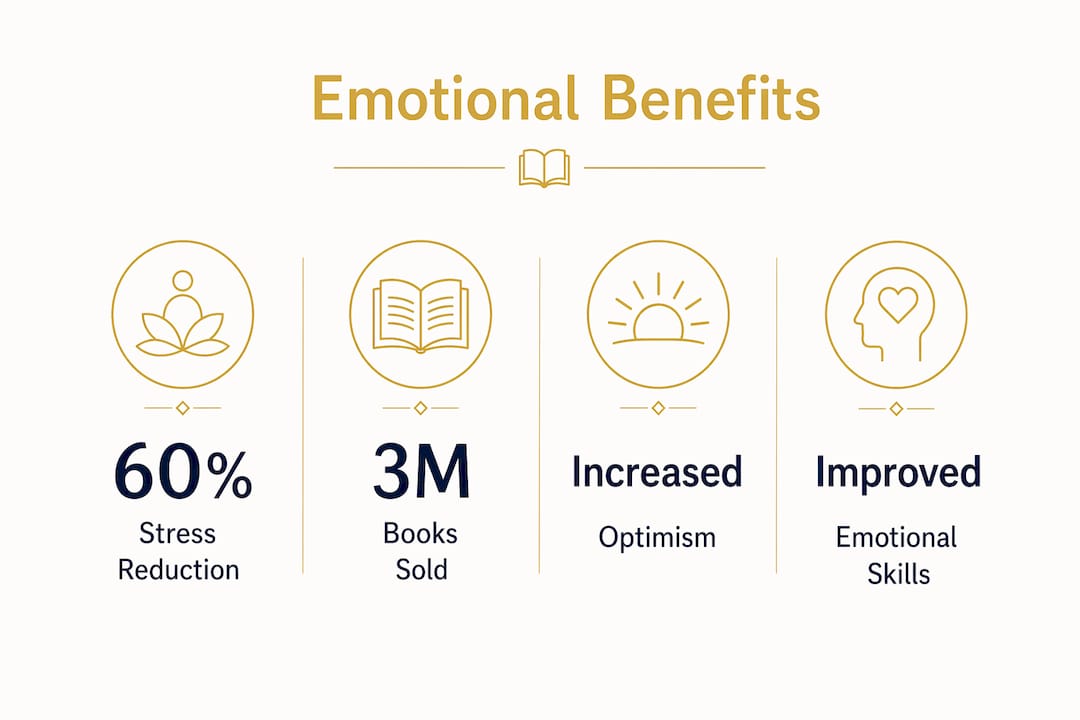
Romance novels normalize the full range of emotions that come with loving someone. Fear, longing, jealousy, hope, and grief all appear in these pages without judgment. Readers who feel ashamed of their own emotional intensity find relief in seeing those same feelings treated as natural and even beautiful. That normalization reduces isolation, which is one of the most damaging side effects of emotional trauma.
The following four benefits show up consistently for readers who turn to romance during recovery:
- Stress reduction. Reading fiction for as little as six minutes lowers heart rate and muscle tension. That physical relief creates space for emotional processing that anxiety blocks.
- Mood improvement. Optimistic narratives shift the brain’s default toward possibility rather than threat. Readers finish romance novels feeling measurably better than when they started.
- Reduced isolation. Relatable characters make readers feel seen. Knowing that fictional people experience the same fears and longings reduces the shame of struggling.
- Renewed hope. The genre’s core promise is that love and healing are possible. For someone who has stopped believing that, repeated exposure to that message is genuinely therapeutic.
The global appetite for romance novels reflects this need. In 2024, readers in Australia alone purchased 3 million romance novels. That scale signals something real. People reach for these books when they need comfort, and the books consistently deliver it. For readers looking for curated starting points, Smartreadshub offers books for emotional recovery organized by emotional need rather than just genre.
How romance novels inspire personal growth and emotional sovereignty
Romance novels do something that pure escapism cannot. They model agency. The protagonists of romance fiction make choices, draw lines, and refuse to accept less than they deserve. Readers absorb those patterns and begin applying them to their own lives, often without consciously deciding to.
This is the difference between reading for distraction and reading for growth. Romance novels act as sandboxes for navigating differences, teaching communication and cooperation in ways that transfer directly to real relationships. A reader who has watched a heroine walk away from a relationship that diminished her has rehearsed that decision. When a similar moment arrives in real life, the path feels less foreign.
The table below shows how romance reading shifts readers from passive suffering to active recovery:
| Reading experience | Real-world outcome |
|---|---|
| Watching a protagonist set a firm boundary | Recognizing your own right to say no without guilt |
| Seeing a hero acknowledge his mistakes and repair trust | Understanding what genuine accountability looks like |
| Following a heroine rebuild confidence after betrayal | Believing your own confidence can return |
| Observing characters choose partners who respect them | Raising your own standard for what you will accept |
Romance novels also develop what some readers call a “pleasure compass,” the ability to recognize what feels good, right, and safe. After trauma, that internal signal often goes quiet. Repeated exposure to characters who trust their instincts and act on them helps readers reconnect with their own. For readers working through relationship patterns that kept them stuck, this recalibration is one of the most practical gifts the genre offers.
The empowerment in romance fiction is not fantasy. It is rehearsal. Every chapter where a character chooses herself is a chapter where the reader practices doing the same.
Key Takeaways
Romance novels actively support emotional recovery by providing nervous system stabilization, emotional rehearsal, and modeled self-worth through their structure, characters, and guaranteed resolution.
| Point | Details |
|---|---|
| HEA structure stabilizes the nervous system | Predictable resolution walks trauma survivors through a complete emotional cycle safely. |
| Mirror neurons enable emotional rehearsal | Reading activates the same neural pathways as real experience, building empathy and communication skills. |
| Fiction reduces stress measurably | Six minutes of daily reading can lower heart rate and muscle tension significantly. |
| Romance models healthy boundaries | Protagonists demonstrate agency and self-respect, giving readers a template for their own recovery. |
| Bibliotherapy validates reading as healing | Practitioners recognize literature as a low-pressure entry point for emotional processing. |
Romance novels changed how I think about healing
I used to think the dismissal of romance fiction was just snobbery. After years of watching readers heal through these books, I think it is something more damaging than that. Calling romance novels “guilty pleasures” teaches people to feel ashamed of the one tool that is actually working for them.
The readers I have seen benefit most from romance fiction are not the ones who read it passively. They are the ones who let themselves feel what the characters feel, who get angry at the villain, who cry at the reconciliation, and who finish the book with a slightly different idea of what they deserve. That is not escapism. That is emotional work done in the safest possible environment.
The cultural underestimation of romance fiction is also worth naming directly. The genre is dominated by women writers and women readers. Its dismissal tracks closely with the dismissal of women’s emotional experiences generally. When you pick up a romance novel during recovery, you are not doing something trivial. You are doing something that research supports and that practitioners recommend.
Trust your instinct to reach for these books. Your nervous system knows what it needs. Smartreadshub’s curated reading lists for women exist precisely because that instinct deserves to be met with the right book at the right moment.
— Robert
Smartreadshub’s reading resources for emotional recovery
Smartreadshub curates book recommendations specifically for readers navigating emotional trauma, breakups, and the slow work of rebuilding self-worth.

The site’s collections go beyond genre lists. Each recommendation connects to a specific emotional need, whether that is processing grief, rebuilding trust, or rediscovering who you are outside of a relationship. Readers who want a structured starting point can explore books for rediscovering yourself after heartbreak, or browse the self-discovery reading guide for titles that pair well with romance fiction during recovery. Every recommendation on Smartreadshub is chosen with your emotional experience in mind, not just your reading preferences.
FAQ
Why do romance novels help with emotional recovery?
Romance novels provide emotional safety through predictable resolution, activate mirror neurons for safe empathy development, and model healthy communication skills. These mechanisms make them a recognized tool in bibliotherapy for processing trauma and rebuilding emotional well-being.
Can reading romance novels reduce anxiety after a breakup?
Reading fiction for as little as six minutes can reduce stress by up to 60%, lowering heart rate and muscle tension. That physical relief creates the calm needed for emotional processing that anxiety typically blocks.
What is bibliotherapy and how does it relate to romance reading?
Bibliotherapy is the structured use of literature to support emotional healing. Practitioners use it because literature allows emotional exploration without the pressure to perform feelings on demand, making it a gentler entry point than traditional talk therapy for many readers.
How do romance novels build real-life relationship skills?
Romance novels model vulnerability, negotiation, and boundary-setting through character behavior that readers absorb unconsciously. Over time, readers develop emotional vocabulary and conflict resolution skills they can apply directly in their own relationships.
Are romance novels a legitimate mental health tool?
Research and bibliotherapy practitioners both support fiction reading as a legitimate mental health practice. The genre’s structure, its emotional arcs, its modeled communication, and its guaranteed resolution address specific psychological needs that arise during trauma recovery and heartbreak.