
Impostor syndrome is defined as a recurring attribution pattern where capable people credit their success to luck, timing, or deception rather than genuine skill. 70% of adults experience this phenomenon at least once, and 25–30% of high achievers report persistent episodes. That prevalence is exactly why books address impostor syndrome so effectively. They meet readers where the experience lives: in private, in the mind, and in the gap between how you feel and what the evidence actually shows. Authors like Pauline Clance, Valerie Young, and Tara Westover have each built bodies of work that help readers name, examine, and reframe that gap.
Why books address impostor syndrome at its psychological root
Books work on impostor syndrome because they target the attribution loop that drives it. The core mechanism is simple: you succeed, you attribute the success to external factors like luck or timing, and you wait to be exposed as a fraud. That loop repeats. Attribution-based cognitive reframing is the primary strategy for breaking it, and well-written books deliver exactly that kind of structured reframing.
The psychological needs these books fulfill go beyond information. Readers need three things: validation that their experience is real and shared, a framework for separating feelings from facts, and tools for changing the attribution habits that sustain self-doubt. A book can deliver all three in a single sitting, which no single therapy session or article can match.

One of the most clarifying shifts in impostor syndrome literature is the move away from calling it a “syndrome” at all. Framing it as a phenomenon rather than a clinical condition reframes the experience as a growth signal rather than a pathology. Pauline Clance, who coined the original term alongside Suzanne Imes in 1978, later expressed preference for “impostor phenomenon” precisely because “syndrome” implies something broken that needs fixing.
Language matters here more than it might seem. Shifting from “impostor” to “impostor moment” reduces the feeling’s intensity and duration. Books that teach this language shift give readers a practical tool they can use the next time self-doubt surfaces.
Pro Tip: When reading any impostor syndrome book, underline every sentence that describes an experience you recognize. That list becomes your evidence base for the reframing work the book asks you to do.
The key psychological needs that books on impostor syndrome address include:
- Normalization: Confirming that the experience is widespread, not a sign of unique inadequacy
- Attribution correction: Teaching readers to assign credit accurately rather than deflecting it
- Emotional separation: Helping readers distinguish between how they feel and what they have actually accomplished
- Behavioral rehearsal: Providing exercises that build new response habits over time
What categories of books tackle impostor syndrome?
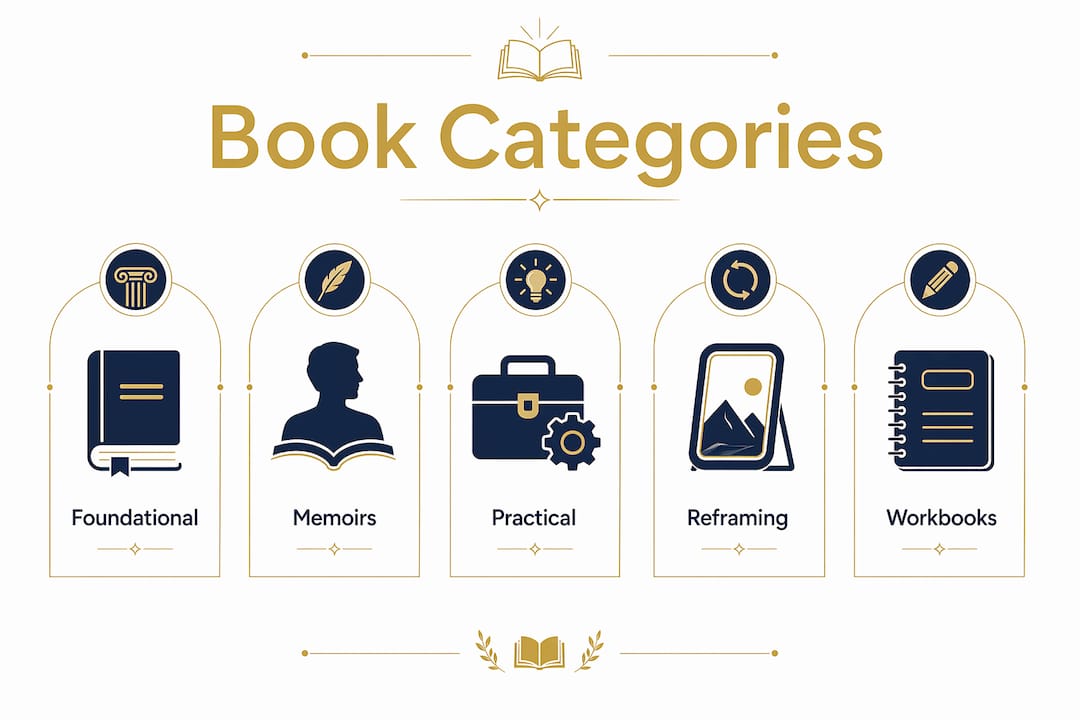
Impostor syndrome literature falls into four categories, each serving a distinct psychological need. Knowing which type you need determines how much value you get from reading.
| Category | Representative Authors | Reader Goal | Core Benefit |
|---|---|---|---|
| Foundational psychology | Pauline Clance, Suzanne Imes | Understand the origin and mechanism | Conceptual clarity and legitimacy |
| Practical workbooks | Richard Orbe-Austin, Lisa Orbé-Austin, Jill Stoddard | Build new behavioral habits | Structured exercises for lasting change |
| Narrative memoirs | Tara Westover, Aparna Nancherla | Feel less alone | Emotional validation and identity reinforcement |
| Targeted professional coaching | Valerie Young, Jessamy Hibberd | Apply strategies in career contexts | Role-specific reframing and confidence tools |
Foundational texts like Clance’s The Impostor Phenomenon give readers the conceptual scaffolding to understand why the experience exists. That understanding alone reduces shame. Practical workbooks by authors like Richard Orbe-Austin go further by requiring readers to complete exercises, track evidence of competence, and practice tolerating imperfect output.
Memoirs serve a different function. Tara Westover’s Educated and Aparna Nancherla’s work show readers that high-achieving, intelligent people carry persistent self-doubt. That recognition is powerful. It does not, however, teach readers how to change their attribution habits. Memoirs validate; workbooks change behavior.
Targeted coaching books by Valerie Young, whose framework categorizes impostors into five types (the Perfectionist, the Superwoman/man, the Natural Genius, the Soloist, and the Expert), give readers a specific identity to work with. That specificity makes the strategies more applicable than general advice.
The right reading sequence for most readers is: start with a foundational text to build understanding, move to a memoir for validation, then commit to a workbook for behavioral change. Skipping straight to a workbook without the conceptual foundation often leads to abandoned exercises.
- Foundational texts reduce shame by naming the experience
- Memoirs reduce isolation by showing shared experience
- Workbooks reduce recurrence by changing attribution habits
- Coaching books reduce career-specific anxiety by providing role-relevant tools
How do top impostor syndrome books help readers overcome self-doubt?
The most effective books on overcoming impostor syndrome share a common structure: they name the problem, normalize it, then require the reader to act. Passive reading produces temporary relief. Active engagement with the exercises produces durable change.
Documenting successes and practicing imperfect work are the two behavioral experiments most consistently recommended across effective impostor syndrome books. Success documentation builds an evidence file that contradicts the internal narrative of fraudulence. Practicing imperfect work, meaning deliberately submitting or sharing work before it feels “ready,” disrupts the perfectionist cycle that feeds impostor feelings.
Cognitive behavioral therapy principles appear throughout the most research-grounded books in this category. The CBT model asks readers to identify automatic thoughts, test them against evidence, and replace them with accurate assessments. Valerie Young’s The Secret Thoughts of Successful Women applies this model specifically to professional contexts, making it one of the most cited books in the field.
- Build a success file. Write down every accomplishment, positive piece of feedback, and completed project. Review it when self-doubt surfaces.
- Name the attribution error. When you succeed, write down one internal factor (skill, preparation, effort) that contributed. Do this every time.
- Practice imperfect output. Send the email before it’s perfect. Submit the draft before you’re ready. Each instance weakens the perfectionist loop.
- Shift your language. Replace “I am an impostor” with “I am having an impostor moment.” The shift is small. The psychological effect is significant.
- Pair theory with practice. Read a foundational text, then immediately begin a workbook. Combining theory and exercises produces better lasting behavioral change than either approach alone.
Pro Tip: Set a timer for 10 minutes after each reading session and write one specific way the chapter’s concept applies to a real situation in your life. This converts passive reading into active cognitive reframing.
A common pitfall is using books purely for comfort. Readers who highlight passages and feel reassured but never complete the exercises get short-term relief without behavioral change. The feeling returns, often stronger, because the attribution loop was never interrupted.
What misconceptions do impostor syndrome books help clarify?
The most damaging misconception about impostor syndrome is that it is a clinical diagnosis. Impostor syndrome does not appear in the DSM-5-TR or ICD-11. It is a measurable attribution pattern, not a mental illness. Books that treat it as a pathology to be cured set readers up for frustration when the feelings return.
The second major misconception is that books can eliminate impostor feelings permanently. Books are management tools, not cures. The goal is not to stop feeling like an impostor forever. The goal is to shorten the duration of each episode and reduce its impact on behavior. Readers who understand this use books more effectively.
Several other misconceptions are worth naming directly:
- Memoirs are enough. Narrative books validate experience but rarely provide the behavioral tools needed for lasting change. Validation through memoirs must be complemented by structured exercises for real growth.
- Impostor feelings signal incompetence. The opposite is more accurate. Impostor feelings tend to surface during growth phases, when readers are stretching beyond their current comfort level. The feeling is a sign of engagement, not inadequacy.
- One book solves the problem. Impostor syndrome is a recurring pattern. Readers benefit from returning to their books during new growth phases, not just reading once and moving on.
- The phenomenon only affects certain groups. Clance and Imes originally studied high-achieving women, but subsequent research confirmed the experience across genders, professions, and cultures.
Understanding impostor syndrome as an attribution pattern rather than a personal flaw changes how readers engage with the literature. The self-discovery books that produce the most growth are the ones readers return to at each new career or life stage, not the ones they read once and shelve.
Key Takeaways
Books address impostor syndrome most effectively when readers combine foundational theory, narrative validation, and structured behavioral exercises rather than relying on any single type of text.
| Point | Details |
|---|---|
| Books target the attribution loop | They teach readers to assign credit accurately, which is the core mechanism behind impostor feelings. |
| Four categories serve distinct needs | Foundational texts, workbooks, memoirs, and coaching books each address a different psychological need. |
| Behavioral exercises produce lasting change | Documenting successes and practicing imperfect work interrupt the perfectionist cycle more effectively than reading alone. |
| Impostor syndrome is not a clinical diagnosis | It is an attribution pattern absent from the DSM-5-TR and ICD-11, which means books are the right tool, not medication. |
| Feelings recur during growth phases | Readers should expect impostor moments to return and use their books as ongoing resources, not one-time reads. |
What I’ve learned from watching readers use these books
Most readers pick up an impostor syndrome book when the feeling peaks. They read it quickly, feel relieved, and put it down. Three months later, the feeling is back and they wonder why the book didn’t work. That pattern is the single most common mistake I see.
The books that actually shift behavior are the ones readers treat as workbooks, not comfort reads. Jessamy Hibberd’s The Imposter Cure and Richard Orbe-Austin’s Own Your Greatness both include structured exercises that require time and repetition. Readers who skip those exercises are essentially reading a fitness manual without going to the gym.
The language reframing point deserves more attention than most books give it. Calling an experience an “impostor moment” rather than “impostor syndrome” sounds trivial. It is not. Identity-level labels (“I am an impostor”) activate shame and avoidance. Situational labels (“I am having an impostor moment”) activate problem-solving. That distinction alone is worth the price of any book in this category.
My honest recommendation is to read Pauline Clance’s foundational work first, then pair it with a workbook that matches your specific context. If you are in a professional setting, Valerie Young’s framework is the most applicable. If you are processing a major life transition, a memoir like Educated by Tara Westover provides the emotional grounding that makes the workbook exercises land more deeply.
Expect the feelings to return. That is not failure. Impostor moments tend to appear at the edges of growth, which means their return is a signal that you are moving forward, not evidence that the books failed you.
— Robert
Psychology books as tools for managing impostor experiences
Smartreadshub curates psychology books specifically for readers working through self-doubt, attribution patterns, and the emotional weight of feeling like a fraud. The guides on the site are built around the same principle this article argues: theory and practice together produce change that neither produces alone.

The science-backed book guide on Smartreadshub walks readers through how psychology books work at a cognitive and emotional level, with specific recommendations organized by reader goal. Whether you are looking for foundational understanding, behavioral exercises, or narrative validation, the curated selections are matched to where you are in the process. Readers who want to go deeper on emotional intelligence reading will also find resources that connect impostor syndrome work to broader self-awareness skills.
FAQ
What is impostor syndrome, exactly?
Impostor syndrome is an attribution pattern where capable people credit their success to luck or external factors rather than their own skill. It is not listed in the DSM-5-TR or ICD-11, which means it is a normative experience pattern, not a clinical diagnosis.
Why do books help with impostor syndrome specifically?
Books provide structured cognitive reframing, normalization, and behavioral exercises that target the attribution loop driving impostor feelings. Reading alone is not enough; the exercises embedded in workbooks produce the behavioral change that reduces recurrence.
Which type of impostor syndrome book should I read first?
Start with a foundational psychology text like Pauline Clance’s The Impostor Phenomenon to build conceptual understanding, then move to a practical workbook for behavioral change. Memoirs are best used for emotional validation between those two steps.
Will reading about impostor syndrome make the feelings go away permanently?
No. Impostor feelings recur during growth phases, and books are management tools rather than permanent cures. The goal is to shorten each episode and reduce its impact on behavior, not to eliminate the experience entirely.
Does impostor syndrome affect only high achievers?
Persistent impostor experiences are most common among high achievers, with research showing 25–30% of that group reporting ongoing episodes. The experience itself, however, crosses genders, professions, and cultures, making impostor syndrome literature broadly relevant.