
Books for emotional recovery are defined as structured therapeutic tools that use narrative, cognitive reframing, and purposeful practice to rebuild mental well-being after loss. After a breakup, the grief you feel is real, neurologically documented, and often underestimated by the people around you. The right book does more than offer comfort. It gives you a framework. Authors like Suzan Song, Tara Narula, and Najwa Zebian have produced works in 2026 that treat healing as a skill you can learn, not a condition you simply wait out. The science behind reading as recovery confirms this approach works.
Bibliotherapy is the clinical term for using books as therapeutic interventions, and it works through two distinct mechanisms: cognitive restructuring and emotional resonance. A 2025 Frontiers in Psychiatry review confirmed that bibliotherapy reduces depressive symptoms through structured manuals like Feeling Good by David D. Burns and Mind Over Mood by Dennis Greenberger and Christine Padesky, both of which guide readers to identify and rewrite distorted thought patterns. This is not passive comfort reading. It is deliberate cognitive work.
The distinction matters because most people pick up a self-help book expecting insight to automatically translate into change. It rarely does. Suzan Song’s framework in Why We Suffer and How We Heal identifies the missing piece: ritual. Her Narrative-Ritual-Purpose framework positions ritual as the bridge between understanding something intellectually and actually changing your behavior. Purpose then becomes the anchor that makes change stick long after the initial motivation fades.
Here is what effective emotional recovery reading actually looks like in practice:
Pro Tip: Treat each chapter as a prescription, not entertainment. Read one section, close the book, and write down one specific thing you will do differently today. This single habit separates readers who change from readers who feel temporarily inspired.
The books below are not ranked by popularity. They are selected because each one targets a specific stage or mechanism of recovery, and together they cover the full spectrum from acute grief to long-term empowerment.
| Book | Author | Core Approach | Best For |
|---|---|---|---|
| Why We Suffer and How We Heal | Suzan Song | Narrative, Ritual, Purpose framework | Building lasting resilience |
| The Healing Power of Resilience | Tara Narula | Acceptance, flexible mindset, self-love toolkit | Connecting physical and mental recovery |
| The One Who Broke You Can’t Heal You | Najwa Zebian | Reclaiming internal healing agency | Breaking closure dependence |
| Conscious Uncoupling | Katherine Woodward Thomas | Five-step emotional freedom roadmap | Structured post-breakup process |
| Self-Directed Complex PTSD Exercises for Women | Debbie Missud | 50+ somatic, EMDR, IFS, DBT exercises | Trauma-informed practical healing |
| When Things Fall Apart | Pema Chödrön | Presence with suffering, Buddhist psychology | Acute grief and emotional overwhelm |
Najwa Zebian’s The One Who Broke You Can’t Heal You addresses one of the most common traps in breakup recovery: waiting for the other person to provide closure. Zebian’s internal healing agency model argues that durable healing only begins when you stop outsourcing your recovery to someone who has already demonstrated they cannot hold it. This is a direct challenge to how most people approach heartbreak, and it is backed by practical exercises rather than abstract philosophy.
Dr. Tara Narula’s The Healing Power of Resilience is notable for its cross-disciplinary approach. Her Resilience Response toolkit explicitly connects physical health markers, sleep, inflammation, and cortisol regulation, to emotional recovery outcomes. This matters because breakups are not just emotional events. They produce measurable physiological stress responses, and Narula’s book treats both simultaneously.
For readers dealing with complex relational trauma, Debbie Missud’s Self-Directed Complex PTSD Exercises for Women offers more than insight. Its 50+ trauma-informed exercises draw from somatic therapy, EMDR, Internal Family Systems, and Dialectical Behavior Therapy. Readers dealing with patterns of narcissistic abuse or manipulation will find this book particularly grounding because it builds skill, not just awareness.
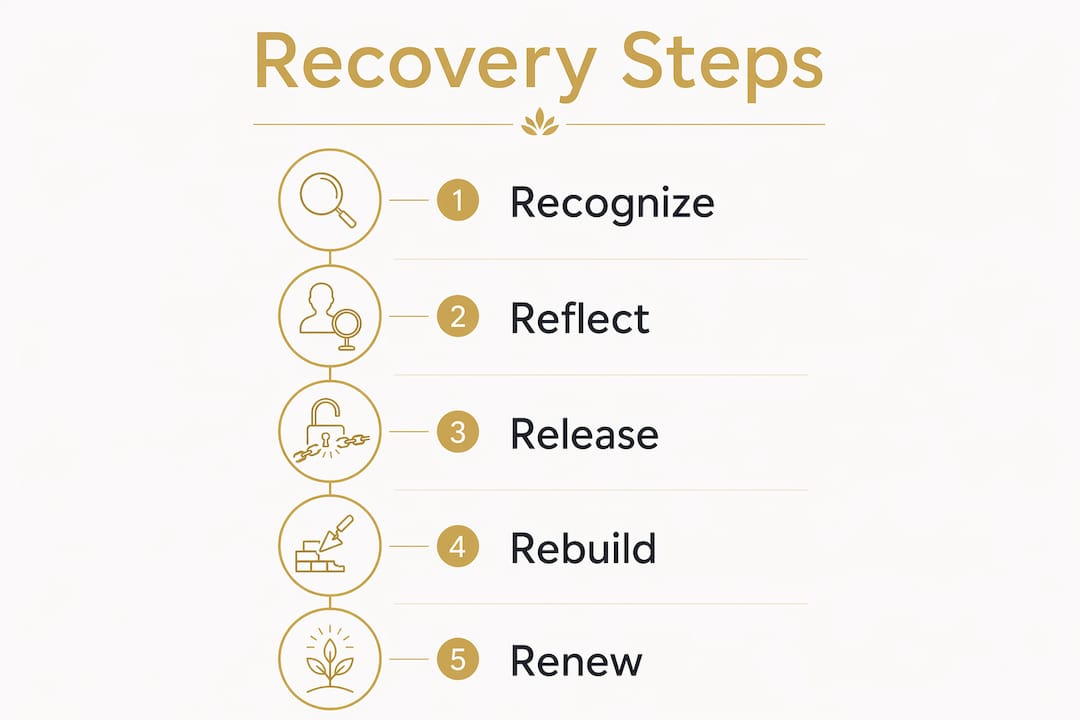
Katherine Woodward Thomas’s Conscious Uncoupling deserves mention for its five-step emotional freedom roadmap, which moves from releasing pain to breaking old patterns to creating a new life vision. It is one of the few books in this category that treats the end of a relationship as a genuine developmental opportunity rather than a wound to manage.
Selecting the right book is only the first decision. How you read it determines whether you heal or simply feel temporarily understood. Follow this sequence to build a plan that produces real change.
Identify your current stage. Acute grief requires a different book than the rebuilding phase. Pema Chödrön’s When Things Fall Apart serves the first two weeks better than a structured workbook. Once the acute phase passes, move to frameworks like Song’s or Narula’s.
Prioritize books with active practices. Pure insight books, those that explain why you feel what you feel without giving you something to do, produce temporary relief. Books with exercises, rituals, or structured prompts produce lasting change. This is the core finding from bibliotherapy intervention research.
Create a daily reading ritual. Fifteen minutes every morning before checking your phone is more effective than an hour of distracted evening reading. Attach the reading to a fixed anchor in your day so it becomes automatic.
Add literary fiction deliberately. A 2025 Motivation and Emotion study found that literary fiction enhances emotion recognition by exposing readers to implicit emotional cues rather than direct labeling. Reading novels by authors like Marilynne Robinson or Kazuo Ishiguro alongside your self-help books builds the emotional vocabulary you need to process what you are going through.
Track what shifts. After each week, write three sentences: what changed in how you think about the breakup, what changed in how you behave, and what still feels stuck. This simple audit prevents the common trap of reading without integrating.
Avoid the consumption trap. Reading five books simultaneously is a form of avoidance. Finish one book fully before starting the next. Apply its core practice for at least two weeks before moving on.
Pro Tip: The books on letting go after heartbreak that produce the fastest results are the ones you read slowly. Resist the urge to rush through chapters looking for the insight that fixes everything. The practice between chapters is where healing actually happens.
Books work best as the anchor of a broader recovery system, not the entire system. Several adjunctive supports significantly improve outcomes when combined with structured reading.
Digital mental health tools have earned a legitimate place in this ecosystem. A 2026 Nature npj Digital Medicine meta-analysis of 48 randomized controlled trials with 28,071 participants found that conversational agents produce small-to-moderate reductions in depression, anxiety, and stress symptoms. Apps like Woebot and Wysa use cognitive behavioral techniques between therapy sessions or reading sessions to maintain momentum. They are not replacements for depth work, but they are effective at preventing backsliding.
Group reading and discussion amplifies individual reading in ways that solo reading cannot replicate. When you articulate your interpretation of a passage to another person, you consolidate the insight more deeply than silent reading allows. Book clubs organized around emotional support literature, whether in person or through platforms like Goodreads groups, provide this benefit alongside the social connection that breakup recovery specifically requires.
“Readers dealing with complex trauma gain more from guided skill practices than generic self-help advice.” This finding from Debbie Missud’s work points to a critical selection principle: match the depth of the book’s practice to the depth of your wound.
Somatic and narrative therapy exercises, the kind found in Missud’s workbook and in resources at psychology-backed healing guides, address what books alone cannot reach: the body’s stored response to relational pain. Pairing a reading plan with even basic somatic practices, such as breath-focused body scans or expressive writing, produces faster emotional integration than reading alone.
The most effective books for emotional recovery combine narrative reframing, daily ritual practice, and purpose-driven action to produce lasting healing rather than temporary relief.
| Point | Details |
|---|---|
| Bibliotherapy works through mechanism | Cognitive restructuring plus emotional resonance produces real symptom reduction, not just comfort. |
| Ritual bridges insight to change | Suzan Song’s framework shows that without ritual practice, intellectual understanding rarely becomes behavioral change. |
| Agency accelerates recovery | Najwa Zebian’s model proves that healing begins when you stop waiting for closure from the person who hurt you. |
| Match book to recovery stage | Acute grief needs presence-focused books; rebuilding phases need structured frameworks with active exercises. |
| Adjunctive tools multiply results | Digital apps, group discussion, and somatic practices amplify the gains from structured reading. |
Reading about emotional recovery and actually recovering through books are two different experiences. I have seen readers work through Suzan Song’s Why We Suffer and How We Heal and report that the ritual component felt almost embarrassingly simple, until they did it consistently for three weeks and noticed their internal narrative had genuinely shifted. That is not a coincidence. That is the mechanism working.
The mistake I see most often is treating emotional support literature as a search for the one book that will explain everything. That search is itself a form of avoidance. The books that produce the most change are the ones you read slowly, argue with, and apply imperfectly. Pema Chödrön’s When Things Fall Apart is not a comfortable read. It asks you to stay present with pain rather than escape it. Most people put it down after two chapters. The readers who finish it consistently describe it as the turning point in their recovery.
I also want to name something that most recovery content avoids: progress after a breakup is not linear. You will have a week where you feel genuinely free, followed by a day where a song sends you back to the beginning. The books that acknowledge this, rather than promising a clean five-step arc, are the ones worth your time. Katherine Woodward Thomas’s Conscious Uncoupling is honest about this in ways that make it more useful, not less.
The emotional detachment resources that resonate most deeply are the ones that treat you as capable of doing hard work, not as someone who simply needs to feel better. That distinction is everything.
— Robert
Smartreadshub curates book recommendations specifically for people navigating the aftermath of psychologically harmful relationships, including gaslighting, narcissistic abuse, and emotional manipulation. Every title in the curated book collection is selected for its practical healing value, not just its popularity. You will find detailed guides, reader reviews, and category-specific lists organized by recovery stage and emotional need. For those rebuilding after divorce or long-term partnership endings, the post-divorce healing guide offers targeted recommendations with context for each book’s specific approach. Smartreadshub exists to make sure you spend your recovery time reading books that actually move you forward.
Effective books for emotional recovery combine cognitive reframing with practical exercises rather than insight alone. Bibliotherapy research confirms that structured practice, not passive reading, drives lasting symptom reduction.
Read one book at a time and apply its core practice for at least two weeks before moving to the next. Reading multiple books simultaneously often becomes a form of avoidance rather than genuine healing work.
Yes. A 2025 Motivation and Emotion study found that literary fiction enhances emotion recognition by exposing readers to implicit emotional cues, which builds the emotional vocabulary needed to process grief and loss.
Digital apps like Woebot and Wysa produce small-to-moderate symptom relief according to a 2026 meta-analysis, but they work best as complements to structured reading, not replacements for the depth work books provide.
Match the book to your current stage. If you are in acute grief, start with Pema Chödrön’s When Things Fall Apart. Once the initial intensity settles, move to structured frameworks like Suzan Song’s or Tara Narula’s for rebuilding and empowerment work.