
Spiritual books are defined as texts that help readers build meaning, regulate emotions, and reconstruct identity after loss, trauma, or addiction. The role of spiritual books in recovery goes beyond comfort reading. These works function as what researchers call “recovery capital,” providing the psychological and spiritual scaffolding people need when their sense of self has collapsed. Louise Hay’s You Can Heal Your Life has sold over 50 million copies, which signals just how deeply this category of literature meets a real human need. Whether you are healing from narcissistic abuse, grief, or addiction, spiritual literature offers a structured path back to yourself.
What evidence supports the effectiveness of spiritual books in recovery?
The science behind spiritual engagement and recovery is stronger than most people realize. A meta-analysis of 55 long-term studies covering 540,712 adults over 21 years found that individuals who engage in regular spiritual practices are about 13% less likely to misuse substances. Weekly spiritual service attendance pushes that figure to an 18% reduction in risk. Those numbers represent hundreds of thousands of real people who stayed sober longer because of a spiritual connection.
“Spirituality provides hope, purpose, and community that are essential for sustained recovery and healing from trauma.” — The Recovery Village
Spiritual books contribute directly to these outcomes. They support psychological well-being by giving readers frameworks for meaning-making, which is the process of finding purpose inside painful experiences. When you understand why something happened and what it means for your future, the emotional weight becomes more manageable. That shift in perspective is one of the core mechanisms behind relapse prevention.
Higher spiritual well-being predicts reduced substance use frequency, especially in the early stages of recovery. This is when identity is most fragile and the pull toward old patterns is strongest. Spiritual literature steps in as a stabilizing force. Books like Francis Weller’s Entering the Healing Ground and Hay’s You Can Heal Your Life give readers a new story to inhabit, one built on growth rather than shame. That identity shift is what researchers mean when they describe spiritual books as recovery capital.
How do spiritual books facilitate healing from trauma and loss?
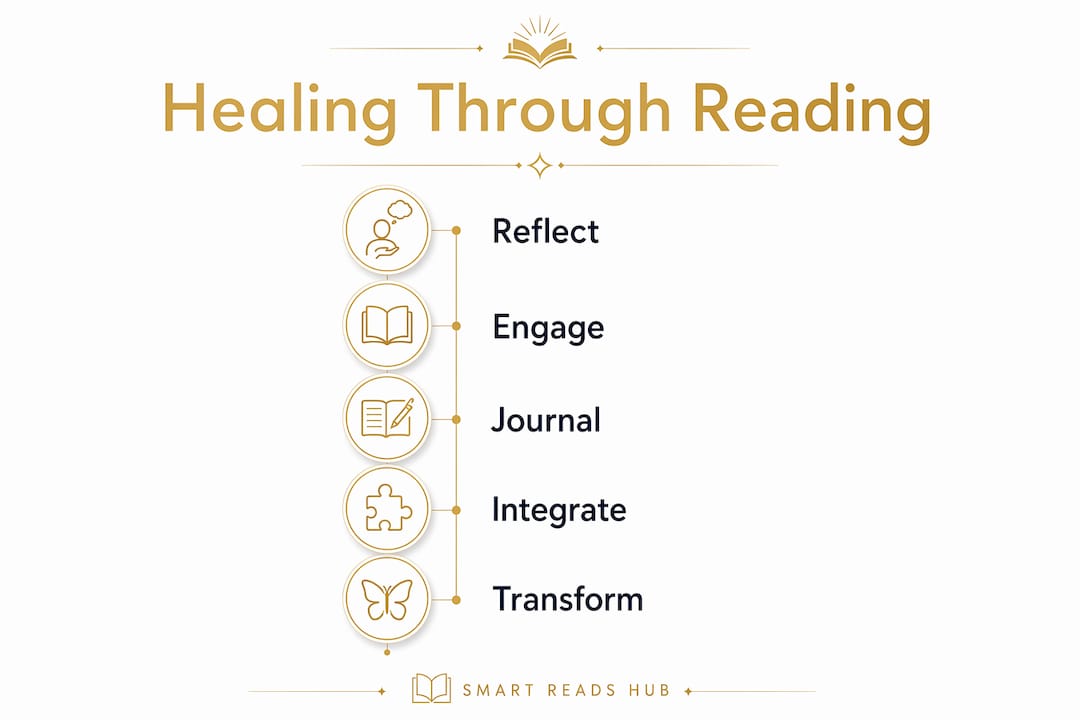
Spiritual books for healing work through several concrete mechanisms, not just inspiration. The most effective ones combine reflection prompts, gratitude exercises, and journal questions that pull readers into active engagement with their own pain. Francis Weller’s Entering the Healing Ground uses guided workbooks that readers can use standalone by chapter, adapting the material to their specific type of grief or trauma. That flexibility matters enormously when no two healing paths look the same.
The key healing tools found in quality spiritual literature include:
- Reflection prompts that ask readers to name their grief without minimizing it
- Gratitude practices that rewire attention toward what still holds value
- Journal exercises that externalize internal chaos into written, manageable form
- Ritual suggestions such as lighting a candle before reading or returning to a marked passage weekly
- Reframing frameworks that help readers see loss as a teacher rather than only a wound
These tools work because they shift reading from passive consumption to active processing. Trauma lives in the body and the unconscious. Writing about it, marking passages that feel true, and returning to them over time forces the nervous system to engage with the material rather than avoid it. That engagement is where healing actually happens.
Pro Tip: Keep a dedicated notebook next to your spiritual reading. When a passage stops you, write down exactly what it triggered. That reaction is information about where your healing needs to go next.
Physical books carry a specific advantage here. Printed books create what Pope Leo XIV describes as an “ideal encounter” with the author, a form of human connection that screens cannot replicate. For readers healing from relational trauma, that sense of being met by another human voice, without judgment, can be profoundly restorative.
What types of spiritual recovery books exist?
Spiritual recovery literature is not a single category. The differences between types matter because the wrong book for your current state can feel alienating rather than healing. The four main categories each serve a distinct purpose.

| Category | Core Focus | Best For |
|---|---|---|
| Christian 12-step literature | Higher power, community accountability, surrender | Addiction recovery with faith foundation |
| Secular spiritual books | Mindfulness, nature connection, universal meaning | Readers outside organized religion |
| Self-help spiritual works | Psychology blended with spiritual concepts | Emotional trauma, identity rebuilding |
| Philosophical and theological texts | Critical worldview expansion, deep questioning | Readers seeking intellectual spiritual growth |
Christian 12-step books, such as those tied to Alcoholics Anonymous or Celebrate Recovery, center the concept of a higher power and lean heavily on community. They work best when the reader already holds or is open to a theistic framework. The accountability structure they provide is one of their greatest strengths.
Secular spiritual books take a different approach. Works in this category draw on Buddhist philosophy, Stoic practice, or ecological spirituality. They focus on connection, presence, and meaning without requiring belief in a personal God. For readers who left organized religion after trauma, this category often feels like the first safe spiritual space they have found.
Self-help spiritual works blend clinical psychology with spiritual insight. Books in this space, like those focused on emotional recovery after loss, tend to be the most accessible entry point for people new to spiritual reading. They speak the language of therapy while pointing toward something larger.
Philosophical and theological texts serve a different function. Reading widely across theological and philosophical spectra prevents echo chamber thinking and builds a more resilient spiritual worldview, according to educator Phylicia Masonheimer. These books are not comfort reads. They challenge assumptions, which is exactly what long-term recovery requires.
How can you integrate spiritual reading into your recovery practice?
Building a sustainable spiritual reading habit requires more than good intentions. The readers who benefit most treat the practice as a ritual, not a task. Here is a practical framework for making it stick.
- Set a fixed time and place. Reading at the same time each day, even for 15 minutes, anchors the habit to an existing routine. Morning works well because it frames the day before stress accumulates.
- Use physical triggers. Keep your current book visible, on a nightstand, a kitchen table, or a reading chair. Consciously replacing less productive habits with reading, and using physical placement as a cue, significantly increases consistency.
- Read actively. Mark passages, journal responses, and re-read sections that hit hard. Passive reading produces far less healing than engaged reading.
- Match the book to your current state. A reader in acute grief needs different material than someone six months into recovery. Check in with yourself before choosing your next book.
- Balance reading with other practices. Spiritual reading works best alongside community, therapy, and mindfulness. It is a tool, not a replacement for human connection.
Pro Tip: When a book stops resonating, put it down without guilt. The right book for your current stage of healing will feel like it was written specifically for you. That feeling is worth waiting for.
Spirituality is most effective for recovery when it is freely chosen and personally meaningful, according to licensed professional counselor Pace Lawson. Forcing yourself through a book that triggers shame or feels imposed defeats the purpose entirely. The goal is growth, not compliance.
There is also what practitioners call the “providence of books”, the phenomenon where readers find exactly the book they need at the right moment. The impact of these unexpected encounters sometimes exceeds that of celebrated classics. Staying open to that possibility, browsing a used bookstore, accepting a recommendation from a friend in recovery, or following an instinct, is itself a spiritual practice.
Key takeaways
Spiritual books build recovery capital by combining identity transformation, emotional regulation, and meaning-making into a single, accessible practice.
| Point | Details |
|---|---|
| Evidence is strong | Regular spiritual engagement links to a 13–18% reduction in substance misuse risk across large-scale studies. |
| Mechanism matters | Active reading with journaling and passage-marking produces deeper healing than passive reading alone. |
| Category fit is critical | Matching book type to your beliefs and current healing stage determines whether the book helps or alienates. |
| Freely chosen spirituality heals | Spiritual reading imposed through guilt or obligation undermines recovery rather than supporting it. |
| Consistency beats intensity | A short daily reading ritual outperforms occasional deep dives for building lasting recovery capital. |
Why I think most people underestimate what a spiritual book can actually do
I have watched readers dismiss spiritual literature as soft or vague, reaching instead for clinical psychology texts or self-help books with numbered frameworks. I understand that instinct. When you are in real pain, you want something that feels rigorous and proven. But the readers I have seen make the deepest recoveries almost always had a spiritual book somewhere in the mix, often one they stumbled onto rather than sought out.
The thing that surprises people is how specific the right book feels. Not comforting in a generic way, but precise. Like the author knew exactly where you were stuck. That is not magic. It is what happens when a writer has processed their own grief or addiction honestly and put it on the page without flinching. You recognize the truth in it because it matches your own interior experience.
What I caution against is using spiritual books as a way to bypass the harder work. Some readers collect spiritual titles the way others collect therapy appointments they never fully commit to. The book sitting on your nightstand does nothing. The book you argue with, cry over, and return to three months later does everything. The science behind books and emotional pain confirms what experienced readers already know: engagement is the variable that determines outcome.
I also think the freedom question matters more than most guides acknowledge. If you are reading a spiritual book because someone in your recovery program told you to, and it triggers shame every time you open it, that book is not helping you. Spiritual reading that supports recovery feels chosen, not assigned. That distinction is worth protecting fiercely.
— Robert
Curated spiritual and healing books at Smartreadshub
Smartreadshub has built a focused library of curated recommendations for readers at every stage of emotional recovery. The categories cover emotional healing after loss, rediscovering yourself after heartbreak, and rebuilding a sense of purpose through spiritual growth.

The site’s guides are organized around specific emotional experiences rather than broad genres, so you can find books that match where you actually are right now, not where you think you should be. If you are looking for a starting point, the best books for emotional recovery guide is one of the most visited resources on the site. Smartreadshub also covers the real role of self-discovery books for readers ready to move from surviving to rebuilding.
FAQ
What are spiritual recovery books?
Spiritual recovery books are texts that help readers rebuild meaning, regulate emotions, and reconstruct identity after trauma, loss, or addiction. They range from Christian 12-step literature to secular mindfulness guides and self-help works that blend psychology with spiritual concepts.
How do spiritual texts help recovery from trauma?
Spiritual texts help recovery by providing reflection prompts, gratitude exercises, and journal frameworks that move trauma from passive avoidance into active processing. Research links regular spiritual engagement to measurable reductions in substance misuse and improved psychological well-being.
Do spiritual books work for people without religious beliefs?
Secular spiritual books focused on mindfulness, nature connection, or universal meaning work effectively for readers outside organized religion. The key factor is that the spirituality feels freely chosen and personally meaningful rather than imposed.
How often should I read spiritual books during recovery?
A short daily reading ritual, even 15 minutes, produces more consistent benefit than occasional longer sessions. Pairing reading with journaling and passage-marking increases the healing impact significantly.
What is the importance of spiritual literature compared to therapy?
Spiritual literature and therapy serve different but complementary functions. Therapy provides professional clinical support, while spiritual books offer continuous, self-paced access to meaning-making frameworks and identity rebuilding tools that reinforce therapeutic work between sessions.