
The self-help book genre is defined as a category of nonfiction literature designed to help readers solve personal problems and improve their lives through practical advice, motivational guidance, and emotional engagement. Also called personal development or self-improvement literature, this genre has grown steadily since the 1970s. Self-help books increased their share of total print books from 1.1% in 1972 to 2.4% by 2000. That growth reflects a genuine cultural shift toward readers taking ownership of their mental, emotional, and professional lives.
What is the self-help book genre and how does it work?
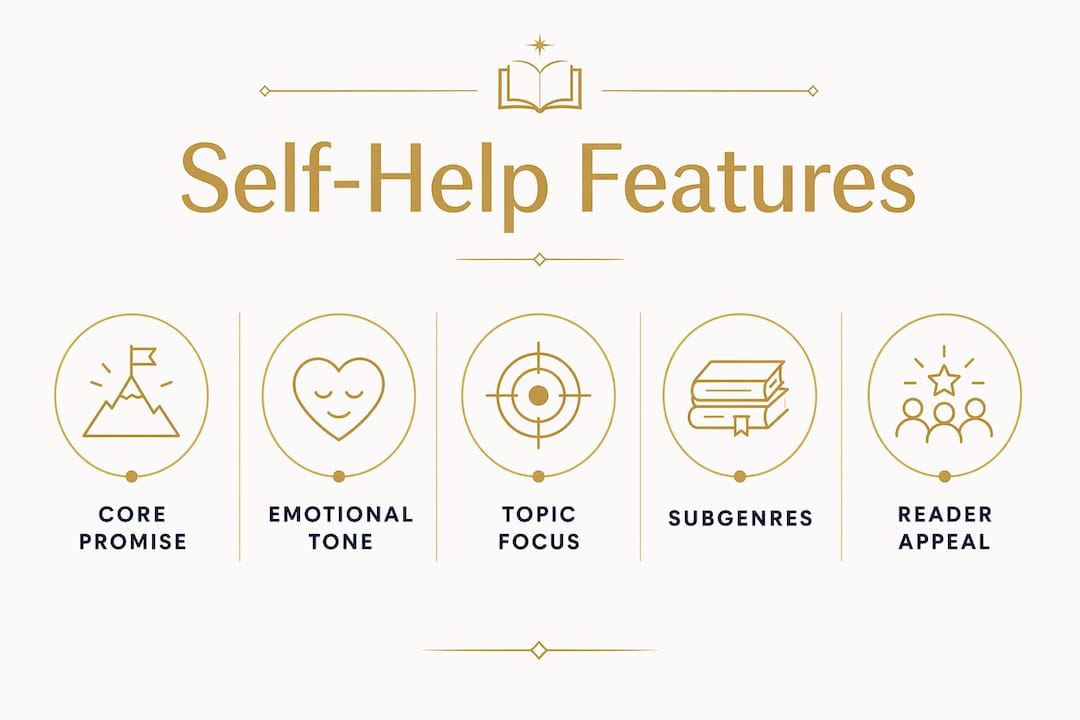
The self-help genre is nonfiction writing built around one core promise: you can change your life if you follow the right steps. Unlike academic psychology texts, these books speak directly to the reader, often in a warm, peer-to-peer voice. Self-help books use a first-person, peer-supportive tone that promotes emotional validation alongside practical guidance. That intimacy is what separates the genre from a clinical manual.
The genre covers an enormous range of topics, from managing anxiety and rebuilding confidence to building wealth and improving relationships. The self-help genre is also known as personal development, wellness guides, or motivational literature, covering topics like mental health, financial independence, and relationships. Each of those labels signals a slightly different reader expectation, but the underlying structure stays consistent: identify a problem, explain why it exists, and give the reader tools to fix it.

What makes the genre work is its dual appeal to both the head and the heart. Self-help books function as a social action framework with a goal to facilitate personal transformation through a mix of practical advice and emotional engagement. Readers do not just want information. They want to feel understood before they feel instructed.
What are the main characteristics of self-help books?
Self-help books share a recognizable set of features that distinguish them from other nonfiction. Knowing these characteristics helps you identify the genre quickly and choose books that will actually deliver results.
Core genre characteristics:
- Conversational tone. The writing feels like advice from a knowledgeable friend, not a lecture from a professor.
- Actionable strategies. Every chapter typically ends with exercises, reflection prompts, or step-by-step methods.
- Personal transformation arc. The book takes the reader from a problem state to a solution state, often through a narrative or case study structure.
- Credibility building. Authors establish trust early, using personal stories, research citations, or professional credentials. Self-help books combine practical advice with emotional engagement, establishing credibility early to build reader trust and connection.
- Emotional resonance. The best titles make readers feel seen before they offer solutions.
Popular themes include mental health, productivity, relationships, financial freedom, grief recovery, and self-discovery. Books addressing emotional recovery and personal empowerment consistently rank among the most read titles in the genre.
Pro Tip: Before buying a self-help book, read the introduction and one middle chapter. If the author has not made you feel understood by page 20, the book is unlikely to hold your attention long enough to help.
How is the self-help genre categorized into subgenres?
The self-help genre is not a single shelf. It is a collection of tightly focused micro-genres, each targeting a specific reader problem. Broad appeal usually dilutes message effectiveness, which is why the most impactful titles zero in on one defined audience and one defined struggle.
| Subgenre | Core focus | Typical reader |
|---|---|---|
| Emotional healing | Grief, trauma, abuse recovery | Readers processing loss or pain |
| Productivity | Time management, habits, focus | Professionals and students |
| Financial freedom | Budgeting, investing, wealth mindset | Career starters and earners |
| Relationships | Communication, boundaries, attachment | Anyone navigating personal dynamics |
| Spiritual growth | Meaning, purpose, mindfulness | Readers seeking deeper connection |
| Self-discovery | Identity, values, life direction | People at crossroads or in transition |
| Health and wellness | Nutrition, sleep, mental fitness | Health-conscious readers |
| Business and leadership | Entrepreneurship, management, influence | Founders and managers |
Bookstores and libraries often scatter these subgenres across multiple sections. Bookstores often place self-help books across non-standardized sections such as health, wellness, and psychology, requiring readers to look beyond a single shelf. Knowing the subgenre you need saves time and prevents you from picking up a book that sounds relevant but misses your actual situation.
The subgenre of self-discovery, for example, focuses on identity and values rather than productivity tactics. A reader recovering from a difficult relationship needs a book in the emotional healing or relationships subgenre, not a time management title. Smartreadshub specializes in exactly this kind of targeted guidance, helping readers match their emotional starting point to the right category of literature.
How has the self-help genre evolved over time?
The genre has changed significantly since its early days. The original self-help texts of the 19th century, including Samuel Smiles’s 1859 book literally titled Self-Help, focused on moral character and industriousness. By the mid-20th century, the genre shifted toward psychology-informed frameworks. By the 1990s and 2000s, it had become a publishing powerhouse.
“Self-help literature is an evolving communicative tool adapting style and structure to reflect current societal and cultural contexts. The genre’s rhetorical architecture strategically balances informational and promotional discourse to engage readers and establish author credibility.”
Mapping the Rhetorical Moves in Self-Help Books
The most visible recent shift is in language. Terms like “wellness guides” gain traction, reflecting a focus on mental and emotional health rather than willpower alone. That terminology shift matters because it signals a broader, less stigmatized entry point for readers who might resist the “self-help” label but readily pick up a “wellness guide.”
Modern self-help books also incorporate scientific research more deliberately than earlier titles did. Authors now cite neuroscience, behavioral economics, and clinical psychology to back their claims. This shift addresses the genre’s long-standing reputation for vagueness. Effective self-help books deliver specific, evidence-backed tools for defined problems rather than vague, broad advice. That standard has raised the bar for what readers expect.
Interactive elements have also entered the genre. Workbook-style formats, journaling prompts, and QR codes linking to audio content now appear regularly. These additions reflect reader demand for engagement beyond passive reading.
Pro Tip: When evaluating a newer self-help title, check whether the author cites peer-reviewed research or relies solely on anecdote. Research-backed books tend to produce more consistent results across different readers.
Why do readers turn to self-help books?
Readers pick up self-help books because they face a specific problem and want both hope and a path forward. Readers seek self-help books to gain hope and actionable progress on challenges, with targeted subgenre relevance tied directly to their emotional starting point. A reader in crisis needs a different book than a reader who is stable and optimizing.
The benefits readers report fall into several clear categories:
- Mental health improvement. Books on anxiety, depression, and trauma recovery give readers frameworks for understanding their own minds. Titles addressing women’s mental health have seen particular growth in recent years.
- Confidence building. Self-help titles focused on identity and self-worth help readers rebuild after setbacks.
- Skill development. Productivity and leadership books teach concrete techniques that transfer directly to work and daily life.
- Relationship clarity. Books on attachment, communication, and boundaries help readers understand patterns they could not previously name.
- Sense of agency. Reading about others who solved similar problems creates the belief that change is possible.
The emotional tone of a book matters as much as its content. A reader who feels judged or lectured will stop reading. A reader who feels understood will finish the book and apply what they learned. This is why the genre’s peer-to-peer voice is not a stylistic choice. It is a functional requirement. Readers looking to understand how psychology-informed books aid healing will find that the most effective titles combine research with genuine empathy.
Key Takeaways
The self-help book genre is defined by its practical focus, emotional tone, and clear subgenre structure, making targeted book selection the single most important factor in whether a reader benefits.
| Point | Details |
|---|---|
| Genre definition | Self-help is nonfiction designed to solve personal problems through practical advice and emotional engagement. |
| Tone and style | The genre uses a peer-to-peer voice that validates readers before instructing them, unlike academic texts. |
| Subgenre precision | Choosing the right subgenre matters more than choosing a popular title; broad books dilute impact. |
| Historical growth | Self-help grew from 1.1% of print books in 1972 to 2.4% by 2000, reflecting sustained cultural demand. |
| Evolving language | Terms like “wellness guides” are replacing “self-help” as mental health awareness reduces stigma around the genre. |
Why most self-help advice misses the mark
The genre has a credibility problem, and most readers sense it without being able to name it. The books that sell the most copies are often the ones with the broadest promises. “Change your life in 30 days.” “The one habit that fixes everything.” Those titles move units, but they rarely move people.
What I have found, after years of reading and recommending self-help literature, is that the books that actually change behavior are almost always narrow in scope. They target one specific reader with one specific problem and go deep rather than wide. A book about recovering from narcissistic abuse will do more for someone in that situation than a general “heal yourself” title ever could. The specificity is the point.
The other misconception I see constantly is that self-help books are a substitute for professional support. They are not. The best titles in the genre acknowledge this openly. They position themselves as a complement to therapy, not a replacement. Readers who approach self-discovery literature with that mindset get far more from it than those who expect a book to do all the work.
My honest recommendation: ignore bestseller lists when choosing self-help. Find the book written for your exact situation, even if it has a fraction of the reviews. Precision beats popularity every time.
— Robert
What Smartreadshub recommends for self-help readers
Smartreadshub curates book recommendations specifically for readers navigating psychologically complex situations, including gaslighting, narcissistic abuse, and emotional recovery after toxic relationships.
The site’s guides go beyond genre overviews to match readers with titles suited to their exact emotional state and challenge. Whether you are looking for books on emotional recovery after a breakup or need a structured path through self-discovery, Smartreadshub provides evidence-backed recommendations organized by subgenre and reader need. The self-discovery books guide is a strong starting point for readers who want to understand what the genre can realistically offer and which titles deliver on that promise.
FAQ
What is the self-help book genre in simple terms?
The self-help genre is nonfiction writing that teaches readers how to solve personal problems and improve their lives through practical strategies and motivational guidance. It covers topics from mental health and relationships to productivity and financial freedom.
How is self-help different from psychology books?
Self-help books use a conversational, peer-to-peer tone designed for general readers, while psychology books typically target clinicians or academics. Self-help prioritizes emotional validation and actionable steps over clinical theory.
What are the main types of self-help books?
The main subgenres include emotional healing, productivity, financial freedom, relationships, spiritual growth, self-discovery, health and wellness, and business leadership. Each targets a specific reader problem and audience.
How do I choose the right self-help book?
Match the book’s subgenre to your specific challenge rather than choosing based on popularity. Targeted subgenre selection tied to your emotional starting point produces better outcomes than broad, bestselling titles.
Why are self-help books sometimes called wellness guides?
Increasing mental health awareness has driven a shift in terminology. The term “wellness guides” reflects a broader, less stigmatized focus on mental and emotional health, making the genre more accessible to readers who resist the “self-help” label.