Books for rediscovering yourself are structured tools for identity rebuilding, not just comfort reads. After a breakup or toxic relationship, the self you knew often feels fractured, buried under grief, confusion, or shame. The right personal growth literature does more than offer reassurance. It gives you a repeatable framework, exercises that force honest reflection, and a clear path from who you were in that relationship to who you actually are. This article identifies what separates genuinely transformative self-discovery books from inspirational noise, compares the leading titles, and shows you how to use them with purpose.
What makes books effective for rediscovering yourself after heartbreak?
Not every self-help book qualifies as a genuine tool for identity recovery. The difference between a book that changes you and one that simply comforts you comes down to structure, specificity, and whether it demands something from you in return.
Books that work for self-rediscovery share four defining traits:
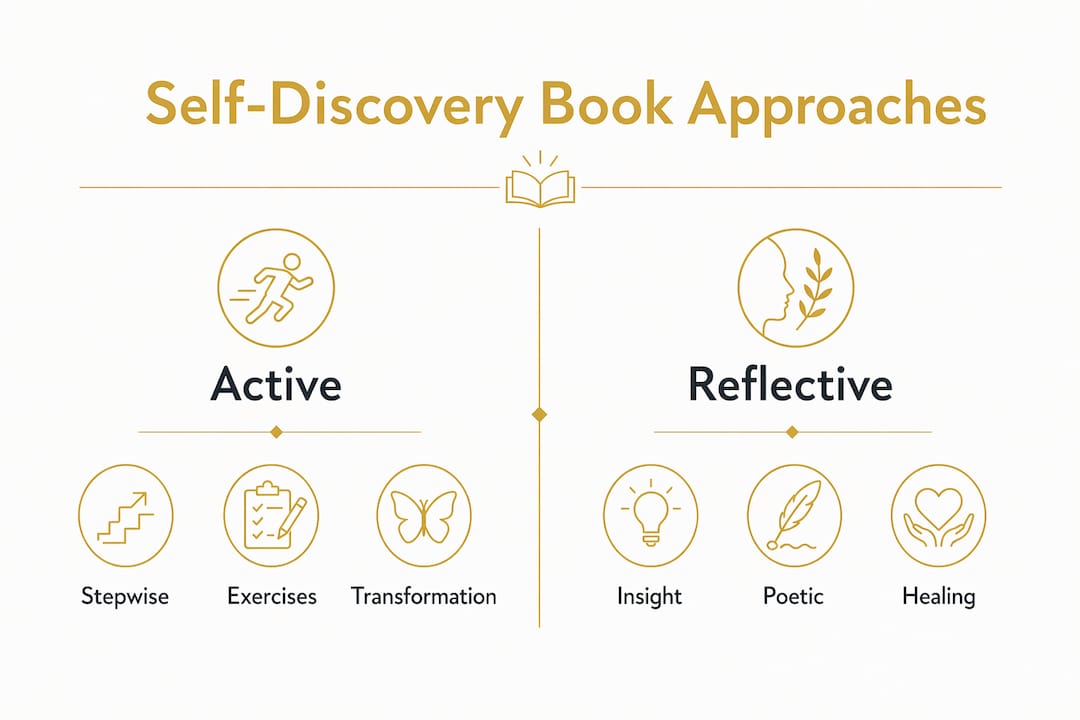
- Explicit step sequences or fixed exercise counts. Books with step sequences outperform purely inspirational narratives in practical self-rediscovery. Katherine Woodward Thomas’s What’s True About You demonstrates this with a seven-step process designed to break false beliefs and rebuild identity from the ground up.
- Journaling prompts and active exercises. Passive reading produces insight. Active exercises produce change. Guided journaling transforms emotional turmoil into trackable progress markers, giving you feedback loops that show measurable growth over time.
- Phased recovery structures. Rebuilding identity is cyclical, not instantaneous. Effective books separate identity rebuilding, attachment release, and inner stability recovery into distinct phases so you know exactly where you are in the process.
- A challenge to harmful myths. The most powerful self-discovery books reject the idea that healing requires closure from the person who hurt you. Najwa Zebian’s The One Who Broke You Can’t Heal You rejects reliance on closure from others, which is one of the most liberating reframes available in this genre.
When evaluating any book on your motivational reading list, ask whether it requires you to do something or just feel something. Feeling is the starting point. Doing is where rediscovery actually happens.
Pro Tip: Before buying a book, read the table of contents and check whether it includes exercises, prompts, or structured phases. If the chapters are all narrative with no active components, treat it as supplemental reading rather than your primary recovery tool.
How do different self-discovery books compare in approach and format?
The self-discovery books category is broad, and the differences between titles matter enormously depending on where you are in your recovery. Below is a direct comparison of the leading titles, their methods, and who they serve best.

| Book | Author | Method | Best for |
|---|---|---|---|
| What’s True About You | Katherine Woodward Thomas | 7-step process, breaks false beliefs, identity transformation | Readers ready to move beyond healing into active self-reinvention |
| Healing After Breakup | Felicity Paulman | 30-day framework, three recovery phases | Readers who want a time-bound, structured program |
| The One Who Broke You Can’t Heal You | Najwa Zebian | Attachment release, self-led compassionate healing | Readers still emotionally tethered to a harmful person |
| After the Breakup: A Self-Love Journal | Various | 150 guided journal entries, self-esteem exercises | Readers who process best through writing |
| The Meaning of Your Life | Arthur C. Brooks | Philosophy and science combined, purpose discovery | Readers seeking meaning beyond the relationship |
| Goodbye, I Love(d) You! | Sumaa Tekur | Indian philosophy, mythology, modern psychology | Readers drawn to culturally rich, narrative-driven healing |
Katherine Woodward Thomas approaches transformation as distinct from healing. Healing removes pain. Transformation installs a new operating system. That distinction matters because many readers stop at feeling better when the real work of rediscovery has barely begun.
Felicity Paulman’s 30-day recovery framework is particularly useful for readers who feel overwhelmed by open-ended self-help. A defined program with a start and end date reduces decision fatigue and creates a sense of forward momentum that open-ended reading rarely provides.
Arthur C. Brooks brings a social scientist’s rigor to a question most self-help books handle loosely: what is the actual meaning of your life, and how do you find it after loss? His evidence-based strategies make The Meaning of Your Life one of the few books in this space that bridges philosophy and empirical research without sacrificing accessibility.
Sumaa Tekur’s Goodbye, I Love(d) You! blends Indian philosophy and psychology to argue that conscious effort, not time alone, reclaims peace after a relationship ends. This is a direct counter to the passive “just give it time” advice that keeps many people stuck for years.
What practical steps maximize growth from self-rediscovery books?
Reading a book is not the same as using a book. The gap between those two things is where most people lose their progress. These steps close that gap.
- Match the book to your recovery phase. If you are still emotionally attached to the person who hurt you, start with Najwa Zebian’s work on attachment release before moving to identity rebuilding. Jumping to transformation before releasing attachment is like repainting a wall that hasn’t been repaired yet.
- Set a daily reading block with a completion target. Decide before you open the book how many pages or chapters you will read per session. A 30-day framework like Felicity Paulman’s works precisely because the structure is pre-decided. Apply the same logic to any book you choose.
- Complete every exercise before moving forward. Skipping exercises to keep reading is the single most common mistake in self-discovery reading. The exercises are the book. The narrative is the instruction manual for the exercises.
- Journal your responses immediately after each session. Guided journaling reduces decision fatigue and makes it easier to complete the healing process. Even five sentences written directly after reading anchors the insight before it fades.
- Identify your specific emotional hurdle and target it. If your primary struggle is releasing attachment to a harmful person, go directly to the chapters in Zebian’s book that address emotional detachment. You do not have to read linearly if a specific section addresses your most urgent need.
- Combine reading with external support. Books are powerful, but they work best alongside therapy, a trusted counselor, or a support community. Psychology books support healing most effectively when paired with human accountability.
Pro Tip: Set a “completion contract” with yourself before starting any book. Write down the date you will finish it and what you expect to have worked through by then. This single act increases follow-through significantly and prevents the common pattern of abandoning a book mid-process when the content gets emotionally difficult.
What challenges do readers face when using books for self-rediscovery?
The path through personal growth literature is rarely smooth, and knowing the obstacles in advance makes them far easier to navigate.
The most common barrier is passive reading without action. Many readers finish an entire book, feel inspired, and then return to the same patterns within weeks. Healing and transformation are distinct. Moving beyond past pain requires structured action, not just understanding. If you finish a chapter without completing its exercises, you have consumed information without creating change.
A second challenge is emotional resistance. Certain chapters will surface memories or feelings you have been avoiding. This is not a sign that the book is wrong for you. It is a sign that it is working. The discomfort of confronting past pain through a book is far safer than avoiding it indefinitely.
A third pattern worth naming is over-identifying with victimhood. Some readers use self-discovery books to confirm how badly they were treated rather than to move forward. Releasing attachment to harmful figures is crucial for nervous system regulation and genuine recovery. A book that keeps you focused on what was done to you is not serving your rediscovery.
Finally, lack of visible progress discourages many readers. Without measurable markers, it is easy to feel like nothing is changing. Structured journals like After the Breakup: A Self-Love Journal, with its 150 guided entries, solve this directly by creating a written record of your growth that you can look back on.
“The work of rediscovery is not about erasing what happened. It is about building something so real and so yours that the past no longer defines the present.”
For readers who want to explore books on letting go as a complement to identity rebuilding, Smartreadshub has curated a dedicated collection that pairs well with the titles discussed here.
Key takeaways
The most effective books for rediscovering yourself after emotional turmoil combine phased frameworks, active exercises, and attachment release strategies rather than relying on inspiration alone.
| Point | Details |
|---|---|
| Structure beats inspiration | Books with step sequences and fixed exercises produce more measurable change than narrative-only titles. |
| Match book to recovery phase | Start with attachment release titles before moving to identity transformation books for best results. |
| Active exercises are non-negotiable | Completing every journal prompt and exercise is where rediscovery actually happens, not in passive reading. |
| Challenge the closure myth | Self-led healing, as Najwa Zebian argues, is more effective than waiting for resolution from the person who hurt you. |
| Track your progress | Structured journals with fixed entry counts give you visible feedback loops that sustain motivation. |
What I’ve learned from years of reading in this space
I have read dozens of books in the self-discovery and emotional recovery category, and the pattern I keep returning to is this: the books that changed me were the ones that made demands. They did not just offer comfort. They handed me a worksheet, a prompt, or a seven-step process and said, “Now do the work.”
The books that felt the most profound in the moment, the beautifully written ones full of poetic insight, often left the least lasting mark. That is not a criticism of literary quality. It is an observation about what actually moves the needle when you are trying to rebuild after something that broke you.
What surprised me most was how much resistance I felt toward the structured books. The exercises felt clinical. The prompts felt forced. But that resistance was almost always a signal that I was approaching something true. The real role of self-discovery books is not to make you feel understood. It is to make you see yourself clearly, sometimes for the first time.
My honest advice: give yourself permission to go slowly. One chapter, fully worked through, is worth more than an entire book skimmed for comfort. And if a chapter brings up something too large to process alone, that is not a failure. That is information about where you need more support.
— Robert
Start your recovery with the right resources
If the books discussed here have opened a door, Smartreadshub is built to help you walk through it. The site’s curated guides go beyond general self-help to address the specific dynamics of toxic relationships, including gaslighting, narcissistic abuse, and the identity erosion that follows.

The category page on how books explain toxic relationships is the best starting point for readers who want targeted recommendations organized by the type of harm they experienced. Whether you are processing a breakup, recovering from manipulation, or rebuilding self-worth after years of emotional damage, Smartreadshub connects you to the books and guides that match exactly where you are right now.
FAQ
What are the best books for rediscovering yourself after a breakup?
What’s True About You by Katherine Woodward Thomas, Healing After Breakup by Felicity Paulman, and The One Who Broke You Can’t Heal You by Najwa Zebian are among the most structurally rigorous options. Each offers a defined framework rather than general encouragement.
How long does it take to see results from self-discovery books?
Felicity Paulman’s 30-day framework suggests meaningful progress is possible within a month when exercises are completed consistently. Results depend on active engagement with the material, not reading speed.
Are guided journals as effective as full self-help books?
Yes, for many readers they are more effective. After the Breakup: A Self-Love Journal uses 150 structured entries to build self-esteem incrementally, and the fixed format reduces the decision fatigue that causes many people to abandon open-ended books.
Can books replace therapy for emotional recovery?
Books are powerful complements to therapy but not replacements. Structured self-discovery reading works best alongside professional support, particularly when recovering from narcissistic abuse or long-term manipulation.
What should I look for in a self-rediscovery book?
Look for explicit step sequences, journaling prompts, phased recovery structures, and a focus on self-led healing rather than waiting for external closure. Books that demand active participation consistently outperform those built around narrative inspiration alone.